“I was too busy to be sick.”
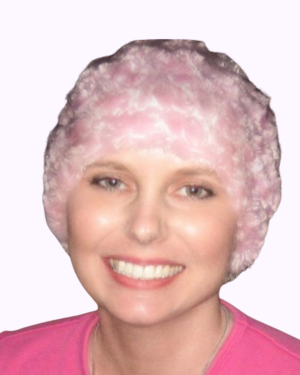
Sarah Ridgeway was working as a respiratory therapist and helping support her family when symptoms began creeping into everyday life.
There were migraines, visual disturbances and severe night sweats. Then came nausea and vomiting.
Sarah was busy. She had a career she had worked hard for, a fiancé and three boys at home.
So she carried on.
Then, in 2013, Sarah experienced a grand mal seizure.
An MRI revealed a glioma growing in her brainstem. Because of its location, Sarah was told that attempting surgery or even taking a biopsy carried a serious risk of paralysis or death.
Instead, she would undergo radiotherapy.
Sarah’s life changed almost overnight.
When Symptoms Were Easy to Explain Away
Looking back, Sarah could recognise that things had been changing before the seizure that eventually led to her diagnosis.
She had experienced severe migraines and changes to her vision, including spots, lines and flashes.
Her night sweats became much worse.
Then, around a month before her first major seizure, Sarah began feeling nauseous and vomiting.
But Sarah was working as a respiratory therapist.
She felt she could not simply stop.
She continued going into work, sometimes being sick between seeing patients, and tried to manage the symptoms herself.
It is something many people affected by brain tumours may recognise — when life is busy, it can be surprisingly easy to find explanations for symptoms and just keep going.
For Sarah, everything changed when she had a seizure.
A Seizure Led to Sarah’s Brain Tumour Diagnosis
Sarah’s first major seizure happened while she was at home with Ben.
Afterwards, her doctor arranged an MRI and an EEG.
Before she had completed all of the investigations, Sarah experienced another seizure.
Then came the MRI result.
Sarah was at her doctor’s surgery having an ankle injury checked when the results arrived.
She could tell from her doctor’s face that something was wrong.
They read the report together.
It described a tectal glioma, a tumour in the brainstem region.
Sarah was diagnosed in May 2013 — Brain Tumour Awareness Month. GoFundMe
Suddenly, many of the symptoms Sarah had been living with had an explanation.
But the location of the tumour created another frightening problem.

When Surgery Was Too Dangerous
Sarah was referred to a neurosurgeon.
Because the tumour was growing in her brainstem, she was told that surgery was not considered a safe option.
Even taking a biopsy was thought to carry a serious risk of neurological damage.
Sarah sought another opinion and eventually found a doctor she felt took the time to understand her unusual tumour and explain the options properly.
The decision was made to treat the tumour with radiotherapy.
Sarah went through 30 radiotherapy treatments. GoFundMe
Brainstem tumours can be particularly difficult to operate on because the brainstem controls vital functions and contains important neurological pathways. Radiotherapy may therefore be used when surgery is not possible or would carry too much risk.
Radiotherapy and the Long Recovery Afterwards
Sarah finished radiotherapy at the end of the summer.
The scans afterwards were encouraging, but recovery was far from instant.
Sarah found that the effects of both the tumour and treatment continued long after the radiotherapy appointments had finished.
She experienced fatigue, headaches, dizziness, problems with coordination and memory, visual disturbances and seizures.
Some days were better than others.
Noise and too much stimulation could become overwhelming.
She described experiencing neurological fatigue — the kind of exhaustion that is difficult to understand unless you have experienced it yourself.
At the time Sarah shared her story with Aunty M Brain Tumours in 2020, she said her most recent MRI, around six months earlier, had been her first stable scan.
That was an important milestone.
But a stable scan did not mean that Sarah was suddenly symptom-free.
Learning to Live With a Different Brain
One of the hardest adjustments for Sarah was accepting that her brain and body did not work in quite the same way anymore.
Before diagnosis, Sarah had been energetic, independent and always busy.
She had run regularly, worked in a demanding clinical role and loved being active.
Afterwards, pain, seizures, fatigue, dizziness and short-term memory problems changed what she was able to do.
Sarah described learning to live with her “new mind.”
That phrase says a great deal about life after a brain tumour.
Recovery is not always about returning to exactly who you were before diagnosis.
Sometimes it is about learning what your brain can manage now, what has changed and how to build a life around that.
Losing a Career She Loved
One of the biggest losses for Sarah was her career.
She was extremely proud of being a registered respiratory therapist and had worked in the profession since 2000.
Her memory problems, pain and seizures eventually meant she could no longer work.
But Sarah was determined not to let go completely.
She continued trying to keep up with developments in respiratory care and took online educational classes when she could.
She was adamant that she would not give up the professional licence she had worked so hard to earn. Aunty M Brain Tumours Podcast
For Sarah, losing the ability to work was not simply about employment.
It was about losing part of an identity she had built over many years.
When Everyday Things Become Difficult
Brain tumour symptoms affected parts of life that Sarah had once taken for granted.
Reading became frustrating because headaches, concentration and short-term memory problems could make it difficult to remember what she had read.
Watching a film might mean watching it several times before she could remember it properly.
She could no longer drive because of her seizures and problems with memory and orientation.
Leaving the house could require earplugs and somebody accompanying her because noise and stimulation became difficult to tolerate.
Sarah had once been a daily runner.
She had been skydiving and had even planned to swim with sharks before bad weather cancelled the trip.
Her life after diagnosis looked very different.
But she was very clear about something else too.
She was still enjoying her life.
Finding New Ways to Enjoy Life
Sarah adapted.
She had always loved drawing, but shaking in her hands made it frustrating.
So she began painting instead.
She spent time gaming and started experimenting with streaming.
She enjoyed being with her dogs and spending time with Ben and the boys.
She also hoped to gradually start exercising again.
That is one of the things I like about Sarah’s story.
It is not about pretending that nothing changed.
A great deal changed.
But when one thing became difficult, Sarah often looked for another way of doing something she enjoyed.
Sarah and Ben
Family sits at the heart of Sarah’s story.
Her husband, Ben, supported her through seizures, radiotherapy, scans and the everyday uncertainty of living with an inoperable brain tumour.
Sarah spoke with enormous affection about him and about the three boys she helped raise.
Sarah and Ben married after her diagnosis.
Their wedding photograph was one of the images she chose to share alongside her original story.
Sarah had taken on much of the financial responsibility for the family before becoming ill so that Ben could spend more time supporting his boys.
After Sarah became unable to work or drive, family roles had to change again.
Ben also began taking over tasks that Sarah’s memory made difficult, including managing household bills.
Brain tumours rarely affect only the person with the diagnosis.
The impact can spread through relationships, work, finances and family life too. GoFundMe
The Anxiety of Living With an Inoperable Tumour
At the time of Sarah’s interview, she was living with the knowledge that the tumour was still there.
That could make any new symptom frightening.
A new pain.
A flash in her vision.
A different headache.
Was it something she already lived with?
Was it an effect of radiotherapy?
Or had something changed?
Sarah described living with high levels of anxiety around those questions.
Even good scan results did not completely remove that uncertainty.
For many people living with a brain tumour, a stable scan can bring enormous relief while still leaving the fear of what the next scan might show.
Sarah’s Advice to Families
Sarah’s advice to other people supporting someone with a brain tumour was simple:
Be patient.
The person you knew before diagnosis may suddenly be dealing with fatigue, memory problems, sensory overload, pain or personality changes that other people cannot see.
They may not be able to keep their home as they once did.
They may forget things.
They may become overwhelmed more easily.
And one day can be very different from the next.
Sarah reminded people that this is the brain we are talking about.
It plays a part in almost everything we do.
Support, patience and understanding can therefore make an enormous difference.
What Kept Sarah Going?
Sarah’s answer was life and family.
She wanted to watch the boys grow up.
She wanted more time with Ben.
Her family and friends meant everything to her.
She did not pretend that having a brain tumour was easy.
Sarah spoke openly about pain, disability, anxiety, memory loss and the career and independence she had lost.
But she also talked about gaming, painting, her dogs, her family and the things that continued to make her laugh.
Both sides belong in a brain tumour story.
There can be grief for the life you had and gratitude for the life you still have at the same time.

Why Sarah’s Story Matters
Sarah’s experience is a reminder that brain tumour symptoms do not always arrive as one dramatic warning sign.
Some may build gradually.
Others can be explained away until something more obvious happens.
In Sarah’s case, it was a seizure that finally led to the MRI that discovered her tumour.
Her story is also an important example of what it can mean to live with an inoperable brain tumour.
Treatment may finish, scans may stabilise and yet the effects can continue to shape everyday life.
Sarah had to adapt her work, independence, hobbies and expectations.
But throughout our interview, her personality still came through strongly.
She was funny, adventurous, proud of her career and deeply devoted to her family.
A brain tumour changed her life.
It did not become the whole of who she was.
About Sarah’s Tumour: Brainstem Glioma
A brainstem glioma is a tumour that develops from glial cells within the brainstem.
The brainstem is the lower part of the brain that connects with the spinal cord. It is involved in vital functions including movement, coordination, breathing and heart rate.
Brainstem gliomas are rare in adults and are more commonly seen in children and younger people.
Because the brainstem contains so many important structures, surgery can sometimes carry significant risks.
Whether surgery, biopsy, radiotherapy or another treatment is appropriate depends on the individual tumour and the person affected. In some situations, radiotherapy may be the main treatment when an operation is not considered safe.
Sarah’s tumour was described as a tectal glioma in the brainstem. She was told that surgery and biopsy were too dangerous, so she received radiotherapy instead. GoFundMe
Support for People Affected by a Brain Tumour
If you have been diagnosed with a brain tumour, or you are supporting someone who has, finding reliable information and people who understand can help.
The Brain Tumour Charity
The Brain Tumour Charity has information about brainstem gliomas, treatments, side effects and support for people affected by brain tumours.
Read about brainstem gliomas at The Brain Tumour Charity
American Brain Tumor Association
Because Sarah lives in the United States, the American Brain Tumor Association may also be helpful for readers in the US.
They provide free information, support groups, a CareLine and a patient and caregiver mentor programme. American Brain Tumor Association
Visit the American Brain Tumor Association
Sarah’s Message
Sarah’s brain tumour changed her career, her independence and the way her brain and body worked.
But Sarah’s story is also about adapting.
When drawing became difficult, she tried painting.
When her old pace of life was no longer possible, she found different ways to spend time with the people she loved.
And when she spoke about what motivated her, she kept coming back to the same things:
Life. Family. Love.
Thank you to Sarah for sharing her experience so openly with Aunty M Brain Tumours.
Her story is a reminder that living with a brain tumour is not only about scans and treatment.
It is about everything that comes afterwards too.
Medical information note
Sarah’s story describes her personal experience and should not be used to predict somebody else’s diagnosis, treatment or outcome. Brainstem gliomas can differ considerably between individuals. If you have symptoms or questions about your own diagnosis, please speak to your medical team.


Claire Bullimore is an influential figure in the brain tumour community. She embarked on her brain tumour journey and was diagnosed with an intraventricular meningioma. In response to her experiences, Claire founded ‘Aunty M Brain Tumours,’ a platform dedicated to sharing brain tumour stories. Based in London, England, Claire also identifies as a blogger and speaker for Aunty M Brain Tumours, shedding light on the challenges faced by those diagnosed and amplifying their voices for better awareness and support. Through her dedication and advocacy, Claire’s efforts have been recognized by Brain Tumour Research and other organizations, spotlighting her commitment to making a positive difference for individuals impacted by brain tumours.