Delyth’s Brain Tumour Story: It Was Never Just Menopause
There are moments when the truth arrives quietly, after years of being mistaken for something else.
For Delyth Smith, that moment came in late 2023. After years of symptoms that had slowly chipped away at her confidence, her health and her sense of self, she was finally given an answer.
What had been blamed on menopause, stress and depression was something very different.
It was a brain tumour — a grade 2 oligodendroglioma.
Before that diagnosis, life had become smaller in ways she struggled to explain. Delyth had always been active, fit and adventurous — a keen climber and mountaineer, someone used to pushing herself physically. But gradually, everyday things became harder. She found it difficult to walk far. Her mood changed. Her confidence slipped. She no longer felt like herself.
Looking back, she says she always knew something was wrong.
“I just knew I felt really, really, really bad.”
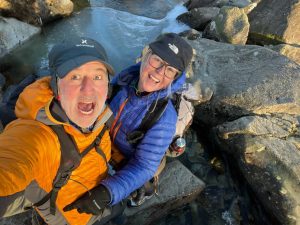
Oligodendroglioma Symptoms: Mistaken for Menopause
One of the most frightening signs came while driving.
Delyth recalls: “I forgot how to drive in the middle of Wilmslow and I just had to leave my car in the middle of the road.”
Moments like this were frightening, confusing and impossible to explain.
Her confidence faded, and life gradually became smaller.
Later, she described that period with heartbreaking honesty.
“I had gradually dropped out of life. I didn’t want to leave the room. I didn’t want to leave my house.”
Looking back now, these were signs of a frontal lobe brain tumour affecting how her brain was functioning.
Like many people with brain tumours, the symptoms were subtle at first and easy to misread.
The Seizure That Changed Everything
Everything came to a head while Delyth was in Sheffield recording social media interviews.
She suffered a major seizure and was rushed to the hospital.
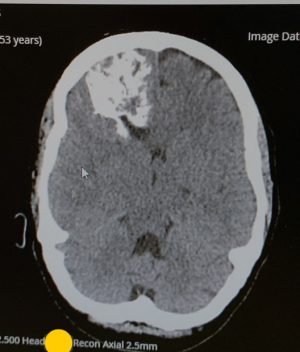
After a CT scan, the truth became clear.
“They’re telling me it’s a tumour. They don’t know what sort it is.”
Within days, she was referred to specialists in Manchester for urgent surgery.
Watch Delth tell her story in full in the Aunty M Brain Tumours Talk Show interview below, or keep reading for the written version
Emergency Brain Surgery
Delyth underwent an eight-hour craniotomy.
Surgeons successfully removed around 90% of the tumour, leaving only a small area that was too close to important blood vessels.
While waiting for final pathology results, she described the uncertainty many patients know too well:
“You just try and focus on the one that you hope it is.”
Eventually, she was diagnosed with a grade 2 oligodendroglioma — a slower-growing type of brain tumour.
Although any diagnosis is difficult, there was relief in knowing it was not one of the fastest-growing forms.
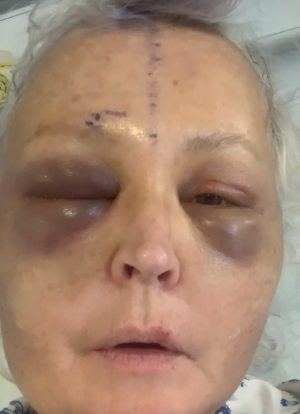
Recovery Was Far From Straightforward
Surgery was only the start of Delyth’s journey.
After returning home, she experienced complications, including leaking cerebrospinal fluid and a serious infection, which led to another emergency craniotomy.
Even in frightening moments, Delyth’s humour never left her.
That humour became one of the ways she coped through the darkest days.
“Thought it was Aperol Spritz actually.”
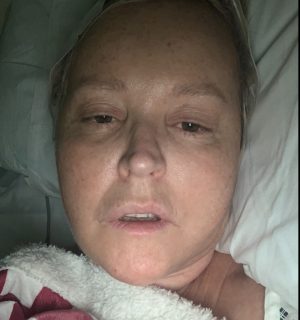
The Hidden Trauma of Hospital Life
Delyth also speaks openly about something many patients understand but rarely say out loud — the hospital itself can be traumatic.
Being surrounded by seriously ill people, hearing devastating conversations behind curtains, losing independence and identity as a patient can leave lasting emotional scars.
She describes feeling like she had stopped being herself and had become only a diagnosis.
Finding Humour in Dark Moments
Despite everything she has faced, Delyth has held on to her humour.
During her time in hospital, she kept notes and voice memos about the strange, surreal and sometimes absurd moments of treatment and recovery.
Those notes became the basis of a book she hopes to publish to raise money for brain tumour charities.
“The working title at the moment is Brain Worm.”
Her humour doesn’t minimise what happened.
It shows the strength it took to survive it.
Why Delyth Is Sharing Her Story
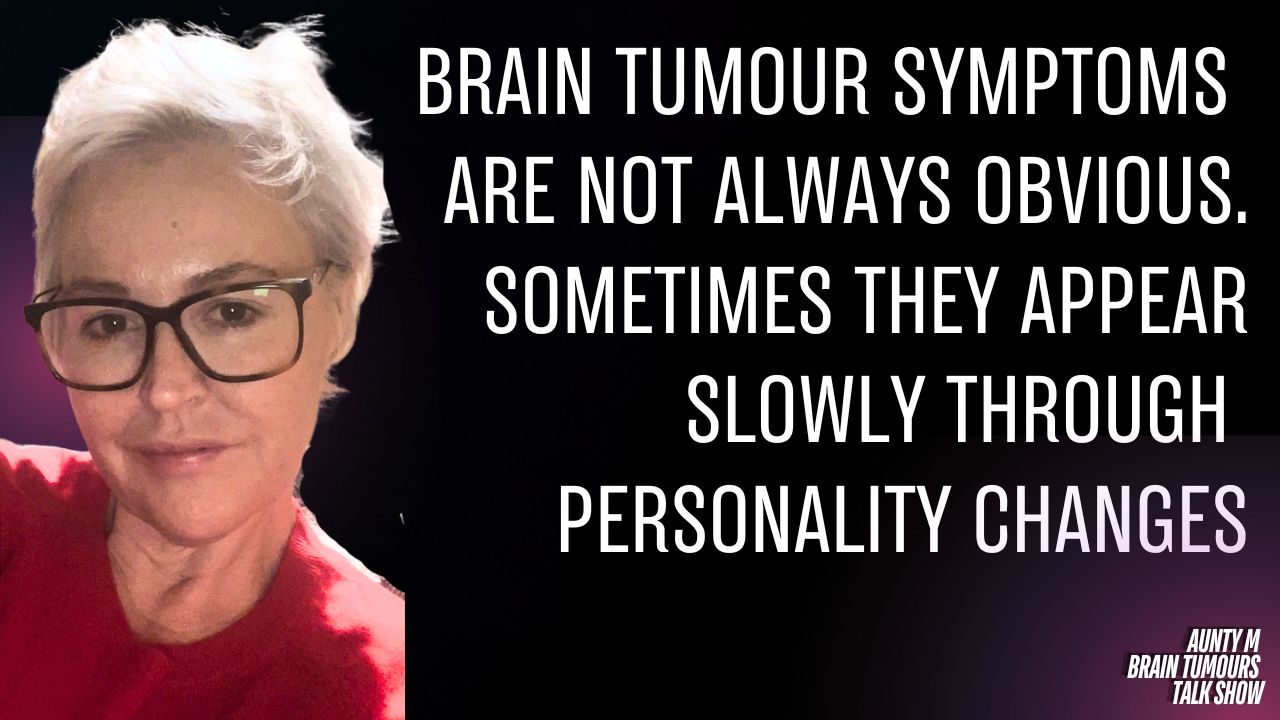
By sharing her experience, Delyth hopes others recognise that brain tumour symptoms are not always obvious.
Sometimes they look like menopause, or they look like depression, burnout, anxiety or personality change, or they just arrive quietly.
Her story is a reminder to trust your instincts, keep asking questions, and seek help when something does not feel right.
It is also a reminder that even after trauma, humour, honesty and hope can still survive…..
“I’m Delyth Smith on Facebook, LinkedIn and @smithdelyth on Instagram.”
If You Have Recently Been Diagnosed With an Oligodendroglioma
If you have found this page because you or someone you love has recently been diagnosed with an oligodendroglioma, please know you are not alone.
Many people arrive here feeling shocked, scared or unsure what happens next. Those feelings are completely understandable.
An oligodendroglioma is a rare type of brain tumour that often grows more slowly than some other brain tumours. Every diagnosis is different, and your medical team will guide you based on the size, location and behaviour of the tumour.
You May Be Feeling a Lot Right Now
It is common in the early days to feel:
- overwhelmed
- anxious
- numb
- confused by medical language
- worried about the future
- relieved to finally have answers
There is no “right” way to feel.
Gentle First Steps After Diagnosis
Right now, you do not need to solve everything at once.
It can help to focus on small next steps:
- Write down questions for your next appointment
- Take someone with you if you can
- Keep notes of information you are given
- Rest when you need to
- Accept help from people who care about you
- Avoid frightening internet rabbit holes when possible
Symptoms Can Look Different for Everyone
Some people are diagnosed after seizures. Others after headaches, memory changes, fatigue, or noticing that something simply does not feel right.
As Delyth’s story shows, symptoms can sometimes be mistaken for other things first.
Whether you have surgery, monitoring scans, treatment, or watch-and-wait care, emotional recovery matters too.
It is okay if you are not coping perfectly.
It is okay if some days feel harder than others.
Remember
You do not need to be brave every minute.
You do not need to have all the answers today.
Right now, it is enough to take the next step, then the one after that.
And there are many people walking this road beside you.
Understanding Oligodendroglioma
An oligodendroglioma is a rare type of brain tumour that develops from cells called oligodendrocytes, which help support and protect nerve fibres in the brain.
These tumours are often slower growing than some other brain tumours, although every diagnosis is unique and treatment plans vary from person to person.
Many people are diagnosed after seizures, headaches, memory changes, or noticing that something no longer feels quite right.
Why Frontal Lobe Tumours Can Be Missed
Delyth’s tumour was in the frontal lobe — an area of the brain linked to personality, emotions, behaviour, motivation and decision-making.
When tumours develop in this area, symptoms can sometimes appear gradually and may include:
- personality changes
- irritability
- poor judgement
- impulsive behaviour
- emotional changes
- difficulty organising tasks
- changes in motivation
Because these symptoms can develop slowly, they are sometimes mistaken for stress, menopause, depression or burnout.
If Something Feels Different
Trust your instincts.
If you or someone you love is experiencing ongoing neurological symptoms, seizures, personality changes, or changes that feel unusual, speaking to a healthcare professional can be an important first step.
Support and Information
View this post on Instagram

Claire Bullimore is an influential figure in the brain tumour community. She embarked on her brain tumour journey and was diagnosed with an intraventricular meningioma. In response to her experiences, Claire founded ‘Aunty M Brain Tumours,’ a platform dedicated to sharing brain tumour stories. Based in London, England, Claire also identifies as a blogger and speaker for Aunty M Brain Tumours, shedding light on the challenges faced by those diagnosed and amplifying their voices for better awareness and support. Through her dedication and advocacy, Claire’s efforts have been recognized by Brain Tumour Research and other organizations, spotlighting her commitment to making a positive difference for individuals impacted by brain tumours.