
Living Fully With a Grade 2 IDH-Mutant Astrocytoma
A diagnosis that came out of nowhere
When Jaime Olbertz first learned she had a brain tumour, it wasn’t because of symptoms that led doctors straight to it. It was something found almost by accident, years after a completely different medical crisis.
As a teenager, Jaime experienced a traumatic brain injury caused by an anaphylactic reaction to a peanut butter cookie. She lost oxygen to her brain and had to relearn how to walk, talk, and function again. After months of recovery and follow-up scans, she was told she was in the clear.
Life moved forward.
But years later, after the birth of her third child, something didn’t feel right.
“I was so tremory it was hard to walk from the couch to the bedroom… I just felt off.”
That instinct led her back to a neurologist—and ultimately to a discovery that would change everything.
“There’s a mass in your brain…”
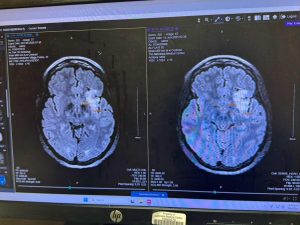
A CT scan, MRI, and EEG revealed something unexpected: a small mass in the front of her brain.
What made it more shocking was that it had apparently been there for years—visible on earlier scans, but never communicated to her.
“My heart dropped… what do you mean there’s something in my brain?”
Initially, doctors recommended a “watch and wait” approach. For nearly a year, Jaime had scans every three months, monitoring subtle changes.
Eventually, in 2023, she underwent a biopsy.
The diagnosis: a grade 2 IDH-mutant astrocytoma. For those unfamiliar, this is a type of astrocytoma grade two IDH mutant tumour, which can appear in adults.
Watch Jaime tell her story in full in the Aunty M Brain Tumours Talk Show interview below, or keep reading for the written version
“I Named My Tumour, Felicia”
Choosing a path forward
With a low-grade tumour, Jaime was presented with multiple options—surgery, chemotherapy, radiation, or continued monitoring. In cases of astrocytoma grade two IDH mutant, decisions are often very complex.
Instead of rushing into a decision, she and her husband took a step that would shape her journey:
They sought multiple opinions.
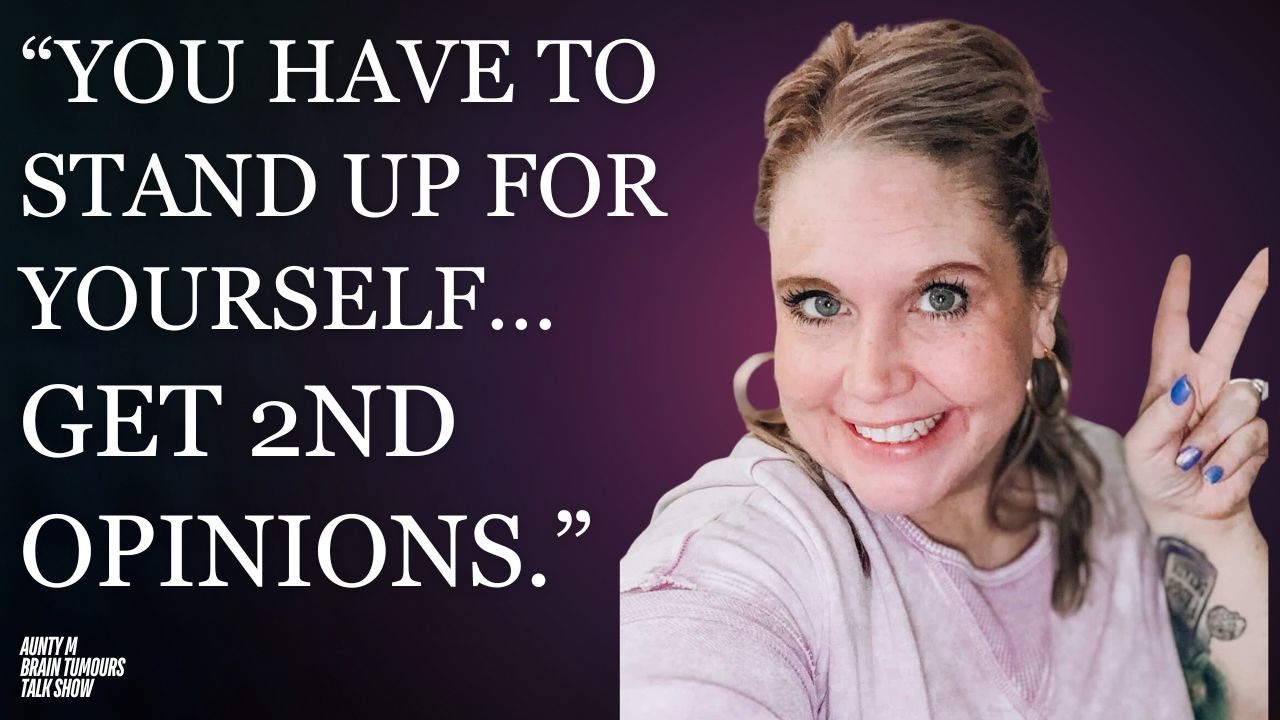
“You have to stand up for yourself… get second opinions, get third opinions.”
After consulting different specialists, Jaime chose to undergo laser ablation, a minimally invasive procedure that uses heat to destroy tumour tissue.
The result: approximately 85% of the tumour was removed.
When treatment takes a new turn
Following surgery, Jaime returned to watch-and-wait monitoring. But about a year later, scans showed the tumour had started to grow again.
Because her tumour had been genetically profiled, she was eligible for a newer targeted treatment: Vorasidenib.
She’s now been on the medication for nearly a year—and the results have been remarkable.
“My tumour is actually shrinking… that wasn’t something they told me would happen.”
While the adjustment period came with nausea and fatigue, those side effects eased over time. Today, she describes the treatment as “a godsend.”
A new perspective on life
Living with a brain tumour has changed how Jaime sees the world—but not in the way you might expect.
Rather than being consumed by uncertainty, she’s grounded herself in the present.
“You’re never promised anything… it’s given me a beautiful perspective on life.”
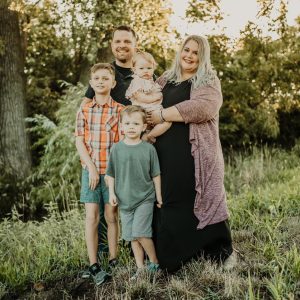
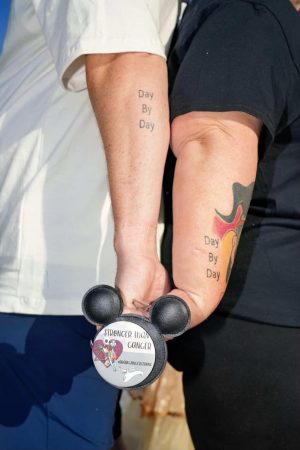
She focuses on everyday moments with her husband and their three children—who are fully aware of her condition. In fact, they’ve even given her tumour a name:
Felicia—the “sixth member” of the family.
Openness has been central to how they cope.
“The more open we can be with them, the better.” Additionally, this honest approach has helped normalise conversations around astrocytoma grade two IDH mutant conditions.
Strength in community and purpose
Jaime continues to work full-time at a therapy clinic, supporting children and families through occupational, speech, and physical therapy.
It’s work that deeply connects to her own experience.
Having gone through a traumatic brain injury herself, she understands what recovery truly takes—and brings a level of empathy that can’t be taught.
“I relate to them on a whole different level… I’ve been there.”
Her life today is full—balancing work, motherhood, treatment, and everything in between.
“The busier I can keep myself, the better… I don’t have time to think about what’s happening in my brain all day.” In brief, Jaime’s experience with astrocytoma grade two IDH mutant has taught her the value of living every moment.
Lessons from Jaime’s journey
Throughout her experience, a few powerful messages stand out:
- Advocate for yourself – Ask questions, seek multiple opinions, and don’t settle for uncertainty
- Listen to your body – Rest when you need to, especially during treatment
- Lean on your support system – Family, friends, and community matter more than ever
- Bring comfort into hard spaces – Whether it’s your favourite shampoo or a podcast, small things make a difference
- Live now – Book the trip, make the memory, do the thing “You never know… so do all the stuff you want to do.”
A story that gives hope
Jaime’s journey is not just about diagnosis and treatment—It’s about strength, perspective, and finding joy. even in uncertainty. Meanwhile, stories like hers can help others facing an astrocytoma grade two IDH mutant diagnosis to find hope.
Her story is a reminder that even in the face of something as life-altering as a brain tumour, it’s still possible to live fully, love deeply, and move forward with purpose.
And sometimes, it’s even possible to watch something once feared begin to shrink.

Claire Bullimore is an influential figure in the brain tumour community. She embarked on her brain tumour journey and was diagnosed with an intraventricular meningioma. In response to her experiences, Claire founded ‘Aunty M Brain Tumours,’ a platform dedicated to sharing brain tumour stories. Based in London, England, Claire also identifies as a blogger and speaker for Aunty M Brain Tumours, shedding light on the challenges faced by those diagnosed and amplifying their voices for better awareness and support. Through her dedication and advocacy, Claire’s efforts have been recognized by Brain Tumour Research and other organizations, spotlighting her commitment to making a positive difference for individuals impacted by brain tumours.