Shona Floyd: Tasha’s Story and Brain Donation for Research
When Shona Floyd talks about brain donation for research, she speaks as a mother who has lived through an extraordinary loss.
Her daughter, Tasha, was diagnosed with a brain tumour at just 16. At an age when life should have been about exams, friendships and plans for the future, she and her family were facing a devastating diagnosis.
Tasha lived for eight years after being told she might have only one. During that time, she helped raise awareness and supported others affected by brain tumours.
Before her death, she made a decision that would extend that contribution: she wanted to donate her brain to research.
In this Aunty M Brain Tumours Talk Show interview, Shona shares her daughter’s story and explains why that decision mattered.
Symptoms During Her GCSE Year
Tasha began experiencing severe headaches while studying for her GCSEs. She also had difficulties with walking and fatigue, but her symptoms were initially attributed to exam stress and migraines.
Getting answers took time.
An optician eventually noticed changes that prompted further investigation. CT and MRI scans revealed a tumour in her brainstem.
For Shona, the experience highlighted how difficult recognising a brain tumour can be when symptoms appear to have more familiar explanations.
Facing a Diagnosis at 16
Tasha’s family were told that she might live for no more than a year.
She also experienced devastating sight loss and became registered blind. Alongside the uncertainty about her future, she had to adapt to a major change in everyday life.
Yet her story included much more than hospital appointments.
She travelled with her family, visited the set of Neighbours in Australia and enjoyed experiences connected to the music and films she loved. These moments were part of a young woman’s life that continued beyond her diagnosis.
Raising Awareness and Helping Others
Tasha became one of The Brain Tumour Charity’s first Young Ambassadors. She went on to university and used her experience to help others understand the impact of brain tumours.
In 2015, she helped launch the charity’s strategy and spoke about why research and hope mattered to her.
People who knew her remembered her humour, enthusiasm and determination to improve things for future patients.
Her mum described her as:
“She was amazing and sassy and so funny and ultimately so brave.”
Those words offer a glimpse of the person behind the diagnosis.
Tasha’s Decision to Donate Her Brain
Before she died, Tasha discussed brain donation with her parents, Shona and Graham.
She wanted her brain to be used for research into diffuse intrinsic pontine glioma, or DIPG — the tumour identified in the charity’s accounts of her story.
Tasha died on 1 December 2015, aged 24. Her donation followed shortly afterwards.
For her family, this was a deeply personal decision made during an already painful time. It was also a way to honour Tasha’s wish to help other people affected by brain tumours.
Why Brain Donation Matters for Research
Donated brain and tumour tissue gives researchers an opportunity to study disease directly.
These samples can help scientists investigate how tumours develop and explore possible approaches to treatment.
After Tasha’s death, Shona and Graham met Professor Chris Jones at the Institute of Cancer Research. They learned how her donation could contribute to knowledge gained from other donated samples.
Shona’s account makes the research personal: behind every sample is a person, a family and a decision made with care.
A Difficult Conversation for Families
Shona speaks openly about how hard it can be to imagine brain donation after the death of a child.
Understanding its value does not remove the emotional difficulty of making that decision.
Her story creates space for a conversation that families may not otherwise know how to begin. Donation is a personal choice, and people need time, clear information and support to consider it.
Understanding DIPG
Diffuse intrinsic pontine glioma is a tumour that grows within the pons, part of the brainstem involved in vital functions.
Its location and the way it grows through surrounding tissue make surgery to remove it particularly difficult.
You may also encounter the term diffuse midline glioma, or DMG. Many tumours described as DIPG belong to this wider group, but the terms are not interchangeable in every case. Your clinical team can explain the terminology used for an individual diagnosis.
Considering Brain Donation for Research
If you would like to explore brain donation, speak with your healthcare team or a suitable brain bank.
The Human Tissue Authority recommends making arrangements in advance. Recording the wish only in a Will may be too late, because tissue usually needs to be collected soon after death.
Questions you could ask include:
- Is donation possible for my diagnosis?
- Who would arrange it?
- What consent is needed?
- What should my family know?
- Could it affect funeral arrangements?
Each brain bank has its own procedures and acceptance criteria. Asking for information does not commit you to donating.
Remembering Tasha
Tasha’s story is about a young woman who travelled, studied, laughed and helped others while living with a brain tumour.
Her donation was one part of that life.
Through sharing her experience, Shona helps people understand both the value of research and the human meaning behind it. At the heart of the interview is a mother remembering her daughter and explaining a choice they made together.
Further Information and Support
- The Brain Tumour Charity — information and support for people affected by brain tumours.
- Human Tissue Authority: brain donation — UK guidance about donating a brain for research.
- Read Shona’s account of Tasha’s donation — published by The Brain Tumour Charity.
This article shares a family’s experience alongside general information. For advice about a diagnosis or donation arrangements, speak with the relevant healthcare or brain banking team.
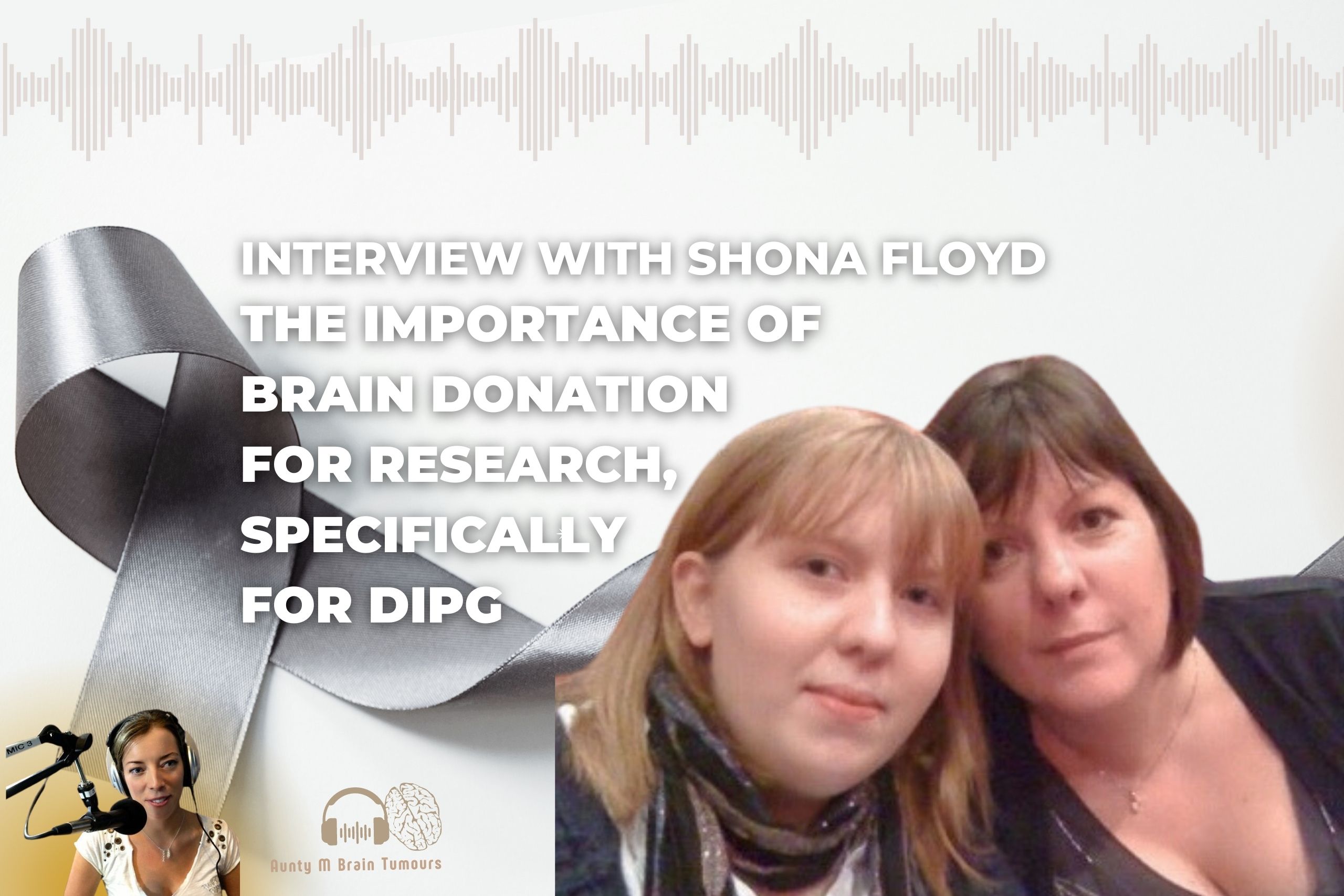

Claire Bullimore is an influential figure in the brain tumour community. She embarked on her brain tumour journey and was diagnosed with an intraventricular meningioma. In response to her experiences, Claire founded ‘Aunty M Brain Tumours,’ a platform dedicated to sharing brain tumour stories. Based in London, England, Claire also identifies as a blogger and speaker for Aunty M Brain Tumours, shedding light on the challenges faced by those diagnosed and amplifying their voices for better awareness and support. Through her dedication and advocacy, Claire’s efforts have been recognized by Brain Tumour Research and other organizations, spotlighting her commitment to making a positive difference for individuals impacted by brain tumours.