Living Beyond an Acoustic Neuroma
A Diagnosis Hidden Behind Headaches
There are moments in life that divide everything into before and after.
For Anya Jones, that moment came after seeking help for headaches she thought might be stress.
One scan changed everything.
What had seemed like an ordinary attempt to get answers became the start of a completely different reality.
By the time Anya got the call, she was no longer dealing with “just headaches”.
She was being told she had a large acoustic neuroma.
Headaches Were the Only Warning Sign
Before diagnosis, Anya’s only real symptom was headaches.
They were severe, often there when she woke up, and continued throughout the day. At first, there were many possible explanations. She tried new glasses. She came off medication that could cause rebound headaches. She was given migraine treatment. At the time, she was also working in a very stressful role across multiple time zones.
For a while, stress headaches seemed like the most likely answer.
Thankfully, her GP agreed to arrange an MRI scan just to be sure.
That decision proved crucial.
The Scan That Changed Everything
Anya remembers getting a call the day after her scan to say they had found something.
“Getting the call the very next day after my scan really stops you dead in your tracks.”
A week later, she learned it was a very large acoustic neuroma, positioned in a difficult and dangerous place near her brainstem.
She had never heard of an acoustic neuroma before. Suddenly, she was thrown into a world of scans, research, treatment decisions and fear.
Like many people diagnosed with a brain tumour, she describes it as the rug being pulled from underneath her. Everything she thought the next few years would look like suddenly changed.
At the time, her daughter was only four years old.
Watch Anya tell her story in full in the Aunty M Brain Tumours Talk Show interview below, or keep reading for the written version
Explaining a Brain Tumour to a Child
One of the hardest parts of the diagnosis was working out how to explain it to her young daughter.
“I was very scared. I had a very young child aged four at the time.”
Anya says resources from The Brain Tumour Charity were especially helpful, including videos designed to help children understand when a parent or loved one has a brain tumour.
That support gave her a way to start a conversation no parent ever expects to have.
Searching for the Right Treatment
Because of where the tumour was located, Anya wanted to be absolutely certain about the treatment plan.
She sought several opinions and carefully researched all possible options. She was understandably frightened by the idea of surgery and hoped radiotherapy might be possible instead.
But after further expert opinions, it became clear that surgery was the only realistic option.
That was a difficult moment, but it also gave her clarity.
Preparing for Brain Surgery
Anya came out of work soon after diagnosis and focused on preparing as best she could.
She spent time with her daughter, got her settled into school, and tried to build her strength ahead of surgery. Like many people facing a major operation, she did not know what recovery might look like, but she wanted to give herself the best chance possible.
When the day came, she was frightened, but she also felt informed.
A Successful Surgery Followed by Rare Complications
Anya’s surgery initially appeared to be a success.
Her tumour was fully removed, even though that had not been the original treatment plan. But afterwards, she developed a very rare and serious complication: her brain began to swell.
That swelling led to further emergency surgeries and an induced coma.
It was an extremely unusual outcome, and not something her team had expected. Her surgeon later explained that the tumour had likely been growing for many years and that her brain had adapted around it in complex ways.
When Anya woke several days later, she had no idea what had happened.
As far as she knew, she had just come round from surgery.
But in those missing days, everything had changed.
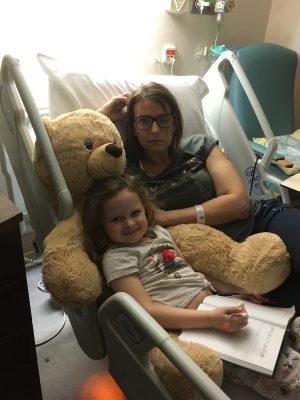
Waking Up to a Different Reality
It took time for her to understand what had happened.
It also took time to understand the effects left behind.
She woke up with weakness down one side of her body, deafness in one ear, facial paralysis, major balance problems and visual difficulties, including double vision and reduced peripheral vision.
The world she woke up to was not the one she had expected.
“My world was very, very different than when I had gone into surgery.”
Learning to Live in a Changed Body
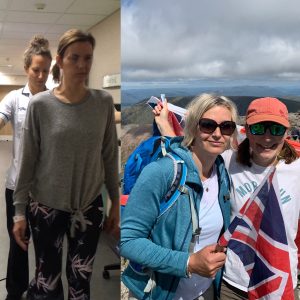
For the first few weeks, Anya was too unwell to do very much rehabilitation. Sitting up was difficult. Movement made her feel very sick. Even getting out of bed took time.
Eventually, rehabilitation began in earnest.
She worked on regaining strength in her hands and upper body. She had neurophysiotherapy to help her walk again. She also had occupational therapy focused on the practical side of daily life, from moving safely to making a cup of tea.
Later, she was transferred to a neuro rehabilitation unit, where recovery became her full-time job.
Why Vestibular Rehabilitation Made Such a Difference
One of the most important parts of Anya’s recovery was vestibular rehabilitation.
Because her tumour had affected the vestibular nerve, she was left with serious dizziness and balance problems. Vestibular therapy focuses on retraining the brain and eyes to work together again and helps the brain adapt when balance systems have been disrupted.
For Anya, this was a game changer.
Although she still lives with some balance challenges now, especially when tired or walking in the dark, she says she would not be where she is today without it.
Her story is an important reminder that specialist rehabilitation can make an enormous difference after treatment.
The Turning Point in Recovery
Anya describes a dark period in rehabilitation when she did not yet understand what had happened or what her future might look like.
But somewhere in that process, she realised
“I had nothing to lose, but everything to gain.”
Small signs of progress mattered.
A little more grip. A little more movement. A little more strength.
Those tiny changes helped build belief.
She had also learned about neuroplasticity before surgery and understood that the brain can adapt, rewire and relearn. That knowledge stayed with her and became part of how she approached rehabilitation.
Trusting Small Steps
One of the most powerful things Anya speaks about is learning to trust small steps.
Before her brain tumour, she says she believed in big action and big change. Recovery taught her something different: the power of incrementality.
Doing the exercises. Repeating the movements. Showing up again. Trusting the process.
“Trust the process. Have faith.”
That lesson now shapes how she lives.
She also speaks honestly about acceptance — not giving up on life, but learning how to do some things differently, and knowing when to keep pushing and when to be gentle with yourself.
“Every single time I did the exercise, my brain was firing and trying to make that movement.”
Life After an Acoustic Neuroma
Anya is now several years on from treatment, but like many people living beyond a brain tumour, she still lives with ongoing effects.
She still has single-sided deafness. Her balance is not perfect. Fatigue and illness can make things worse. But she is high-functioning, deeply reflective, and passionate about helping others understand that recovery is possible even when life does not go back to exactly what it was before.
She also speaks openly about the hardest part of all: the psychological journey.
Coming to terms with a new identity after a brain tumour can be harder than the physical recovery itself.
That honesty will resonate with many readers.
Finding Purpose Through The Brain Tumour Charity
In the years after her treatment, Anya became involved with The Brain Tumour Charity, first through research involvement work and later as an Involvement Champion.
Her lived experience has helped shape rehabilitation content, strategy work and quality-of-life conversations for others affected by brain tumours.
She says the work gives her purpose and helps her give something back to a community she understands deeply.
It has also connected her with other people living with and beyond brain tumours — something she says makes a huge difference, because brain tumour life can feel incredibly isolating.
“It can feel very isolating”
Important takeaway
Anya’s story is a reminder that brain tumours do not always come with obvious warning signs.
Sometimes the only symptom is a headache.
It is also a reminder that:
- Recovery can be long and deeply personal
- Rare complications do happen, but rehabilitation can still be life-changing
- Specialist therapies like vestibular rehabilitation can make a huge difference
- Small steps matter
- The psychological side of recovery deserves just as much attention as the physical side
Anya speaks warmly about the support and community she found through The Brain Tumour Charity.
She became involved more deeply with the charity in 2021 as an Involvement Champion, helping bring lived experience into strategy, rehabilitation information and quality-of-life work.
She also recommends the charity’s resources for families, especially when explaining a diagnosis to children.
If you are looking for support, rehabilitation information or ways to connect with others who understand brain tumour life, these organisations may help:
Understanding Acoustic Neuroma
An acoustic neuroma, also known as a vestibular schwannoma, is a usually non-cancerous brain tumour that grows on the nerve connecting the inner ear to the brain.
Because this nerve helps control hearing and balance, symptoms can include:
- hearing loss, often in one ear
- tinnitus
- dizziness
- balance problems
- headaches
- facial weakness or numbness in some cases
Some acoustic neuromas grow very slowly and may cause few symptoms at first. Others are only discovered once they become large enough to press on nearby structures.
As Anya’s story shows, a tumour can still become significant even when warning signs seem small.
Why Balance Problems Can Continue After Treatment
Because acoustic neuromas affect the hearing and balance nerves, some people continue to experience dizziness, imbalance or visual disorientation after treatment.
This is where vestibular rehabilitation can help.
Vestibular rehabilitation is a specialist therapy that helps the brain adapt and compensate for balance system changes. It often uses repeated eye, head and movement exercises to improve stability over time.
Progress can feel slow, but many people find it makes a real difference.
If You Have Recently Been Diagnosed With an Acoustic Neuroma
If you have landed on this page after a recent diagnosis, please know you are not alone.
Every acoustic neuroma story is different.
Some people need surgery. Others are monitored over time. Some need rehabilitation afterwards, while others recover with fewer long-term effects.
Try not to compare your journey too closely with anyone else’s.
What can help in the early days:
- write down questions for appointments
- take someone with you if you can
- ask for explanations in plain language
- seek support when you need it
- be gentle with yourself
You do not need to know everything today.
The next step is enough for now.
And you do not have to walk this road alone.
Where to Go After an Acoustic Neuroma Diagnosis?
DISCLAIMER: This information is for general awareness only and is not a substitute for advice from your own medical team. Aunty M Brain Tumours shares personal experiences and supportive information, not individual medical guidance.
View this post on Instagram

Claire Bullimore is an influential figure in the brain tumour community. She embarked on her brain tumour journey and was diagnosed with an intraventricular meningioma. In response to her experiences, Claire founded ‘Aunty M Brain Tumours,’ a platform dedicated to sharing brain tumour stories. Based in London, England, Claire also identifies as a blogger and speaker for Aunty M Brain Tumours, shedding light on the challenges faced by those diagnosed and amplifying their voices for better awareness and support. Through her dedication and advocacy, Claire’s efforts have been recognized by Brain Tumour Research and other organizations, spotlighting her commitment to making a positive difference for individuals impacted by brain tumours.