Finding Hope Acoustic Neuroma Story: Naomi Hope on Regrowth, Recovery and Finding Hope
When something small turned out to be life-changing
Naomi’s acoustic neuroma story began with symptoms that were easy to dismiss at first. There are moments in life that divide everything into before and after.
For Naomi Hope, that moment did not begin with a dramatic collapse or emergency admission.
It began with a strange feeling in her ear. A sensation like wax. Something easy to dismiss. Something that did not seem urgent.
But over time, more symptoms followed. Balance problems. Facial numbness. A feeling that something was not quite right.
And when Naomi finally got answers, life changed in an instant.
She was told she had an acoustic neuroma.
Naomi’s Story
Naomi was diagnosed with an acoustic neuroma, also known as a vestibular schwannoma, in April 2016. But she knew something wasn’t right long before that.
Looking back, she says she had first noticed something was wrong a few years earlier.
It began with that strange blocked feeling in her ear. A nurse checked it and could not see anything obviously wrong.
Then, a couple of years later, new symptoms began to appear.
Naomi started struggling with coordination and balance. She describes it as feeling drunk, even when she had not been drinking. And if she did have a glass of wine, the sensation became much worse.
At the same time, she began losing feeling down the left side of her face.
She could touch her face, but could not feel herself touching it.
Eating felt strange. Talking felt strange. Even her smile felt different.
That was what finally sent her back to her GP.
Watch Naomi tell her story in full in the Aunty M Brain Tumours Talk Show interview below, or keep reading for the written version
When You Know Something Is Not Right
At that appointment, Naomi was prescribed a type of antidepressant often used for nerve pain.
But she did not have nerve pain.
She had numbness.
She says she was not in a position to advocate for herself properly at the time, but deep down she knew the explanation did not fit.
So she did not take the medication.
Instead, she followed another instinct and asked her dentist to check whether the facial numbness could be related to her teeth.
That appointment changed everything.
Her dentist carried out a thorough examination, found no dental cause, and told her plainly that losing sensation in half of the face was not normal.
He referred her urgently to hospital.
That decision led to an MRI scan — and then to the news Naomi never expected.
The Diagnosis That Threw Everything Into Confusion
When Naomi returned for her MRI results, she was told she had an acoustic neuroma.
Thankfully, her wife was with her.
Naomi says she went completely blank.
The only thing she remembers asking was whether it was cancer.
She was told it was not cancerous, that it was benign, and that she would be referred on to a neurosurgeon.
But even then, confusion followed.
A nurse told her not to think of it as a tumour, but as “just a lump”.
Instead of reassuring her, that left Naomi feeling even more muddled.
Was it a tumour or not?
Was it a brain tumour or not?
That confusion had a lasting effect. It made her feel as though she did not really belong in the brain tumour world and was somehow not relevant to the support offered by brain tumour charities.
That misunderstanding would later become one of the things she wished she could go back and change.
Waiting for the Neurosurgeon
Naomi then faced a long two-month wait to see the neurosurgeon.
Like many people, she wanted control and wanted knowledge. So she began researching.
By the time she met the neurosurgeon in July 2016, she had started to understand more about acoustic neuroma and the possible treatment options.
She knew there were three broad possibilities:
- monitoring with scans
- stereotactic radiosurgery
- surgery
Because acoustic neuromas are usually slow growing, there was no pressure to rush into major surgery straight away.
That was a relief.
But Naomi also knew that the size of her tumour put her right on the upper edge of suitability for stereotactic radiosurgery.
Part of her simply wanted it gone.
Like many people, she says she just wanted it out of her head.
After talking through the options, her neurosurgeon felt that stereotactic radiosurgery was the right choice.
A plan was finally in place.
And having that plan helped.
Preparing for Treatment
Once Naomi knew what was happening, she found herself strangely calm.
Her work became a huge distraction. At the time, she worked in a college as a business manager and was the only person doing much of that role. So she had to prepare systems, processes and handovers for the possibility that she might be away for months.
That practical busyness helped.
So did focusing intensely on her health.
Naomi took up running, improved her diet, got fitter, and made her own wellbeing a priority.
In her own words, she became slightly obsessed with preparing herself physically.
Looking back, that gave her a sense of purpose during a period that could otherwise have felt completely unmanageable.
Stereotactic Radiosurgery and the Loss of Hearing
On the day of treatment, Naomi says she does not think she fully processed what was happening.
The last thing she remembers clearly is the mask and being told to count.
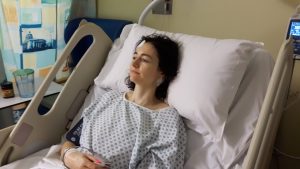
Her stereotactic radiosurgery lasted many hours.
When she came round, her wife, parents and friends were waiting.
Her wife later said she called Naomi’s name and saw her turn her head, which was the sign everyone needed that she was still there.
That moment brought huge relief.
But the hours afterwards were hard.
Naomi was very sick, struggling with vertigo, disorientation and vomiting. It was a grim first couple of days.
Then, over time, another impact became clear.
She lost the hearing on her left side.
That has been one of the hardest lasting effects of all.
For a long time, the true impact of that hearing loss was not obvious, because her world was quiet and contained while she recovered at home. But once she started re-entering everyday life, she realised just how noisy the world is and how much had changed.
Later, she was fitted with BiCROS hearing aids, which have made a real difference, especially in conversation and daily life.
When Regrowth Changed Everything Again
After treatment, Naomi had annual scans.
At first, everything looked stable.
A small remnant of the tumour remained on the facial nerve, but there was no sign of change.
Then came the scan that changed things again.
In 2021, she was told there had been regrowth.
The news came over the phone on 23 December.
It ruined Christmas.
Naomi handled the call as best she could. She had dealt with this once before and told herself she could deal with it again.
This time, she was referred to the specialist team in Sheffield for Gamma Knife treatment.
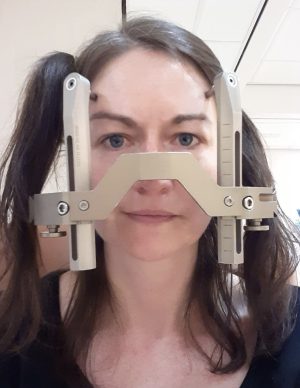
Compared with her earlier stereotactic radiosurgery, the Gamma Knife procedure itself was much easier. It was a day procedure, uncomfortable at points, but manageable. She was awake throughout, had a frame fitted, underwent treatment, then walked back to recovery for tea and biscuits.
She came home tired, but okay.
At least, that was how it seemed.
The Delayed Side Effects No One Sees Coming
A few months later, Naomi’s life changed again.
About three or four months after Gamma Knife treatment, she started falling over.
She began bumping into things and losing balance so badly that she was falling most days.
At first, she was frightened the tumour was growing again.
Instead, she later came to understand that these were delayed side effects from radiation. The swelling response was affecting the same areas again, bringing back symptoms that felt frighteningly familiar.
This became Naomi’s lowest point.
She went from feeling that treatment had gone well to suddenly finding that she was no longer okay.
A walking stick was recommended to keep her safe.
Psychologically, that was incredibly hard.
She says what made it even worse was that other people had already seen her come through treatment and appear “fine”. Then suddenly, months later, she was not fine at all.
Because the effects were invisible, they were difficult to explain.
It was not like a broken bone or a visible wound.
It was something happening inside her head, changing her balance, her confidence, her independence and her life.
Vestibular Rehab Changed Everything
Naomi was referred to physiotherapy, then occupational therapy, and then to a specialist neuro physio for vestibular rehabilitation.
That, she says, was one of the best things that ever happened.
The rehab was long and demanding, but it gave her a way forward.
At the same time, she was also struggling with fatigue in a way she had never understood before.
She says she had once assumed fatigue just meant being very tired.
But this was different.
This felt like hitting a brick wall.
Finding Brainstrust When She Needed It Most
Around six months after Gamma Knife treatment, Naomi had a follow-up call with a specialist ENT nurse.
That nurse was brilliant.
She listened to how bad things had become and pointed Naomi towards Brainstrust, especially for support with fatigue.
Naomi was sent information, including a Brainstrust booklet about fatigue, and she reached out.
That changed her life.
She joined online workshops about fatigue management and living with uncertainty. She also started coaching support through Brainstrust.
That support came at exactly the right time.
Naomi was struggling not only with her symptoms, but with her changing identity.
Her capacity to work had changed dramatically. She had already reduced her hours after her first treatment and never managed to rebuild them. After the later treatment and delayed side effects, even that reduced role became too much.
Eventually, she had to face the reality that she could no longer do the job she had once imagined retiring from.
That led to ill-health retirement in 2023.
It was a heartbreaking shift.
Losing a Career, Losing a Version of Yourself
Naomi says a huge part of her identity had been tied up in her career.
Losing that left her feeling unsteady in more ways than one.
She had shut herself away for a long time. She felt embarrassed by the walking stick, uncomfortable in her own skin, and unsure who she was without the role that had once defined so much of her life.
At the same time, she also felt trapped in conversations where the only thing people knew to ask about was the brain tumour.
Appointments. Symptoms. Exercises. Recovery.
She wanted some sort of life back.
How Volunteering and Mosaics Helped Naomi Rebuild
When Naomi began to feel strong enough to step back into the world, she started with volunteering.
She had already been involved with GoodGym, but wanted something more local and regular. She found it in a nearby nature reserve and began volunteering there with a team.
That helped her reconnect with people and with life outside illness.
Then one day, through a completely unrelated activity, she found something else.
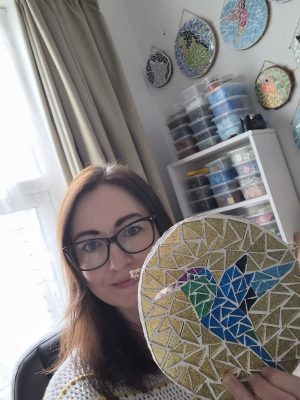
Mosaic-making.
The group took part in a workshop to help create a sign for the nature reserve, and Naomi loved it. It brought back childhood memories and gave her a sense of calm, colour and creativity that she had not felt in a long time.
She started making more mosaics with friends.
Then she remembered that Brainstrust had a community crafts section where people donate handmade items to help raise funds.
So she reached out.
The response was yes.
And that was the beginning of something new.
Hope Mosaics and a New Chapter
Naomi began sending small mosaic pieces to Brainstrust.
Then she started wondering whether this hobby could become something a little bigger — not a huge business, not pressure, but something joyful that could fund itself and also give something back.
That idea became Hope Mosaics.
She set up a small online shop, started sharing her work, and now donates 10% of sales to Brainstrust.
The rest mostly goes back into the hobby itself.
She describes it as creative therapy. Something mindful, colourful and absorbing. Something that makes her happy.
And she still finds it hard to believe that people have things she made hanging on their walls.
Naomi says she is not the same person she was before.
She does not have the same life she had before either.
But she also says she feels happier now than she expected to.
That does not erase everything she has been through.
It means she has found a new way forward.
Support That Made the Difference
When Naomi reflects on who carried her through, there are many people she wants to thank.
Her wife, Lorraine. Her family. Her friends. Her specialist nurses.
And the charities that helped her find herself again.
She speaks especially warmly about Brainstrust and her coach Jodie, who helped her through one of the hardest periods of her life. Through Brainstrust, she was also connected with another person living with a brain tumour, and that peer support grew into a genuine friendship.
More recently, Naomi has also become involved with The Brain Tumour Charity, contributing as a community voice at events focused on improving support and research for future patients.
She describes discovering this wider brain tumour community as life-changing.
She only wishes she had found it sooner.
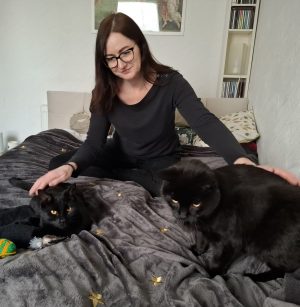
And she would also like to thank her two therapy cats, whose cuddles and purrs helped more than words can say.
Follow Naomi and Hope Mosaics
Naomi now shares her creativity through Hope Mosaics.
You can find her work at hopemosaics.com and follow her on Instagram and Facebook under Hope Mosaics.
Through her small business, she donates 10% of sales to Brainstrust.
It may be a small amount at a time, she says, but it is still money trickling in — and it comes wrapped in colour, creativity and hope.
If You Have Recently Been Diagnosed With an Acoustic Neuroma
If you have landed on this page after a recent diagnosis, please know you are not alone.
Every acoustic neuroma story is different.
Some people need surgery. Others are monitored over time. Some need rehabilitation afterwards, while others recover with fewer long-term effects.
Try not to compare your journey too closely with anyone else’s.
What can help in the early days:
- write down questions for appointments
- take someone with you if you can
- ask for explanations in plain language
- seek support when you need it
- be gentle with yourself
You do not need to know everything today.
The next step is enough for now.
And you do not have to walk this road alone.
Where to Go After an Acoustic Neuroma Diagnosis?

Claire Bullimore is an influential figure in the brain tumour community. She embarked on her brain tumour journey and was diagnosed with an intraventricular meningioma. In response to her experiences, Claire founded ‘Aunty M Brain Tumours,’ a platform dedicated to sharing brain tumour stories. Based in London, England, Claire also identifies as a blogger and speaker for Aunty M Brain Tumours, shedding light on the challenges faced by those diagnosed and amplifying their voices for better awareness and support. Through her dedication and advocacy, Claire’s efforts have been recognized by Brain Tumour Research and other organizations, spotlighting her commitment to making a positive difference for individuals impacted by brain tumours.