Diagnosed With a Brain Tumour at Just Eight Months Old
The First Sign Something Was Wrong
Amber was just eight months old when her mum, Lara, noticed something unusual with her eye.
What followed was something no parent expects.
After investigations and an MRI scan, Lara and Amber’s dad were told that doctors had found a tumour in their baby daughter’s brain.
Amber was diagnosed with a pilocytic astrocytoma.
She was only eight months old.
For Lara and her family, life suddenly became about hospitals, scans, surgery and trying to understand what was happening to their baby.
In this episode of the Aunty M Brain Tumours Talk Show, Lara talks openly about what happened next — from Amber’s first major brain operation and years of chemotherapy to travelling to America for proton beam therapy and dealing with the lasting effects of childhood brain tumour treatment.
Most importantly, Lara talks about the person behind the diagnosis: Amber.
Watch Lara tell her story in full in the Aunty M Brain Tumours Talk Show interview below, or keep reading for the written version
Brain Surgery at Eight Months Old
Soon after her diagnosis, Amber underwent major brain surgery.
For Lara, handing her baby over to the surgical team and waiting through the operation was terrifying.
Although surgery was an important part of Amber’s treatment, it was not the end of their brain tumour journey.
The tumour later showed signs of growth and Amber needed chemotherapy.
She was still incredibly young, and treatment became part of her early childhood.
Chemotherapy and More Treatment
Amber went through chemotherapy in an attempt to control the tumour.
There were periods when treatment worked well, but the family also faced the uncertainty that comes with repeated MRI scans.
For a while things could look encouraging, only for another scan to bring difficult news.
Lara talks openly in our interview about what it was like living through that cycle as a parent — treatment, scans, results and waiting to hear what would happen next.
Over the years, Amber needed further treatment as doctors worked to keep her tumour under control.
Proton Beam Therapy in America
Eventually, proton beam therapy became another part of Amber’s treatment plan.
At the time, Amber and her family had to travel from the UK to Oklahoma in America for treatment.
They spent several weeks away from home while Amber underwent proton therapy.
For a child who had already experienced surgery and chemotherapy, it was another enormous stage of treatment — and another huge adjustment for the whole family.
Today, NHS high-energy proton beam therapy is available at specialist centres in Manchester and London, but when Amber needed treatment, travelling overseas was part of the family’s experience.
An Emergency After Treatment
Amber’s journey did not end when proton therapy finished.
After returning home, she became unwell and doctors discovered she had developed hydrocephalus, a build-up of fluid in and around the brain.
She needed urgent surgery.
It was another frightening moment for Lara and her family after everything Amber had already been through.
Amber once again recovered, but the years of treatment had an impact that would continue long after the hospital appointments became less frequent.
Growing Up After a Childhood Brain Tumour
One of the most important parts of Lara’s interview is what happened after treatment.
It is easy to think that once treatment finishes or a tumour becomes stable, the story is over.
For many children affected by brain tumours, it isn’t.
As Amber grew older, Lara and the family began dealing with some of the longer-term effects of her tumour and treatment.
In our conversation, Lara talks about areas including memory, education, hormones, vision and emotional wellbeing.
These effects became part of Amber’s life as she grew from a baby into a child and then a teenager.
And support needs can change as children get older.
Amber Today
Amber is now 16 years old.
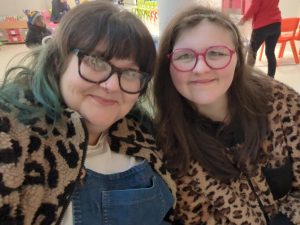
Looking at the photograph of Lara and Amber today alongside the photograph of Amber as a baby really brings home just how much life has happened since that first diagnosis.
Amber has grown up with a brain tumour forming part of her story, but her diagnosis is not everything about who she is.
Lara’s interview also highlights something that is sometimes forgotten when we talk about childhood brain tumours.
Getting through treatment is incredibly important.
But families may still be dealing with the consequences many years later.
About Amber’s Tumour: Pilocytic Astrocytoma
A pilocytic astrocytoma is a type of glioma that most commonly occurs in children and young people.
It is generally considered a slow-growing, low-grade brain tumour.
However, the impact of a pilocytic astrocytoma can vary considerably depending on where it is growing in the brain, the child’s age, whether the tumour can safely be removed and whether it continues to grow.
Treatment may include surgery, chemotherapy or radiotherapy.
For Amber, treatment included:
- Brain surgery
- Chemotherapy
- Further surgery
- Proton beam therapy
- Emergency treatment for hydrocephalus
- Long-term monitoring
The term low grade should not be confused with “not serious”. Even a slow-growing brain tumour can have a major effect depending on its location and the treatment required.
Support for Families Affected by Childhood Brain Tumours
If your child has been diagnosed with a brain tumour, you do not have to navigate everything alone.
The Brain Tumour Charity
The Brain Tumour Charity provides information and support for children, young people and families affected by brain tumours.
Young Lives vs Cancer
Young Lives vs Cancer supports children and young people with cancer and their families with practical, emotional and financial help.
NHS Proton Beam Therapy
Information is available through the NHS about proton beam therapy and the specialist proton treatment centres in England.

Claire Bullimore is an influential figure in the brain tumour community. She embarked on her brain tumour journey and was diagnosed with an intraventricular meningioma. In response to her experiences, Claire founded ‘Aunty M Brain Tumours,’ a platform dedicated to sharing brain tumour stories. Based in London, England, Claire also identifies as a blogger and speaker for Aunty M Brain Tumours, shedding light on the challenges faced by those diagnosed and amplifying their voices for better awareness and support. Through her dedication and advocacy, Claire’s efforts have been recognized by Brain Tumour Research and other organizations, spotlighting her commitment to making a positive difference for individuals impacted by brain tumours.