“I named my tumour Ruby”
Meningioma Story: Christy’s Brain Tumour Journey:
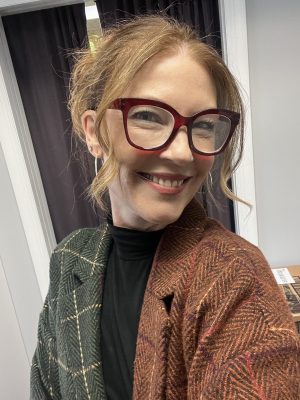
When Christy Karach received an alert that her MRI results were available online, she had no idea her life was about to change.
It was 2021, in the middle of the pandemic. Like so many people, Christy was struggling under the weight of uncertainty. As a mother, wife, and owner of a successful eyebrow studio, she was trying to navigate business closures, family responsibilities, and the emotional toll of a world turned upside down.
What she didn’t expect was that a routine MRI—ordered as a last resort after months of unexplained body tingling—would reveal a brain tumour.
A Diagnosis She Never Saw Coming
Brain tumours were never on Christy’s radar.
After numerous tests failed to explain her symptoms, her neurologist suggested an MRI “just to rule things out.” The scan revealed a meningioma, a typically benign and slow-growing brain tumour.
Unfortunately, Christy discovered the news alone.
Before speaking with her doctor, she opened her medical portal and saw the words “mass” and “meningioma.” Instantly, her mind raced to the worst possible conclusion.
“I immediately gave myself brain cancer,” she recalls.
Fortunately, her doctor called within minutes and reassured her that her tumour was not cancerous and that many people live their entire lives with meningiomas without needing treatment.
Relieved, Christy decided to make peace with her unexpected companion.
She even gave it a name.
“Ruby.”
Watch Christy tell her story in full in the Aunty M Brain Tumours Talk Show interview below, or keep reading for the written version
Learning to Live with Ruby
At first, Christy believed she and Ruby would simply coexist.
Regular scans would monitor the tumour, and life would continue as normal.
But at her follow-up MRI, everything changed.
The tumour had grown significantly—far faster than expected. What had once been roughly the size of a chickpea had grown closer to the size of a walnut.
Doctors became increasingly concerned because of its location. If it continued growing, it could eventually affect the area of her brain responsible for movement on the left side of her body.
The news forced Christy into a difficult reality.
She felt perfectly healthy.
She wasn’t sick.
She had no symptoms.
Yet she was being asked to consider major treatment options.
Making the Biggest Decision of Her Life
Christy explored every option available.
She sought multiple medical opinions and carefully considered monitoring the tumour, radiation treatment through Gamma Knife surgery, and ultimately, a craniotomy.
The thought of brain surgery felt surreal.
“How is this even part of my reality?” she remembers thinking.
The emotional burden was immense. There were moments of disbelief, fear, and frustration. How could she need brain surgery when she felt completely fine?
As someone who relies heavily on her hands for her work and leads an active lifestyle, the possibility of losing mobility wasn’t something she could ignore.
Eventually, after consulting several specialists and finding a surgeon she trusted completely, Christy made her decision.
She would have the tumour removed.
Walking out of that final consultation, reality hit hard.
She collapsed into her husband’s arms and cried.
“Am I having brain surgery? What the hell is this?”
Telling Her Family
One of the hardest parts of the journey was sharing the news with her children.
For two years, Christy had carried the diagnosis privately while she gathered information and made decisions. She wanted to protect her family until she knew what path she would take.
When the time finally came, she called a family meeting.
She carefully explained her diagnosis and the treatment options. Then she asked what they thought she should do.
Before she could even finish her sentence, both of her children answered:
“Take it out.”
In that moment, she knew they were all aligned.
The decision had been made.
The Night Before Surgery
As surgery approached, Christy focused on preparing her business, her clients, and her family.
But the night before the operation brought a flood of emotions.
After returning home from a special outing with her sister, she gathered her family together and asked for one final family hug.
Not because she expected something to go wrong.
But because brain surgery forces you to confront possibilities most people never have to consider.
“I might not hug them again. I might not smell them again.”
The family embraced, cried together, and said goodnight.
The next morning, she kissed her husband goodbye as she was wheeled into surgery.
 |
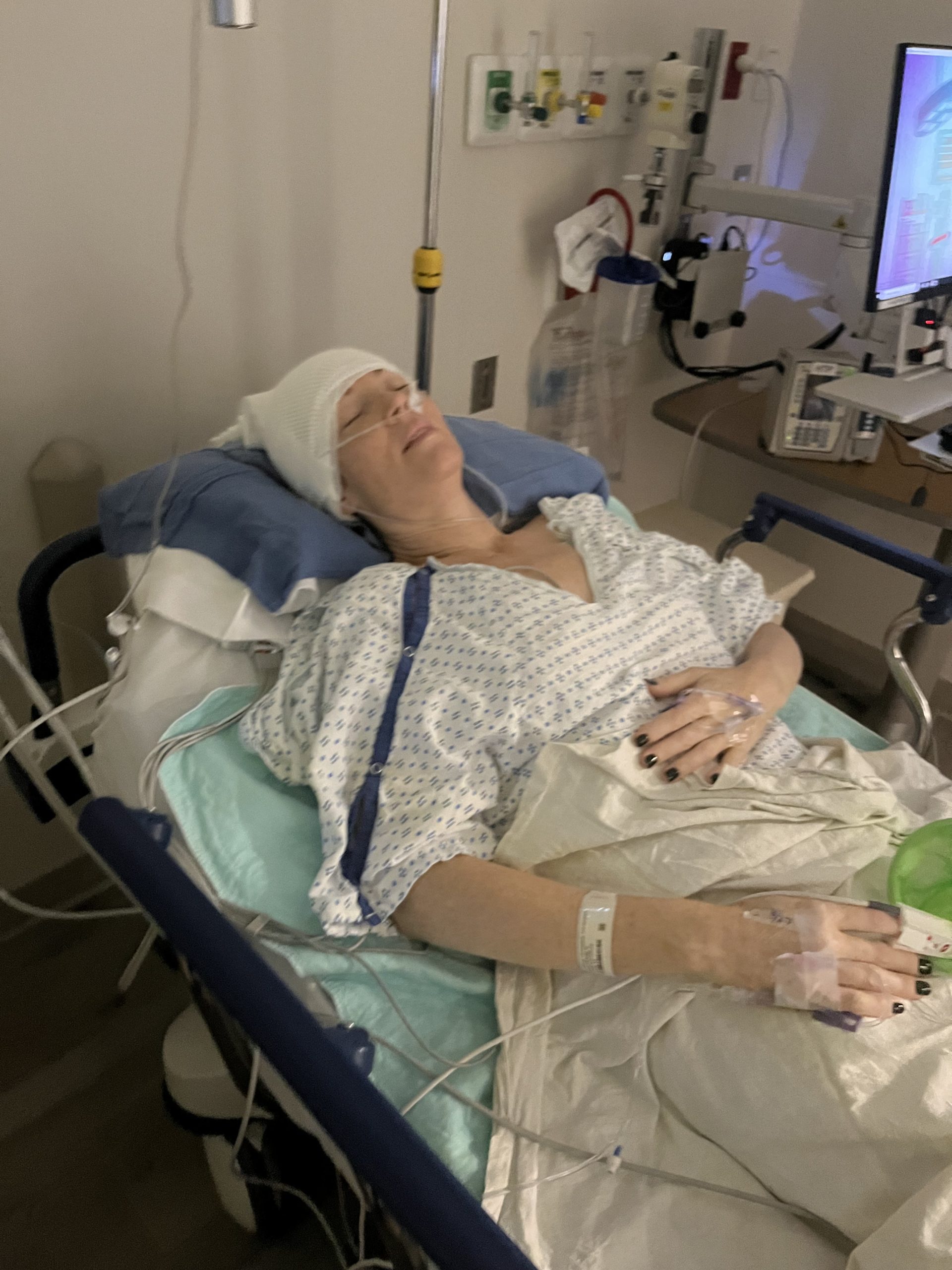 |
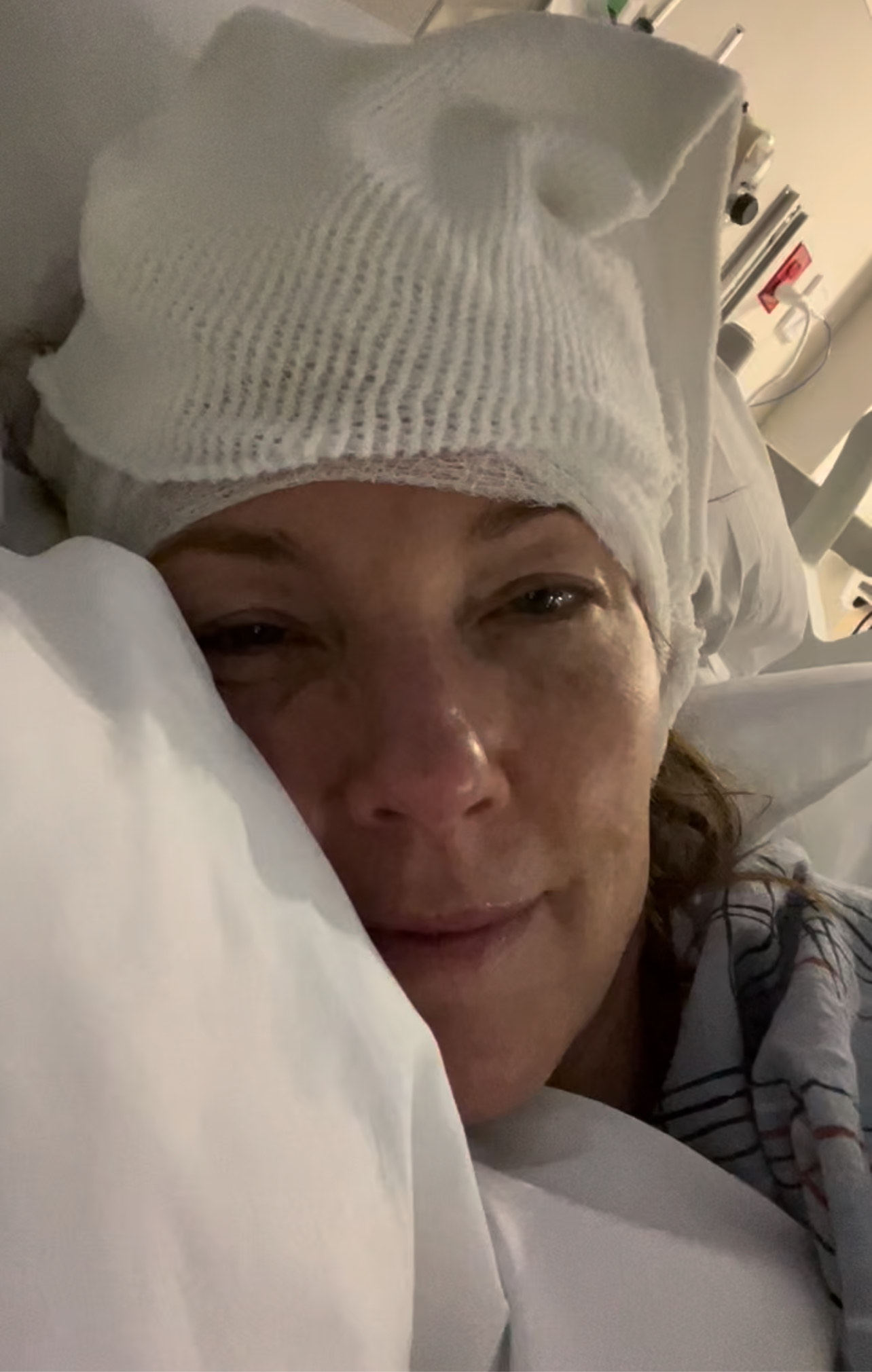
Waking Up
When Christy opened her eyes after surgery, her husband was there.
“You did it, baby. You did it.”
Her first thought?
“I didn’t die.”
The surgery was successful. Surgeons removed almost all of the tumour, leaving only a tiny section attached to a vein that continues to be monitored through follow-up scans.
Two days later, she was discharged home.
But as she would soon discover, the hardest part of her journey was only just beginning.
The Recovery Nobody Prepared Her For
Christy believes there is a major gap in conversations around brain tumour recovery.
While doctors thoroughly explain surgery, many patients aren’t prepared for what happens afterward.
The emotional and cognitive effects caught her completely off guard.
The steroids she was prescribed dramatically affected her mood.
Normally calm and easygoing, she found herself overwhelmed by anger, sadness, and emotional volatility.
“I felt possessed by the steroid.”
Reading became impossible.
Speech became difficult.
Words disappeared mid-sentence.
Simple tasks felt overwhelming.
At one point, she couldn’t remember the next step in her own eyebrow treatment process despite years of experience.
There were moments of despair.
Moments when she questioned whether she’d made the right decision.
Moments when she felt completely alone.
Learning to Receive Love
One of Christy’s biggest challenges wasn’t physical.
It was accepting help.
As a mother, business owner, and caregiver, she had spent most of her life taking care of everyone else.
Now she had no choice but to let others take care of her.
Her husband became her constant companion.
Her son stepped in to help with everyday tasks.
Her daughter checked in regularly from university.
Her parents provided comfort she hadn’t realised she still needed.
For perhaps the first time in her life, Christy found herself on the receiving end of extraordinary love.
“It was the most profound love I’ve ever experienced.”
The experience taught her an important lesson:
Allowing people to help isn’t weakness.
It’s a gift—for both the person receiving and the person giving.
Finding Purpose Through Sharing
As she recovered, Christy began documenting her experience online through her Instagram page, Life With Christy K.
What started as a personal outlet quickly became something much bigger.
She shared the realities that no one had warned her about:
- The emotional rollercoaster of recovery
- Cognitive challenges after surgery
- Difficulty reading and concentrating
- Dependence on others
- Physical rehabilitation
- Loneliness despite being surrounded by support
The response was immediate.
Other brain tumour survivors began reaching out.
People recognised themselves in her story.
And Christy realised she had found a community.
Advice for Others Facing a Brain Tumour
Today, Christy encourages anyone facing a similar diagnosis to remember one thing:
You are not alone.
She recommends seeking support, whether through therapists, support groups, online communities, or trusted loved ones.
At the same time, she cautions against becoming consumed by worst-case scenarios online.
Support groups can be incredibly valuable, but they can also become overwhelming if you’re constantly exposed to fear and uncertainty.
Most importantly, she encourages people to honour their own healing journey.
Recovery isn’t a race.
Everyone heals differently.
“Listen to your body. Your timeline is your timeline.”
She also encourages patients to document their experiences, whether through writing, journaling, or sharing online.
Not only can it help process emotions, but it may also become a source of hope and guidance for someone else in the future.
A Life Forever Changed
Looking back, Christy describes her experience as transformational.
Not because she would ever choose to go through it again.
But because it taught her lessons about vulnerability, love, resilience, and human connection that she might never have learned otherwise.
Her journey began with a frightening diagnosis and an unexpected visitor named Ruby.
Today, it continues as a story of survival, healing, and hope—one she shares openly so that others facing brain tumours know they don’t have to walk the path alone.

Claire Bullimore is an influential figure in the brain tumour community. She embarked on her brain tumour journey and was diagnosed with an intraventricular meningioma. In response to her experiences, Claire founded ‘Aunty M Brain Tumours,’ a platform dedicated to sharing brain tumour stories. Based in London, England, Claire also identifies as a blogger and speaker for Aunty M Brain Tumours, shedding light on the challenges faced by those diagnosed and amplifying their voices for better awareness and support. Through her dedication and advocacy, Claire’s efforts have been recognized by Brain Tumour Research and other organizations, spotlighting her commitment to making a positive difference for individuals impacted by brain tumours.