 Living With Glioblastoma
Elizabeth’s glioblastoma survivor story began in June 2020 with a sudden headache that quickly became a medical emergency. More than five years later, she is still here—living fully and proving statistics do not define people.
When a headache became something far more serious
In June 2020, Elizabeth woke in the night with a sudden, sharp pain in her head.
The next morning, she contacted her GP immediately. Concerned by what she described, her doctor advised her to go straight to A&E.
At hospital, she was assessed, given anti-sickness medication, and reassured that because of her age—just 35 at the time—it was unlikely to be anything serious.
But Elizabeth knew something was wrong.
The pain became constant. Paracetamol did nothing. She began vomiting and could no longer eat.
When symptoms worsened, she contacted her GP again.
That second call may have saved her life.
Collapsing in A&E
Her GP arranged a referral so A&E would see her urgently.
Elizabeth’s mother drove her straight back to hospital. Because it was during the COVID pandemic, she had to wait outside.
Inside the hospital, Elizabeth collapsed.
She later woke in a hospital bed wearing a gown, having undergone an MRI while unconscious.
That scan revealed a mass on her brain.
A consultant told her the news the following day.
She was alone.
“I didn’t have anybody with me… it was terrifying.”
Doctors later discovered that the headaches she had experienced for eight days were caused by an ongoing brain haemorrhage.
Watch Elisabeth tell her story in full in the Aunty M Brain Tumours Talk Show interview below, or keep reading for the written version
“I’m Still Here”: Elizabeth’s Glioblastoma Story, Defying Expectations and Living Fully
When a headache became a glioblastoma diagnosis
In June 2020, Elizabeth woke in the night with a sudden, sharp pain in her head.
The next morning, she contacted her GP immediately. Concerned by what she described, her doctor advised her to go straight to A&E.
At hospital, she was assessed, given anti-sickness medication, and reassured that because of her age—just 35 at the time—it was unlikely to be anything serious.
But Elizabeth knew something was wrong.
The pain became constant. Paracetamol did nothing. She began vomiting and could no longer eat.
When symptoms worsened, she contacted her GP again. Her doctor arranged an urgent referral back to hospital.
That second call may have saved her life.
Elizabeth’s mother drove her to A&E. Because it was during the COVID pandemic, she had to wait outside.
Inside the hospital, Elizabeth collapsed.
She later woke in a hospital bed wearing a gown, having undergone an MRI while unconscious. The scan revealed a mass on her brain.
A consultant delivered the news the following day.
She was alone.
“It was terrifying.”
Doctors later discovered that the headaches she had endured for eight days were caused by an ongoing brain haemorrhage.
Understanding glioblastoma symptoms and treatment
Glioblastoma, often shortened to GBM, is a fast-growing type of brain tumour.
Common symptoms can include:
- Persistent headaches
- Nausea and vomiting
- Seizures
- Weakness on one side of the body
- Changes in speech or memory
- Personality or behavioural changes
Treatment often includes:
- Surgery
- Radiotherapy
- Chemotherapy
- Steroids to reduce swelling
- Regular MRI monitoring
Every glioblastoma journey is different. Statistics may give averages, but they do not define individuals.
Elizabeth’s story is proof of that.
The surgery doctors thought was impossible
Elizabeth was transferred to King’s College Hospital, where specialists took over her care.
She was first booked for a biopsy, but the procedure had to be stopped due to bleeding. That immediately raised concerns about cancer.
Within 72 hours, she was called back for a craniotomy.
Until that point, she had repeatedly been told the tumour was inoperable.
But her surgeon believed it was worth trying.
He removed 96% of the tumour.
“It’s thanks to my surgeon… everyone had said it was inoperable.”
Sometimes, one person willing to take a chance can change everything.
Living with glioblastoma after treatment
After surgery, Elizabeth was left paralysed down her left-hand side.
She had to relearn how to walk and how to use her arm. Going from fully independent to needing help with basic daily tasks was one of the hardest parts of her journey.
“It was slightly soul destroying, if I’m honest.”
She then underwent six weeks of radiotherapy alongside daily TMZ chemotherapy.
The treatment was exhausting.
At the same time, she was raising two young children. She was in hospital when her youngest turned one, although staff allowed her home for a day so she could celebrate with family.
When follow-up scans showed the tumour had returned and was growing quickly, Elizabeth faced another huge decision.
She agreed to a second craniotomy.
After that, she began a different chemotherapy treatment for around a year.
Later, when the tumour returned again, she underwent a third craniotomy followed by further radiotherapy.
Despite repeated setbacks, she continued to keep moving forward.
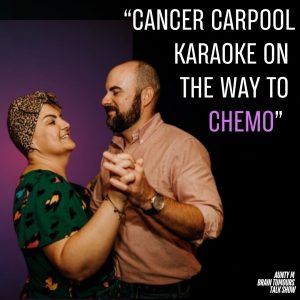
Finding joy through Cancer Carpool Karaoke
During later radiotherapy appointments, Elizabeth decided to make treatment days memorable.
Instead of asking her husband to travel with her every day, she invited friends to join her on different hospital trips.
Each person chose a song.
Together, they sang in the back of the Uber on the way to treatment.
She called it:
Cancer Carpool Karaoke
The videos brought laughter not only to Elizabeth and her friends, but to many others online too.
Humour became part of healing.
How Elizabeth became a long-term glioblastoma survivor
Elizabeth says the diagnosis changed her family’s outlook on life.
Rather than saying no to things, they began finding ways to say yes.
They booked events, made memories, and planned things to look forward to.
“I call them my glimmers.”
Those glimmers—concerts, gigs, family days out, future plans—became reasons to keep going.
Now more than five years on from diagnosis, Elizabeth continues to defy expectations.
Her most recent scan was stable.
“I accepted the diagnosis, but there is no way on this earth I’m going to accept the prognosis.”
She is still here.
Still living.
Still proving that statistics do not tell every story.
Support, hospice care and community
Elizabeth also speaks passionately about the support of St Christopher’s Hospice.
Like many people, she once associated hospice care only with end of life. Instead, she found practical help, therapies, emotional support, and a calm place for her whole family.
They offered:
- Family support
- Reflexology
- Acupuncture
- Day services
- Reassurance and guidance
“It doesn’t have to be associated with death all the time.”
She now encourages others to seek support sooner and understand what hospices can truly offer.

Music, fundraising and purpose
A classically trained musician, Elizabeth organised a fundraising concert after diagnosis, believing it might be the last chance to perform with friends.
Instead, it became an annual tradition.
Each Christmas, friends reunite to perform and raise money for charity.
Last year alone, they raised around £5,000 for hospice care.
What began as one concert became something much bigger: hope, connection, and purpose.
What Elizabeth’s story can teach others
Elizabeth’s journey is about:
- Trusting yourself when symptoms feel serious
- Speaking up and advocating for urgent care
- Getting expert opinions
- Finding joy during treatment
- Accepting diagnosis without surrendering hope
- Letting others help you
- Living fully in the present
Her story is not only about surviving glioblastoma.
It is about truly living.
💬 At a glance
Diagnosis: Glioblastoma (2020)
Treatment: Multiple craniotomies, radiotherapy, chemotherapy
Current status: Stable scans more than five years later
Focus now: Family life, advocacy, fundraising, hope
Frequently Asked Questions About Glioblastoma
Can someone survive glioblastoma for five years?
Yes. While glioblastoma can be aggressive, some people live significantly longer than expected. Every case is individual.
What treatment is used for glioblastoma?
Treatment often includes surgery, radiotherapy, chemotherapy, and regular monitoring scans.
Can you still enjoy life after a glioblastoma diagnosis?
Yes. Many people continue to create meaningful memories, travel, work, parent, and find joy after diagnosis.

Claire Bullimore is an influential figure in the brain tumour community. She embarked on her brain tumour journey and was diagnosed with an intraventricular meningioma. In response to her experiences, Claire founded ‘Aunty M Brain Tumours,’ a platform dedicated to sharing brain tumour stories. Based in London, England, Claire also identifies as a blogger and speaker for Aunty M Brain Tumours, shedding light on the challenges faced by those diagnosed and amplifying their voices for better awareness and support. Through her dedication and advocacy, Claire’s efforts have been recognized by Brain Tumour Research and other organizations, spotlighting her commitment to making a positive difference for individuals impacted by brain tumours.