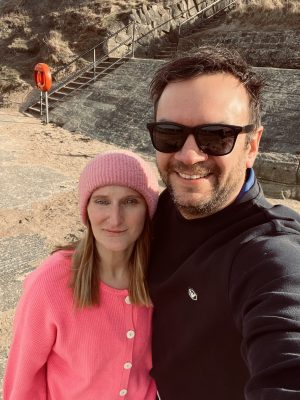
Laura’s Acoustic Neuroma Story: “They Didn’t Think I’d Survive”
Acoustic neuroma symptoms can be easy to dismiss at first. Laura knows that better than most.
“They didn’t think I was going to survive… but I’m living proof that sometimes they do get it wrong.”
When Laura first noticed something was changing, it did not feel dramatic enough to be serious. There were subtle shifts in her hearing. Moments of imbalance. A strange sense that her body was no longer behaving quite as it should.
Like many people, she tried to carry on.
Life was busy. Responsibilities still existed. There was always something else to focus on, and the symptoms were easy to explain away as tiredness, stress or one of those temporary health niggles that would eventually disappear.
But they didn’t disappear.
What followed was a diagnosis that would divide life into before and after: vestibular schwannoma, also known as an acoustic neuroma.
For Laura, it was the start of brain surgery, serious complications, rehabilitation and a recovery journey that demanded more strength than she ever imagined she had.
Today, her story offers hope to anyone facing an acoustic neuroma diagnosis or wondering what life after vestibular schwannoma surgery can really look like.
Watch Laura tell her story in full in the Aunty M Brain Tumours Talk Show interview below, or keep reading for the written version
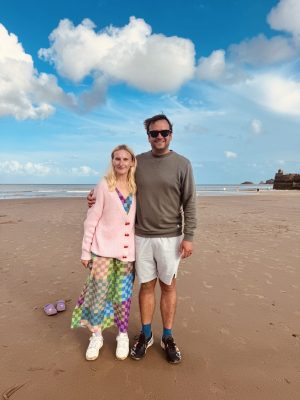
The Early Acoustic Neuroma Symptoms Laura Nearly Ignored
One of the most difficult things about acoustic neuroma symptoms is that they often begin gradually.
Laura did not wake up one day dramatically unwell. Instead, the warning signs arrived quietly.
Her hearing was changing. Balance felt unreliable. Fatigue became harder to shake off. There was a growing sense that something was wrong, even if it was difficult to explain exactly what.
That slow build can be dangerous because symptoms are easy to normalise.
Many people delay seeking help because they assume they are run down, stressed or simply getting older. Laura understands that instinct completely.
She tried to push through.
Eventually, however, the symptoms became impossible to ignore. Medical appointments led to scans, and scans led to the words no one expects to hear.
You have a tumour.
What Is an Acoustic Neuroma?
An acoustic neuroma, also called a vestibular schwannoma, is usually a benign (non-cancerous) tumour that develops on the vestibulocochlear nerve — the nerve responsible for hearing and balance.
Although benign, it can still cause serious symptoms because of where it grows.
As the tumour enlarges, it may affect hearing, balance, facial nerves and surrounding brain structures.
For Laura, the word benign did little to soften the reality.
A tumour is still a tumour. And hearing that one is growing inside your head changes everything.
Hearing the Diagnosis
Nothing truly prepares you for hearing the word tumour.
Laura remembers the shock of the moment. Even with doctors explaining that it was non-cancerous, fear arrived instantly.
Suddenly, life was no longer ordinary.
There were hospital letters, consultations, risks to consider and decisions to make. Conversations with loved ones became emotional and surreal.
Questions flooded in:
- Would surgery work?
- Would she lose hearing?
- Would she have facial paralysis?
- Would she survive?
- Would life ever feel normal again?
These are the thoughts many patients carry privately after diagnosis.
To everyone else, appointments are dates in a diary.
To the person living it, every appointment can feel like standing at the edge of the unknown.
Preparing for Vestibular Schwannoma Surgery
When surgery became the recommended option, Laura entered a world she had never imagined needing to understand.
She learned that vestibular schwannoma surgery is highly specialised. The tumour sits close to delicate nerves controlling hearing, facial movement and balance.
Even when surgery is clearly the right decision, agreeing to brain surgery is emotionally enormous.
There were forms to sign. Risks to hear. Practical plans to make.
And then there was the waiting.
Waiting for surgery can be one of the hardest parts of the process. Life feels paused while anxiety grows louder.
Friends and family often try to stay positive, but fear sits quietly underneath everything.
Laura knew she had to be brave.
But bravery rarely looks glamorous. Often it looks like showing up while terrified.
“They Didn’t Think I’d Survive”
Laura underwent surgery to remove the tumour.
For the people who loved her, it was a long and frightening wait. For Laura, memories of that time are blurred by anaesthetic, pain relief and the fog that can follow major surgery.
What she does know is this:
“They didn’t think I was going to survive.”
Those words tell their own story about how serious things became.
And yet Laura is here today.
That fact alone gives power to every sentence that follows.
Because sometimes statistics, predictions and expectations do not get the final word.
Sometimes people do.
Waking Up to a New Reality
Many people imagine recovery begins once surgery is over.
In truth, recovery often starts at the exact moment patients realise how much has changed.
For Laura, the early days after surgery were incredibly hard.
There was exhaustion unlike anything she had known before. Sitting up could feel monumental. Standing took effort. Concentrating on conversations was draining. Walking a few steps could require determination and support.
Balance problems were one of the biggest challenges.
Because the vestibular nerve helps the brain understand movement and position, surgery in this area can leave patients dizzy, unsteady or disoriented while the brain learns to compensate.
Fatigue became another constant companion.
This is something many people underestimate about acoustic neuroma surgery recovery. Healing is not only about scars or stitches. It can be neurological, physical and emotional all at once.
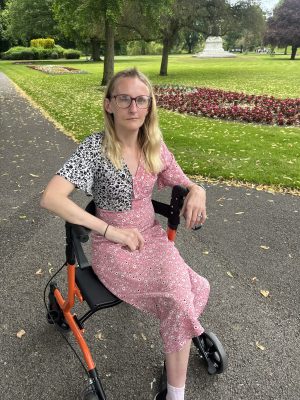
Learning to Walk Again
Recovery milestones that once seemed tiny became huge victories.
Standing independently.
Walking a little further.
Managing stairs.
Leaving the house.
Feeling less frightened by movement.
For people who have never experienced rehabilitation, these moments can sound ordinary.
For someone rebuilding after brain surgery, they are anything but ordinary.
Laura had to learn patience in a way most people never do.
Healing was not linear.
Some days brought progress. Others felt like setbacks. Improvement could be frustratingly slow.
But slowly is still progress.
That truth carried her forward.
The Emotional Side of Recovery Nobody Talks About
What surprised Laura most was not only the physical challenge, but the emotional aftermath.
There can be grief after survival.
Grief for the life you had before.
Grief for the body that once felt effortless.
Grief for the confidence that disappeared overnight.
There were difficult days. Tears. Frustration. Isolation.
There were also moments when others assumed she was “better” because she looked well, while inside she was still managing fatigue, overwhelm and the invisible work of recovery.
This is common after brain tumour treatment.
Symptoms such as dizziness, hearing loss, anxiety, cognitive fatigue and sensory overload are often unseen by others.
Laura learned something vital during this time:
To be kinder to herself.
To stop measuring progress by perfection.
To accept help when needed.
To rest without guilt.
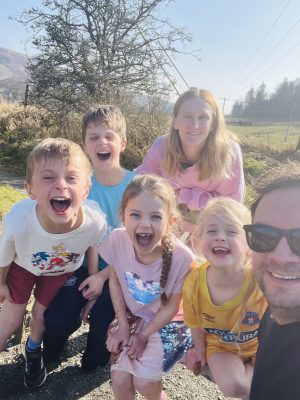
Life After Acoustic Neuroma Surgery
Over time, Laura began to trust herself again.
Walking became easier. Confidence returned. Daily life slowly expanded.
Recovery did not mean returning to exactly who she had been before.
Instead, it meant becoming someone shaped by resilience, perspective and gratitude.
People who survive serious illness often speak about ordinary life differently afterwards.
Laura understands how precious ordinary moments really are now:
A steady walk.
A calm morning.
Time with family.
Laughter that comes naturally.
The gift of feeling well enough to plan ahead.
These things can seem small until you nearly lose them.
Laura’s Advice for Anyone Newly Diagnosed
If Laura could speak directly to someone facing a new acoustic neuroma diagnosis, she would want them to know this:
You are allowed to be frightened.
You are allowed to grieve.
You are allowed to recover slowly.
There is no perfect way to go through surgery or rehabilitation.
Ask questions. Accept support. Celebrate small wins. Do not compare your recovery with anyone else’s.
And remember that doctors can estimate outcomes — but they cannot measure human determination.
Laura is living proof of that.
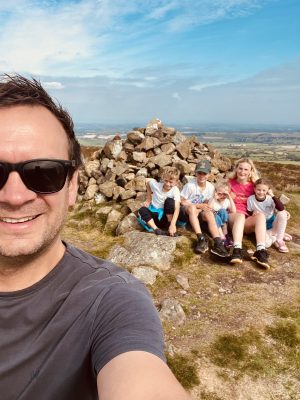
Acoustic Neuroma Symptoms, Treatment and Recovery: Quick Facts
Common Acoustic Neuroma Symptoms
- Hearing loss (often one-sided)
- Tinnitus (ringing in the ear)
- Dizziness or imbalance
- Facial numbness or tingling
- Headaches
- Pressure sensations
- Fatigue
Treatment Options
Depending on tumour size, growth and symptoms, treatment may include:
- Monitoring with regular MRI scans
- Radiosurgery
- Microsurgical removal
Acoustic Neuroma Surgery Recovery Time
Recovery time varies widely.
Some people improve steadily over weeks. Others need many months of rehabilitation for balance, fatigue or neurological symptoms.
There is no single timeline.
Final Thought
Laura’s story is not simply about a benign tumour.
It is about courage when life becomes uncertain.
It is about rebuilding when everything feels shaken.
It is about discovering that strength is often quieter than we imagine.
And it is a reminder that even after fear, even after surgery, even after being told the worst — life can still move forward.
Where to Go After an Acoustic Neuroma Diagnosis?
DISCLAIMER: This information is for general awareness only and is not a substitute for advice from your own medical team. Aunty M Brain Tumours shares personal experiences and supportive information, not individual medical guidance.
View this post on Instagram