
“The most awful thing that’s happened to me has also, in a strange way, become one of the best things that’s happened to me.”
Lauren Papadopoulos Green was just 18 when she underwent life-saving brain surgery following a schwannoma diagnosis. After ten years of reassuring MRI scans, she received the news she never expected: her tumour had returned. In this personal schwannoma story, Lauren shares her first symptoms, surgery, recovery, and the emotional challenges of living with a recurring brain tumour.
“I threw food all over my brother,” Lauren laughs as she recalls the first sign that something wasn’t quite right. What appeared to be an awkward moment caused by an unexpected arm spasm would eventually lead to a life-changing diagnosis.
Today, Lauren uses her TikTok and Instagram platforms to share her Schwannoma journey, support others facing similar challenges, and raise awareness of the realities of living with a recurring brain tumour. But getting to this point has been anything but easy.
Lauren’s First Schwannoma Symptoms and Diagnosis
Back in 2012, Lauren began experiencing unexplained spasms in her arms and legs. At first, she and her family brushed them off as strange but harmless. Like most teenagers, she never imagined anything serious could be wrong.
Then, just days after her 18th birthday, everything changed.
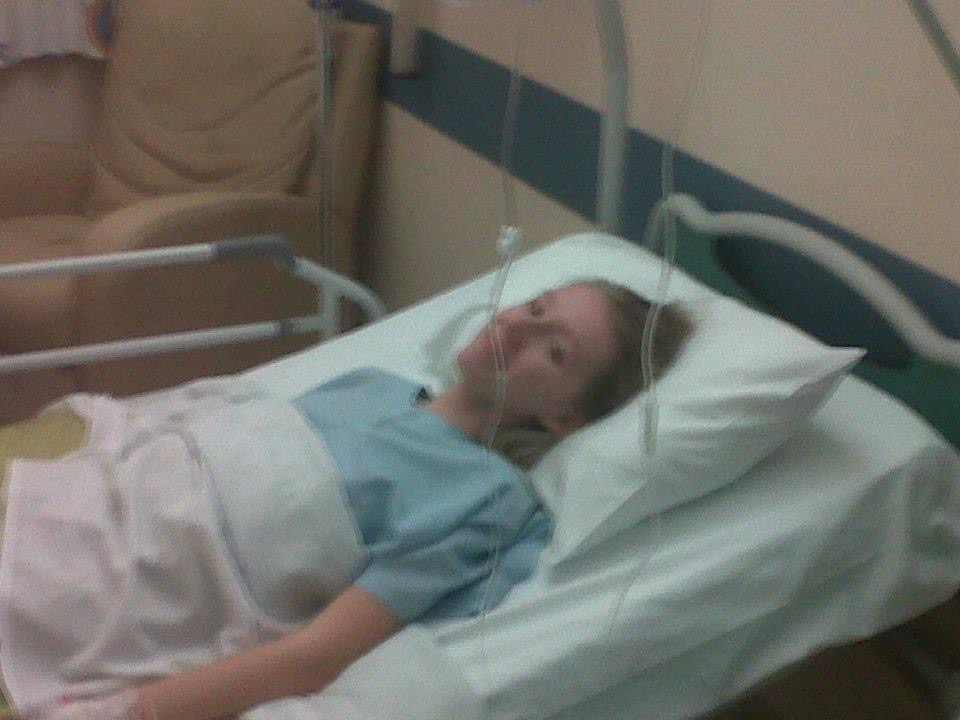
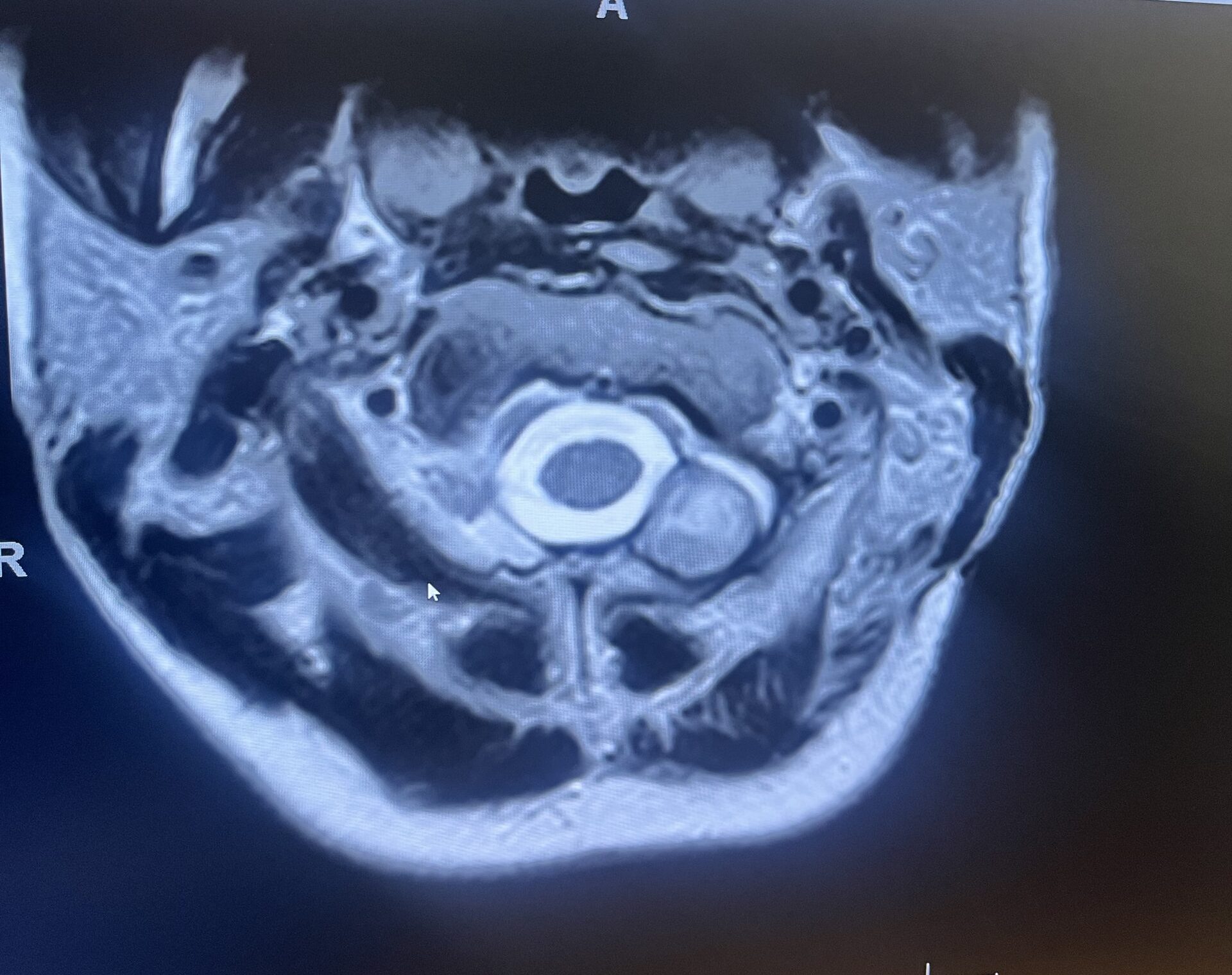
Her arm suddenly went numb and she lost the ability to move it completely. After an urgent MRI scan, doctors delivered devastating news: Lauren had a brain tumour.
“It went from throwing food over my brother at dinner to being told I had a tumour and a five per cent chance of surviving,” she recalls.
Living in Cyprus at the time, Lauren was initially admitted to hospital locally, but her family quickly realised she needed specialist treatment. She was flown to England, where surgeons prepared for an operation that doctors warned carried enormous risks.
Her condition deteriorated rapidly. She lost the ability to walk independently, suffered severe headaches, lost weight, and became increasingly unwell.
“My dad was carrying me everywhere,” she says. “One minute I was a normal teenager and the next I was on death’s door.”
Brain Surgery for Lauren’s Schwannoma
Despite the frightening prognosis, Lauren’s surgery went remarkably well.
In fact, the operation was so successful and completed so quickly that her parents initially thought the surgeons hadn’t performed the procedure at all.
Even more astonishing was her recovery.
Before surgery, Lauren had struggled to move. Afterwards, she was waving at her family as she was wheeled out of intensive care.
“I had to learn to walk again and use my hands properly again,” she explains. “But my recovery was incredibly smooth. No one really understood how it happened.”
At the time, Lauren didn’t see herself as brave.
“People would always say, ‘You’re so brave,’ but I didn’t feel brave. I felt like the surgeons did all the hard work.”
Looking back now, she recognises just how much she endured as a teenager facing a diagnosis most adults would struggle to comprehend.
 |
 |
Watch Lauren tell her story in full in the Aunty M Brain Tumours Talk Show interview below, or keep reading for the written version
Life After Schwannoma Surgery
Following her surgery, Lauren entered a routine of regular MRI scans.
Each year brought reassuring news. The scans remained clear. Appointments became less frequent. Life moved forward.
She went to college, attended university, started her career, moved in with her boyfriend, and built the future she’d once feared she might never have.
After ten years of stable scans, Lauren believed she was finally reaching the end of her brain tumour journey.
Then came the appointment that changed everything.
When Lauren’s Schwannoma Returned After Ten Years
In January 2023, Lauren attended what she believed would be her final follow-up appointment.
Instead of being discharged, she was told her tumour had returned.
“We thought I was being signed off,” she says. “Then they told me it was growing back.”
The recurrence was particularly difficult because it was so different from her first experience. As a teenager, events had moved rapidly from diagnosis to treatment. This time, she was told the tumour would be monitored through a “watch and wait” approach.
For Lauren, the uncertainty has often been harder than the original diagnosis.
“I know how bad it can get,” she explains. “Now I wake up wondering what’s happening in there. Is it growing? How much is it growing? It feels like a ticking time bomb.”
Unlike her younger self, Lauren now has a career, relationships, and plans for the future.
“I’ve built a life for myself. In some ways, I have more to lose now than I did when I was 18.”
Finding Support After a Schwannoma Diagnosis
One of the biggest lessons Lauren has learned is the importance of finding support.
She sought counselling through brain tumour charities and connected with others who understood the emotional impact of diagnosis, treatment and recurrence.
“The counselling was incredibly helpful,” she says. “But a lot of support came from finding other people going through similar experiences.”
Like many patients, Lauren discovered that the emotional effects of a brain tumour often continue long after treatment ends.
The uncertainty, anxiety, and questions about the future can be just as challenging as the physical symptoms.
Creating a Platform to Help Others
What started as a personal outlet soon became something much bigger.
Lauren began documenting her experiences on TikTok, initially as a way of processing her thoughts and feelings.
Then she realised her story could help others.
“I started filming for myself,” she explains. “But then I thought this could really help people like 18-year-old me.”
Today, her social media channels provide a safe space for people affected by brain tumours to connect, learn, and feel less alone.
She shares updates about her health, raises awareness of brain tumour issues, supports fundraising campaigns, and speaks openly about the realities of living with uncertainty.
Most importantly, she has become the person she wishes she’d had when she was first diagnosed.
“I want to be that person for 18-year-old me who really needed someone who’d been through it.”
 |
 |
Balancing Advocacy and Everyday Life
While Lauren is passionate about raising awareness, she has also learned the importance of balance.
Immersing herself completely in the brain tumour world became overwhelming at times.
“I made my whole personality about having a brain tumour,” she admits. “Eventually I had to take a step back.”
Now, she consciously separates “Lauren with a brain tumour” from everyday Lauren.
Advocacy remains an important part of her life, but it doesn’t define who she is.
“I still want to be me. The brain tumour is part of my story, but it’s not all of me.”
Living With a Recurring Schwannoma
Like many people living with a recurring brain tumour, Lauren doesn’t always find it easy to plan far into the future.
The uncertainty remains.
Yet despite everything she has faced, she continues to use her experiences to help others, support charities, and advocate for greater awareness and support for brain tumour patients.
What began as one of the most frightening chapters of her life has also become a source of purpose and connection.
“The most awful thing that’s happened to me has also, in a strange way, become one of the best things that’s happened to me,” Lauren reflects.
Through her honesty, courage, and willingness to share her story, Lauren is helping ensure that no one facing a brain tumour diagnosis has to feel as alone as she once did.
Follow Lauren Online:
@laurenpapagreen
Resources:
Brain Tumour Research: Website
Funds research into brain tumours and campaigns for increased awareness and investment.
The Brain Tumour Charity: Website
Offers support services, counselling, information and community groups for patients and families.
Brainstrust: Website
They are here to help you live life with a brain tumour.
Brain Tumour Support: Website
Here for everyone affected by a brain tumour
ABOUT SCHWANNOMAS
What is a Schwannoma?
A schwannoma is a usually benign (non-cancerous) tumour that develops from Schwann cells, which form the protective covering around nerves.
Key Facts
- Most schwannomas grow slowly.
- They can occur anywhere in the body but are commonly found around nerves in the head, neck and spine.
- Symptoms depend on the tumour’s location and may include:
- Headaches
- Balance problems
- Hearing changes
- Limb weakness or numbness
- Muscle spasms
- Treatment may include:
- Monitoring with MRI scans (“watch and wait”)
- Surgery
- Radiotherapy in some cases

Claire Bullimore is an influential figure in the brain tumour community. She embarked on her brain tumour journey and was diagnosed with an intraventricular meningioma. In response to her experiences, Claire founded ‘Aunty M Brain Tumours,’ a platform dedicated to sharing brain tumour stories. Based in London, England, Claire also identifies as a blogger and speaker for Aunty M Brain Tumours, shedding light on the challenges faced by those diagnosed and amplifying their voices for better awareness and support. Through her dedication and advocacy, Claire’s efforts have been recognized by Brain Tumour Research and other organizations, spotlighting her commitment to making a positive difference for individuals impacted by brain tumours.