Meagan Sutherland
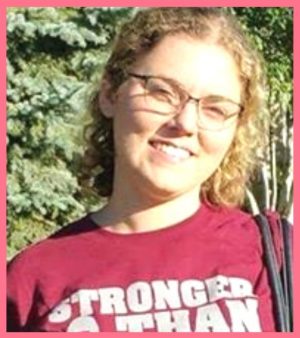
At just 18 years old, Meagan Sutherland was diagnosed with a rare central neurocytoma after years of headaches and a sudden episode of double vision. What followed was eight hours of brain surgery, Gamma Knife radiosurgery, rehabilitation and the emotional challenge of rebuilding her confidence. Here, Meagan shares her experience of living beyond a brain tumour diagnosis.
In May 2008, Meagan Sutherland was an 18-year-old student in Michigan, USA, when her life changed unexpectedly.
She had been experiencing headaches for years, but one day, while driving to meet her mother at their country club, something frightening happened.
Meagan suddenly began seeing double.
She pulled over and called her mum, who arranged for her to see an optometrist.
What started as an eye examination quickly became a medical emergency.
An MRI scan revealed a mass in Meagan’s brain, and she was transferred by ambulance to Beaumont Hospital in Royal Oak, Michigan.
She was diagnosed with a central neurocytoma, a rare brain tumour that usually develops in the fluid-filled spaces deep inside the brain.
Within weeks, Meagan underwent an eight-hour operation, followed by Gamma Knife radiosurgery to treat the remaining tumour.
But her journey was far from over.
She experienced weakness on her left side, aphasia, further complications and a difficult period of depression that affected her confidence, education and everyday life.
When she shared her story with Aunty M Brain Tumours, Meagan spoke openly about the challenges she had faced, the importance of rehabilitation and why she wanted to help others living with brain tumours.
This is Meagan’s central neurocytoma story.
Years of Headaches Before a Sudden Change in Vision
Looking back, Meagan had been experiencing headaches for several years.
At the time, she was a young student trying to get on with life.
Then, one day in May 2008, she was driving to meet her mother when her vision suddenly changed.
Everything appeared double.
Concerned about what was happening, Meagan pulled over and called her mum.
Because she was only a few minutes away from the country club, they agreed she would continue there.
Her mother then took her to an optometrist to investigate the unusual visual symptoms.
Neither of them expected the appointment to lead to an emergency hospital admission.
The Eye Examination That Revealed Something Was Wrong
During Meagan’s appointment, the optometrist dilated her pupils so he could examine the back of her eyes.
What he saw clearly concerned him.
Meagan remembered the shock on his face.
He explained that something appeared to be obstructing his view during the examination.
Rather than arranging another routine appointment, he contacted the local hospital and organised an urgent MRI scan.
When the results came back, Meagan could see that the hospital technician was visibly shaken.
She was told that a mass had been discovered in her brain.
Suddenly, the headaches and double vision were no longer isolated symptoms.
Meagan was facing a brain tumour diagnosis at just 18 years old.
An Ambulance Transfer to a Specialist Neurosurgery Team
Meagan was transferred by ambulance to Beaumont Hospital in Royal Oak, Michigan, where a specialist neurosurgical team could assess her.
She vividly remembered the ambulance journey.
The vehicle was noisy and uncomfortable, her head was throbbing and her eyes felt as though they were bulging.
It was a frightening experience for somebody who had only recently been enjoying ordinary student life.
By the time she arrived at the hospital, it was late at night.
Because Meagan was only 18, she was admitted to the paediatric intensive care unit.
She met her neurosurgeon that evening.
Her family felt reassured by the surgeon’s experience and reputation, which helped Meagan feel a little more comfortable about what was going to happen next.
But she was still facing major brain surgery.
Eight Hours of Brain Surgery for a Central Neurocytoma
In May 2008, Meagan underwent an eight-hour operation to remove as much of the central neurocytoma as possible.
Central neurocytomas often develop within the ventricles, the spaces deep inside the brain that contain cerebrospinal fluid.
Their location can make surgery particularly complex because of the nearby structures involved in movement, memory, language and other neurological functions.
The aim of Meagan’s operation was to remove as much of the tumour as could be safely reached.
Although surgery was an important first step, some tumour remained.
Her medical team therefore recommended further treatment.
In August 2008, Meagan underwent Gamma Knife radiosurgery.
Gamma Knife Radiosurgery: A Frightening Experience
Gamma Knife is a form of stereotactic radiosurgery.
Despite its name, it does not involve a surgical knife cutting into the brain.
Instead, highly focused radiation beams are used to target an area of abnormal tissue.
For Meagan, the treatment was particularly distressing.
She remembered the process of having the rigid head frame, sometimes called a halo, attached to keep her head completely still.
She described hearing the sound of the frame being secured and feeling extremely frightened.
The experience left a lasting impression.
Her Gamma Knife treatment lasted approximately two hours and was intended to treat the tumour remaining after her original operation.
Although the main treatment had been completed, Meagan would later experience further complications.
A Brain Cyst and Another Procedure in 2009
In March 2009, Meagan developed a brain cyst, which she associated with the effects of her previous radiation treatment.
The following month, in April 2009, she underwent another procedure to have a reservoir installed to help manage the problem.
A reservoir is a medical device that can provide access to fluid inside the brain, depending on the condition being treated.
Unfortunately, Meagan experienced considerable difficulties during the period when the reservoir was in place.
She described severe paralysis affecting her left side and problems retaining information.
These difficulties had a significant impact on her everyday life.
By 2011, the medical team decided that the reservoir should be removed because it was causing more problems than benefits in her particular circumstances.
It was another difficult chapter in a recovery that had already involved surgery, radiation and neurological rehabilitation.

Recovery After Brain Surgery: Weakness and Aphasia
Following her original brain surgery, Meagan experienced weakness affecting the left side of her body.
She also developed aphasia.
Aphasia is a language difficulty caused by damage or disruption to parts of the brain involved in communication.
It can affect speaking, understanding language, reading or writing, although the exact difficulties vary from person to person.
For Meagan, these changes meant that returning to everyday life required additional support.
She began outpatient rehabilitation involving speech and language therapy, occupational therapy and physiotherapy.
These therapies helped her work on the difficulties she was experiencing after surgery.
The Speech Therapist Who Made a Difference
One of the most positive parts of Meagan’s recovery was the connection she developed with her speech therapist, Jenny.
Meagan spoke about her with enormous affection.
She enjoyed spending time with the therapists and other patients during rehabilitation.
Rather than describing every appointment as something she had to endure, Meagan remembered rehabilitation as an enjoyable and encouraging experience.
The relationships she developed helped make a difficult period more manageable.
For somebody who had undergone major surgery at such a young age, having supportive professionals around her made a real difference.
Rehabilitation also gave her an opportunity to work towards returning to the activities and education she had enjoyed before diagnosis.
Eventually, Meagan was able to return to school.
But rebuilding her life was not as straightforward as she had hoped.
The Hidden Emotional Impact of Brain Tumour Recovery
One of the most difficult parts of Meagan’s story was not the brain surgery itself.
It was what happened when she tried to return to the world around her.
While she had been undergoing treatment and rehabilitation, her friends had continued with their education, summer internships and career plans.
Meagan felt that she had fallen behind.
She wanted the opportunities other young people her age were enjoying, but the lasting effects of her brain tumour treatment made everything more complicated.
Her confidence had been badly affected.
She found it difficult to connect with people and struggled to find employment.
These experiences left her increasingly isolated.
Eventually, her depression became so severe that she struggled to get out of bed.
When Depression Became Another Battle
Meagan’s mental health deteriorated to the point where her parents arranged for her to receive hospital care.
She described becoming unresponsive during this period and spending approximately two months in a psychiatric hospital.
Looking back, she considered it one of the hardest experiences she had faced.
Her story highlights something that is not always discussed openly enough after brain surgery.
Surviving a brain tumour does not automatically mean that somebody feels emotionally well.
There can be changes to speech, memory, mobility, independence, friendships and employment.
For young adults, these difficulties may arrive at a time when their friends are moving into further education, careers and independent living.
The emotional impact of seeing life continue around you while your own plans are interrupted can be enormous.
Meagan was honest about how deeply this affected her.
Her experience is a reminder that psychological support can be just as important as physical rehabilitation after neurological illness.
Learning to Live With Aphasia and Rebuilding Confidence
When Meagan shared her story, she was pleased with how much her physical health had improved.
However, she continued to experience aphasia.
Communication difficulties were something she still had to manage in daily life.
Returning to education remained a particularly important ambition.
Although she had made progress following rehabilitation, she worried that her original plans might no longer be possible.
That uncertainty was frustrating.
Meagan had spent years working towards a future that now looked very different from the one she had expected.
But she was determined to keep trying.
And she began finding opportunities to make a difference in other people’s lives.
Volunteering and Finding Purpose Through Helping Others
One of the things that motivated Meagan was helping people.
She volunteered at an adult foster care home, where she worked as an activity director.
She enjoyed organising activities and spending time with the residents.
It gave her an opportunity to contribute, connect with others and focus on something beyond her own health difficulties.
Meagan also took on part-time jobs and volunteered with organisations including Wigs for Kids and the mAss Kickers Foundation.
These experiences were important to her.
She wanted to use what she had learned during her brain tumour journey to offer support and encouragement to other people.
Creating Brain Tumour Life Coach
Meagan also created a Facebook page called Brain Tumour Life Coach.
Her aim was to share information she felt was important to people living beyond a brain tumour diagnosis.
She particularly wanted families and loved ones to understand that recovery does not necessarily end when somebody leaves hospital.
From the outside, a person may appear to be doing well.
But they may still be managing communication difficulties, fatigue, physical changes or emotional struggles that other people cannot see.
Meagan had experienced how difficult it could be when even people close to her did not fully understand that she was still recovering after her craniotomy.
By sharing her experiences, she hoped to make those conversations easier for others.
Visit Meagan’s Brain Tumour Life Coach Facebook Page
This was Meagan’s original social media page; availability may have changed since the interview.
The Toughest Challenge: Learning to Face the World Again
When I asked Meagan about the toughest challenge brain tumour survivors face, her answer was particularly meaningful.
“The toughest challenge a survivor faces is learning how to face the world again.”
It is a simple sentence, but it says so much.
There is the medical side of a diagnosis: surgery, treatment, scans and rehabilitation.
Then there is the challenge of finding your place in everyday life afterwards.
For Meagan, that meant rebuilding her confidence, trying to return to education, finding employment and learning to live with aphasia.
It also meant adjusting to the fact that her experiences had changed her.
She was not simply returning to the life she had before diagnosis.
She was learning how to move forward with the person she had become.
Meagan’s Family: Her Greatest Motivation
When I asked Meagan about her personal heroes, she spoke about her family.
Their support had been important from the moment she became unwell.
Her mother had helped her seek medical advice when her double vision first appeared, and her family had supported her through surgery, treatment and the difficult periods that followed.
Meagan wanted to make them proud.
Her family remained one of her greatest motivations as she continued rebuilding her life.
Getting to Know Meagan Beyond Her Brain Tumour
One of the things I enjoy most about interviewing people is discovering the person behind the diagnosis.
When I asked Meagan about the most interesting thing she had ever done, she remembered getting lost in Italy at night.
It was an unexpected answer that offered a glimpse of her adventurous side.
She also shared something people might not know about her.
She could speak German very well.
These little details matter.
Meagan is not simply somebody who underwent brain surgery at 18.
She is somebody who loves connecting with others, has travelled, enjoys volunteering and has hopes for her future.
Her brain tumour experience is part of her life, but it is not her entire identity.
My Thoughts: Life After a Central Neurocytoma Diagnosis
What stands out to me about Meagan’s story is how much she experienced at such a young age.
At 18, she should have been enjoying student life, making friends and thinking about her future.
Instead, she was suddenly facing an eight-hour brain operation, Gamma Knife treatment and rehabilitation.
But I think the emotional side of her story is equally important.
Meagan spoke openly about losing confidence, struggling with aphasia and watching her friends move forward while she felt left behind.
That is an experience many people affected by brain tumours will recognise.
The operation may be over, but there can still be a long journey towards rebuilding independence and confidence.
I particularly loved how Meagan spoke about her rehabilitation team.
Her affection for Jenny, her speech therapist, and the fun she found in therapy remind us how important the people involved in recovery can be.
And I admire her determination to help others understand the reality of living after brain surgery.
She knew how difficult it was when family members and friends did not fully understand the challenges that remained.
Rather than keeping those experiences to herself, she wanted to help others feel understood.
Thank you, Meagan, for sharing your story with me and the Aunty M Brain Tumours community.
I hope your experience helps somebody else facing a central neurocytoma diagnosis, rehabilitation or a difficult return to everyday life feel less alone.
What Is a Central Neurocytoma?
A central neurocytoma is a rare type of brain tumour that usually develops inside the ventricles, the fluid-filled spaces deep within the brain.
These tumours arise from cells with neuronal characteristics and most commonly affect young adults.
Central neurocytomas are generally slow-growing and are usually classified as WHO grade 2 tumours.
Although they are often described as relatively low-grade, their location can make them medically serious.
The ventricles contain cerebrospinal fluid, which normally circulates around the brain and spinal cord.
A central neurocytoma may interfere with this flow, sometimes causing hydrocephalus — a build-up of fluid that increases pressure inside the skull.
Treatment depends on factors including the tumour’s size, location, symptoms and whether it can be safely removed.
What Symptoms Can a Central Neurocytoma Cause?
Symptoms differ from person to person.
Possible symptoms include:
- Persistent or worsening headaches
- Blurred or double vision
- Nausea and vomiting
- Balance or coordination difficulties
- Changes in memory or concentration
- Weakness or other neurological symptoms
- Seizures
Not everyone experiences the same symptoms, and many of these difficulties can have other causes.
Meagan’s main symptoms before diagnosis were longstanding headaches and sudden double vision.
Central Neurocytoma Frequently Asked Questions
Is a Central Neurocytoma Cancerous?
Central neurocytomas are generally considered low-grade brain tumours.
Most are WHO grade 2 and tend to grow relatively slowly.
However, they can still cause serious problems because of their location within the brain.
Some tumours may behave more aggressively, so treatment and follow-up need to be tailored to the individual.
How Is a Central Neurocytoma Diagnosed?
MRI scans are commonly used to identify a tumour and assess its location.
Doctors may also use CT scans.
A definitive diagnosis generally requires examination of tumour tissue by a specialist pathologist, who can identify the tumour type and its characteristics.
What Treatment Is Available for Central Neurocytoma?
Surgery is often the main treatment, with the aim of removing as much of the tumour as safely possible.
When some tumour remains or later grows, radiotherapy or stereotactic radiosurgery, including Gamma Knife, may be considered.
The treatment plan depends on the individual diagnosis and specialist assessment.
Can a Central Neurocytoma Return After Surgery?
Yes.
A central neurocytoma can recur or grow again after treatment, particularly if some tumour remains.
Follow-up MRI scans are often recommended to monitor for changes.
The risk of recurrence varies, and patients should discuss their individual scan results and follow-up plans with their specialist team.
What Is Gamma Knife Radiosurgery?
Gamma Knife is a form of highly focused radiation treatment.
It delivers radiation to a carefully targeted area without using a surgical blade.
It may be used to treat remaining or recurrent central neurocytoma when appropriate.
Gamma Knife does not physically remove the tumour. Its aim is generally to control growth.
Can Brain Surgery Cause Aphasia?
Yes. Aphasia can occur when areas of the brain involved in language are affected by a tumour, surgery or another neurological injury.
It can affect speaking, understanding language, reading or writing.
Speech and language therapy may help people improve their communication and develop strategies for managing ongoing difficulties.
Meagan experienced aphasia following her brain surgery and received speech therapy as part of rehabilitation.
Central Neurocytoma Information and Support
Because central neurocytoma is rare, finding reliable information and people with similar experiences can sometimes be difficult.
The following resources may help.
Orphanet — Central Neurocytoma
Information about this rare tumour, including its usual location and symptoms.
Read Orphanet’s Central Neurocytoma Information
The Brain Tumour Charity — A Central Neurocytoma Patient Story
The Brain Tumour Charity shares another person’s experience of being diagnosed with a central neurocytoma.
Read Catrin’s Central Neurocytoma Story
Brainstrust — Brain Tumour Support
Brainstrust offers practical information, emotional support and guidance for people affected by brain tumours and their families.
Read More Central Neurocytoma Stories
Every central neurocytoma experience is different.
Some people undergo surgery and recover with relatively few lasting difficulties. Others require further treatment, rehabilitation or ongoing support.
At Aunty M Brain Tumours, I share these personal experiences to help people understand the realities of diagnosis, treatment and life afterwards.
You may also like to read:
Amber’s Central Neurocytoma Story
Amber Spicer shares her experience of diagnosis, surgery, Gamma Knife treatment and learning to make the most of life afterwards.
Holly’s Central Neurocytoma Story
Holly Wodahl shares her experience of brain surgery, rehabilitation, memory difficulties and further treatment for a rare central neurocytoma.
Hearing from others with the same diagnosis can be particularly valuable when facing a rare brain tumour.
Would you like to share your story?
If you have been affected by a central neurocytoma or another brain tumour and would like to help others through your experience, I would love to hear from you.
Medical disclaimer: Meagan’s story reflects the experience she shared in her original interview. The general medical information is provided for awareness and support and should not replace advice from a qualified healthcare professional. Always discuss your individual diagnosis, symptoms and treatment options with your specialist medical team.

Claire Bullimore is an influential figure in the brain tumour community. She embarked on her brain tumour journey and was diagnosed with an intraventricular meningioma. In response to her experiences, Claire founded ‘Aunty M Brain Tumours,’ a platform dedicated to sharing brain tumour stories. Based in London, England, Claire also identifies as a blogger and speaker for Aunty M Brain Tumours, shedding light on the challenges faced by those diagnosed and amplifying their voices for better awareness and support. Through her dedication and advocacy, Claire’s efforts have been recognized by Brain Tumour Research and other organizations, spotlighting her commitment to making a positive difference for individuals impacted by brain tumours.