Colloid Cyst Story: Claire Snyman’s Diagnosis, Brain Surgery and Life Afterwards
From headaches and vertigo to emergency brain surgery, author Claire Snyman shares how a colloid cyst changed her life and inspired her to become a voice for patients.
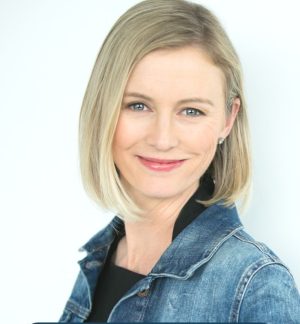
In 2010, Claire Snyman was 34 years old, living in Canada and raising two children when she received a diagnosis that would change her life.
What began with headaches and episodes of vertigo led to the discovery of a colloid cyst in her brain.
At first, Claire’s doctors recommended monitoring the cyst through regular MRI scans, an approach commonly known as watch and wait. But two years later, her situation changed dramatically. The cyst had doubled in size, and she needed emergency brain surgery.
Recovery would prove to be more than a physical experience. As Claire came to terms with everything that had happened, she began writing about her journey. Those personal reflections eventually became a book and opened doors to patient advocacy, public speaking and healthcare collaboration.
I first interviewed Claire in 2013 on my Brain Tumour Thursday radio show. Six years later, we caught up again to discover how her life had changed.
This is Claire’s colloid cyst story, from the uncertainty of diagnosis to finding purpose and a new direction after brain surgery.
When Headaches and Vertigo Led to a Colloid Cyst Diagnosis
Before her diagnosis, Claire was living a busy family life in Canada with her husband and two children.
She had started experiencing vertigo attacks and headaches, symptoms that prompted her to seek medical advice.
The investigations revealed something she had never expected: a colloid cyst in her brain.
Although colloid cysts are generally benign, meaning they are not cancerous, their location can make them potentially serious.
For Claire, the news was overwhelming.
Her thoughts immediately turned to her family and what the diagnosis might mean for their future.
“My first thoughts were of my family. I felt numb.” — Claire Snyman
Like many people receiving an unexpected brain diagnosis, Claire suddenly found herself trying to understand unfamiliar medical information while continuing to manage everyday life.
There were questions about the cyst, what might happen next and whether she would eventually need an operation.
For the time being, however, her medical team recommended monitoring rather than immediate surgery.
Living With a Colloid Cyst: The Uncertainty of Watch and Wait
After her diagnosis in 2010, Claire entered a period of regular monitoring with annual MRI scans.
For some people with a colloid cyst, particularly where there are no concerning symptoms or signs of blocked fluid flow, monitoring may be an appropriate treatment approach.
But being told that a condition can be monitored does not necessarily make living with it easy.
For Claire, the uncertainty was one of the most difficult aspects of her diagnosis.
She found it hard to feel as though she could move forward when another scan was always on the horizon.
There was also the emotional challenge of knowing the cyst was still there, even when she was getting on with normal family life.
During this period, Claire began connecting with other people affected by brain tumours and colloid cysts.
She became involved in fundraising and joined a Facebook support group specifically for people living with colloid cysts.
Finding others who understood the experience made a difference.
It gave her somewhere to share concerns, exchange experiences and feel part of a community.
Sometimes, knowing that another person understands the uncertainty of waiting for scan results can be just as important as having medical information.
When Claire’s Colloid Cyst Required Emergency Brain Surgery
Two years after her diagnosis, Claire’s circumstances changed.
In 2012, her colloid cyst had doubled in size. According to Claire’s account, she was also experiencing swelling in the brain, and emergency surgery became necessary.
After two years of monitoring, she was suddenly facing the operation she had hoped might never be needed.
Brain surgery is a major event in anyone’s life.
There is the uncertainty of the operation itself, the worry about possible complications and the emotional impact on family and loved ones.
For Claire, who was also a mother, the experience brought a completely different set of challenges from those she had faced during watch and wait.
Her story demonstrates why colloid cysts require individual assessment and why monitoring plans sometimes need to change.
Although some remain stable for many years, others can enlarge or interfere with the normal circulation of fluid around the brain.
Claire’s experience was one in which surgery became urgently necessary.
The Emotional Recovery After Colloid Cyst Surgery
Coming through brain surgery did not mean that every challenge had suddenly disappeared.
About three months after her operation, Claire was still processing many emotions connected to what she had experienced.
She decided to begin keeping a journal.
Initially, it was simply a private way of expressing her thoughts and feelings.
Writing gave Claire somewhere to put the emotions that could be difficult to explain in ordinary conversation.
Over time, her journal grew.
The more she wrote, the more she discovered that putting her experiences into words helped her make sense of what had happened.
Claire also sought psychological support as part of coming to terms with her experience.
Her psychologist encouraged her to consider turning her journal into a book.
What had begun as a personal coping strategy gradually developed into something she could share with other people.
This is an important part of Claire’s journey.
Recovery after brain surgery is not always limited to physical healing. For some people, adjusting emotionally to what has happened, processing uncertainty and finding a sense of identity afterwards can take much longer than expected.
Claire’s writing became one way of navigating that process.
Turning a Brain Surgery Experience Into a Book
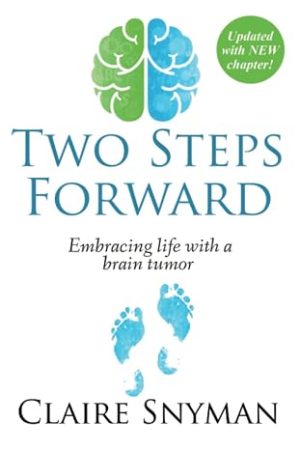
Claire’s journal eventually became her book, Two Steps Forward: Embracing Life with a Brain Tumor.
The book grew out of her experiences of diagnosis, uncertainty, surgery and recovery.
Rather than keeping those experiences to herself, Claire wanted to share what she had learned.
Writing gave her an opportunity to reach people facing their own difficult diagnoses and to encourage conversations about the emotional side of recovery.
It also led her towards new opportunities she might never have imagined before her colloid cyst diagnosis.
Over time, Claire became involved in patient advocacy, speaking and collaborating with healthcare professionals.
Her story was no longer only about what had happened to her.
It was also becoming about what she could do with the experience.
Find out more about Claire’s book: Two Steps Forward
Buy a copy of ‘Two Steps Forward’ HERE
Listen to Claire’s Original 2013 Brain Tumour Thursday Interview
In 2013, I welcomed Claire onto the Aunty M Brain Tumours Brain Tumour Thursday radio show.
During our conversation, we discussed her colloid cyst diagnosis, the challenges of watch and wait, her experience of brain surgery and how writing helped her through recovery.
We also talked about her book, Two Steps Forward, and why sharing personal experiences can be so important to other people affected by brain tumours.
Listen to Claire’s original podcast interview below.
Six Years Later: How Had Claire’s Life Changed?
When I caught up with Claire again six years after our original radio interview, I wanted to find out what life had been like since we last spoke.
Had her outlook changed? What had she learned? And how had her experiences influenced what she was doing now?
Claire explained that the changes she had made following brain surgery had taken her in directions she had never expected.
Writing her book had introduced her to new people, new experiences and opportunities to become involved in improving healthcare.
By the time of our follow-up interview, she was working part-time as a consultant in healthcare collaboration, while continuing to write and speak at events.
Her work focused on encouraging patients to become more involved in their own care and helping healthcare teams understand the importance of patient experiences.
Despite her professional achievements, Claire was equally clear about what mattered most to her: being a wife and mother.
Her answer reflected something that many people discover after a life-changing medical experience.
Success does not always mean returning to exactly the life you had before.
Sometimes it means finding a different way forward.
Finding Purpose Through Patient Advocacy
One of the most interesting parts of our follow-up conversation was hearing what motivated Claire.
She explained that making a difference, particularly through teamwork and collaboration, had become an important part of her life.
She wanted patients to feel more confident participating in decisions about their health and to recognise that their experiences mattered.
Claire had also developed a particular interest in making healthcare better for both patients and professionals.
Her work connected personal experience with practical improvements in communication, collaboration and patient involvement.
When I asked about the people she admired most, Claire named her husband and her neurosurgeon, Dr Alfredo Quiñones-Hinojosa.
Both had played important roles in her journey.
For Claire, advocacy was not simply about telling her own story.
It was about using what she had experienced to help other people find their voice.
Giving a TEDx Talk to 2,500 People
When I asked Claire about one of the most exciting things she had done since her diagnosis, her answer was giving a TEDx talk in front of an audience of 2,500 people.
It was an extraordinary achievement and another opportunity to share what her experiences had taught her.
Her talk focused on a practical approach to helping patients take a more active role in their healthcare.
She called it the T.E.A.M. approach:
- T — Track: Keep records of your appointments, medical tests, treatments and important information.
- E — Educate: Learn about your diagnosis using reliable information so you can better understand your care.
- A — Ask: Ask your healthcare team questions, even if you need something explained more than once.
- M — Manage: Work with your healthcare team to identify your priorities and the outcomes you hope to achieve.
The approach encourages patients to become informed and involved partners in their care, rather than feeling that important decisions are happening around them.
For someone who has just received a frightening diagnosis, having a simple framework can help make an unfamiliar healthcare journey feel more manageable.
Watch Claire Snyman’s TEDx Talk: The T.E.A.M. Approach for Empowering Patients
What Claire Has Learned About Life After Brain Surgery
During our follow-up interview, I asked Claire what she believed was one of the toughest challenges facing brain tumour survivors.
Her answer focused on adjusting to a different normality.
Recovery can involve physical changes, but there can also be emotional and psychological challenges that are not immediately obvious to other people.
For some, the recovery period is longer than they or their families originally expected.
Claire’s experience highlights the importance of recognising that life after surgery can involve a period of adjustment.
Things may look different. Priorities can change, and sometimes people have to find new ways of doing things they once took for granted.
That does not mean there cannot be fulfilling experiences afterwards.
Claire’s journey into writing, advocacy and public speaking is one example of how her life developed following treatment.
But her story is also a reminder that nobody should feel pressured to turn a difficult medical experience into an achievement.
Simply finding a way to live well after diagnosis and treatment is meaningful in itself.
Claire’s Advice to Anyone Facing a Brain Tumour Diagnosis
When I asked Claire what advice she would give to somebody facing a frightening diagnosis, she encouraged people to approach things one step at a time.
Her suggestions focused on taking an active role in healthcare while recognising the importance of emotional and community support.
Drawing on Claire’s advice, some useful steps include:
- Keep a record of medical appointments, test results and questions.
- Ask your medical team to explain anything you do not understand.
- Use reliable information to learn about your diagnosis.
- Discuss your treatment goals and concerns with your healthcare team.
- Find a support group where you can connect with people who understand what you are experiencing.
For Claire, joining a colloid cyst support group was an important part of her journey.
It helped her feel connected to others who understood the uncertainty and emotions surrounding the diagnosis.
And there is something reassuring about being able to speak to somebody who understands without needing every detail explained.
Getting to Know Claire Beyond Her Diagnosis
One of the reasons I enjoy catching up with people years after their original interviews is that there is always so much more to a person than their medical history.
During our conversation, I asked Claire to share something people might not know about her.
She told me about growing up in South Africa, where she enjoyed trout fishing as a child.
She still loved being near the water and appreciated the peace of spending time by a river.
It was a lovely reminder of the person behind the patient story.
Claire is not simply somebody who had a colloid cyst.
She is a wife, mother, writer, speaker and someone with interests, memories and experiences that exist far beyond her diagnosis.
My Thoughts: More Than a Colloid Cyst Survivor
When I first interviewed Claire in 2013, we talked about how she had coped with her diagnosis and brain surgery, and how those experiences had led her to write a book.
Catching up six years later gave me the opportunity to hear how her life had continued to develop.
What I find particularly meaningful about Claire’s story is that she speaks openly about the difficult parts of recovery while also recognising the opportunities that came afterwards.
Her journey is not simply about having brain surgery and getting better.
It is about living through uncertainty, finding support, adjusting to change and discovering what matters to you.
I also think her experience of watch and wait is important to share.
People sometimes assume that if you are not having immediate treatment, everything must be fine. But waiting for scans and living with uncertainty can bring its own challenges.
For anyone facing a colloid cyst diagnosis, I hope Claire’s experiences offer insight, understanding and the reassurance that there are others who know what this journey can feel like.
Thank you, Claire, for sharing your story with me and the Aunty M Brain Tumours community.
What Is a Colloid Cyst?
A colloid cyst is a usually benign, fluid-containing cyst that most commonly develops in the third ventricle of the brain.
The third ventricle is one of the spaces within the brain through which cerebrospinal fluid circulates.
Although a colloid cyst is not usually cancerous, its location is important.
Some colloid cysts remain small and cause no symptoms. Others can interfere with the normal flow of cerebrospinal fluid, potentially leading to a build-up of fluid inside the brain, known as hydrocephalus.
This can increase pressure within the skull and may require urgent medical treatment.
What Are the Symptoms of a Colloid Cyst?
Symptoms vary depending on the cyst’s size, position and whether it is affecting the flow of cerebrospinal fluid.
Possible symptoms include:
- Headaches, which may be severe or intermittent
- Nausea and vomiting
- Dizziness or balance problems
- Blurred vision or other visual disturbances
- Memory or concentration difficulties
- Difficulty walking or changes in coordination
Some people have no symptoms, and their colloid cyst is found incidentally during a scan for another reason.
Not everyone will experience the same symptoms, and having one or more of these symptoms does not necessarily mean somebody has a colloid cyst.
Sudden severe headache, particularly with vomiting, confusion, increasing drowsiness or collapse, requires emergency medical assessment.
Colloid Cyst Frequently Asked Questions
Can You Live With a Colloid Cyst Without Surgery?
Yes. Some colloid cysts can be monitored through MRI scans and specialist follow-up rather than being removed immediately.
Doctors consider several factors, including symptoms, cyst size and location, evidence of hydrocephalus and the individual’s circumstances.
As Claire’s experience shows, the treatment plan may change if the cyst grows or causes new concerns.
When Does a Colloid Cyst Need Surgery?
Surgery may be recommended when a colloid cyst is causing symptoms, blocking cerebrospinal fluid flow or creating a significant risk of complications.
The decision depends on the individual patient and specialist assessment.
Surgical approaches may include endoscopic or microsurgical removal. The most appropriate option depends on the cyst and the medical team’s assessment.
Is a Colloid Cyst a Brain Tumour?
A colloid cyst is a benign intracranial cyst rather than a typical cancerous brain tumour.
However, it develops inside the brain and may require specialist neurosurgical care.
People with colloid cysts can experience many of the same practical and emotional challenges as others affected by brain tumours.
Their experiences deserve recognition and support.
Can a Colloid Cyst Come Back After Surgery?
A colloid cyst can recur, particularly if some of the cyst wall remains after surgery.
The risk varies according to the procedure and extent of removal.
Follow-up imaging may be recommended so the medical team can check for any changes.
How Long Does Recovery Take After Colloid Cyst Surgery?
There is no single recovery timeline.
Recovery depends on factors such as the type of surgery, the person’s health before treatment, whether complications occurred and any ongoing symptoms.
Some people recover relatively quickly, while others need more time or additional rehabilitation and emotional support.
Claire’s experience also highlights that emotional recovery can continue after the initial physical healing period.
Colloid Cyst Information and Support
If you or somebody you love has been diagnosed with a colloid cyst, reliable information and supportive communities can help you understand the condition and prepare for conversations with your medical team.
Brainstrust — Colloid Cyst Support
Brainstrust provides dedicated colloid cyst information, patient resources and opportunities to connect with others affected by the condition.
Visit Brainstrust’s Colloid Cyst Support Hub
Brainstrust — Colloid Cyst Information Sheet
A helpful resource explaining the condition, symptoms, treatment and support.
Read the Colloid Cyst Information Sheet
NHS — Hydrocephalus
Information about the build-up of cerebrospinal fluid, possible symptoms and treatment.
Find Out More About Claire Snyman
Claire went on to share her experiences through writing, speaking and work focused on improving patient involvement in healthcare.
You can explore more about her work and her book, Two Steps Forward: Embracing Life with a Brain Tumor, through her website.
Read More Brain Tumour and Colloid Cyst Stories
Every brain tumour and colloid cyst experience is different.
Some people are monitored for years, while others require surgery. Some recover with relatively few difficulties, while others face longer-term physical or emotional challenges.
Hearing different personal experiences can help people feel less isolated and better prepared for conversations with their medical teams.
Explore more personal stories here at Aunty M Brain Tumours, where people share their experiences of diagnosis, treatment, recovery and life afterwards.
Explore other Cyst stories you may be interested in Here or read about Claire Sutton’s colloid cyst story.
Medical disclaimer: This article shares Claire Snyman’s personal experiences alongside general medical information for awareness and support. It is not a substitute for advice from a qualified healthcare professional. Always discuss your individual diagnosis and treatment with your specialist medical team.

Claire Bullimore is an influential figure in the brain tumour community. She embarked on her brain tumour journey and was diagnosed with an intraventricular meningioma. In response to her experiences, Claire founded ‘Aunty M Brain Tumours,’ a platform dedicated to sharing brain tumour stories. Based in London, England, Claire also identifies as a blogger and speaker for Aunty M Brain Tumours, shedding light on the challenges faced by those diagnosed and amplifying their voices for better awareness and support. Through her dedication and advocacy, Claire’s efforts have been recognized by Brain Tumour Research and other organizations, spotlighting her commitment to making a positive difference for individuals impacted by brain tumours.