Living Fully With a Grade 3 Astrocytoma
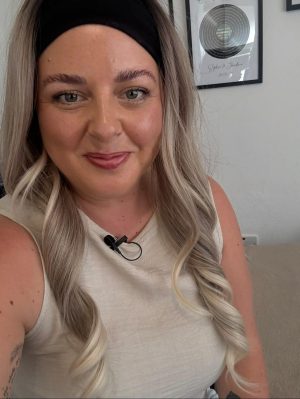
At 36, Sophie Reid had a busy life in Jersey. She ran her own hair salon, enjoyed spending time with her family and considered herself fit and healthy. A brain tumour diagnosis was the last thing she expected.
But a sudden seizure at work changed everything.
What followed included a frightening diagnosis, awake brain surgery, radiotherapy, chemotherapy and neurological difficulties that affected her everyday life.
Today, Sophie uses her experiences to raise awareness, challenge gaps in patient support and help other people affected by brain tumours.
In our conversation for the Aunty M Brain Tumours Talk Show, Sophie shares the reality of living with a grade 3 astrocytoma, from the fear of her initial diagnosis to finding a new purpose through advocacy.
The First Seizure at Work
Sophie was working in her hair salon when she suddenly became vacant, struggled to speak and collapsed onto a client during a seizure.
Although she could sense something was wrong, she could not explain what was happening.
Paramedics arrived within minutes and took Sophie to hospital. Staff carried out blood tests, monitored her for several hours and eventually discharged her with information about the First Seizure Clinic and plans for a CT scan.
The following day, Sophie visited her GP.
Her doctor took the unexplained seizure seriously. As a healthy 36-year-old woman with no previous history of seizures, Sophie needed further investigation.
Her GP arranged an urgent head CT scan.
At the time, Sophie had no idea how much her life was about to change.
Watch Sophie tell her story in full in the Aunty M Brain Tumours Talk Show interview below, or keep reading for the written version
Being Told She Had a Brain Tumour
On 3 October, Sophie attended her CT scan.
Initially, everything seemed routine. However, during the appointment, the radiographer explained that the team needed further images with contrast.
Something about the conversation made Sophie uneasy.
Afterwards, she returned to the salon and continued working, trying to carry on with her normal day.
Then her phone rang.
Sophie recognised the hospital telephone number immediately. The caller explained that the scan had shown abnormalities in her brain and asked her to return to hospital.
Suddenly, everything felt very different.
The Fear of What Might Happen
Sophie immediately contacted her husband, Jordan.
Her colleague Charlotte, who had worked alongside her for around 15 years, noticed the change in Sophie’s expression and realised something was seriously wrong.
The fear became overwhelming.
“I don’t want to die.”
Like so many people facing unexpected medical news, Sophie struggled to process what she had just heard.
Nevertheless, she knew she needed to return to hospital.
She went home, packed an overnight bag, contacted her mum and prepared for whatever might happen next.
Hearing the Diagnosis
When Sophie arrived at A&E, the department initially seemed unaware of why she had returned.
Staff also struggled to find her a bed.
Eventually, a nurse arranged a room and explained that a doctor needed to speak to her urgently.
That conversation confirmed Sophie’s worst fears.
Doctors had discovered a brain tumour.
The news shocked Sophie and her family. Nobody could yet tell her exactly what type of tumour she had or what the future might hold.
Travelling From Jersey to Southampton for Specialist Care
Doctors explained that the tumour appeared quite large and that Sophie needed an MRI for further investigation.
Her hospital team sent the scans to Southampton for specialist review.
However, the initial conversations left Sophie frightened about her prognosis.
One doctor’s description of the possible seriousness of the tumour stayed with her.
Sophie sat alongside her husband and mum as she tried to understand what the diagnosis might mean.
As a mother herself, she could not stop thinking about how her mum must have felt hearing such frightening news about her daughter.
The Possibility of Cancer Elsewhere
The following morning brought more uncertainty.
Doctors raised the possibility that Sophie had metastatic cancer, meaning cancer that had spread to the brain from somewhere else in the body.
They arranged full-body scans to look for a possible primary cancer.
For Sophie, this was one of the most frightening moments of the entire experience.
She genuinely feared she might be dying.
Waiting for answers became incredibly difficult, particularly while trying to remain strong for her family.
Getting a Private Consultation in Southampton
Sophie’s husband had access to private health insurance through his employer.
His workplace suggested using that insurance to arrange a specialist consultation.
This brought Sophie to Professor Paul Grundy in Southampton.
After reviewing her scans, Professor Grundy explained that the tumour looked more like a low-grade glioma.
However, he could not confirm its type or grade without examining tumour tissue through a biopsy or surgery.
That distinction mattered. Sophie had spent days fearing the worst, and this consultation gave her a clearer understanding of the options.
Choosing Between Monitoring, Biopsy and Surgery
Professor Grundy discussed three possible approaches:
- Monitor the tumour with regular scans.
- Carry out a biopsy to obtain a tissue diagnosis.
- Perform surgery to remove as much of the tumour as safely possible.
Sophie decided to have surgery.
The surgical team offered her a date relatively quickly, but she faced one important personal consideration.
Her daughter’s birthday was approaching.
Sophie desperately wanted to protect that special day and avoid having the memory of brain surgery overshadow it for years to come.
Like many parents, she found herself balancing her own medical needs with her desire to protect her child.
Ultimately, Sophie knew she needed treatment.
Sophie’s Awake Brain Surgery
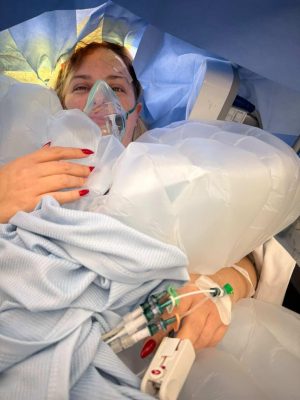
On 1 December 2024, Sophie underwent awake brain surgery in Southampton.
For many people, the idea of remaining awake during brain surgery sounds terrifying.
Yet Sophie approached the experience with curiosity and determination.
She wanted to understand what the surgeons were doing and how the procedure worked.
In fact, Sophie felt so strongly about raising awareness that she offered to let the medical team photograph or film the operation if it could help others.
What Does Awake Brain Surgery Feel Like?
During an awake craniotomy, surgeons may keep a patient awake for part of the procedure to monitor important brain functions.
The team can ask the patient to speak, identify objects or complete other tasks while surgeons work near areas responsible for speech or movement.
This helps the specialists identify important brain tissue and reduce the risk of damaging essential functions.
For Sophie, the most unsettling part was not necessarily being awake.
It was hearing the sounds associated with opening her skull.
The experience stayed with her long afterwards.
Testing Speech During Surgery
Once the surgical team reached the brain, they needed to monitor Sophie’s speech and language.
Sophie even brought her own music playlist into theatre, which included Christmas songs and Taylor Swift.
The atmosphere changed when the team began testing her speech.
Surgeons stimulated different areas of the brain and asked Sophie to complete language tasks.
At certain points, the stimulation created sensations that reminded her of her original seizure.
Her tumour lay close to areas involved in speech and language. The surgeons therefore needed to balance removing tumour tissue with preserving her ability to communicate.
They could not safely remove one section because of its location near these important brain functions.
Sophie’s surgeon also expressed interest in using her unusual case to help others learn.
Her response reflected the attitude that would later become central to her advocacy.
“If it helps someone else, every brain matters, right?”
Recovery After Awake Brain Surgery
Following the operation, Sophie’s husband and mum felt surprised by how alert she appeared.
She could communicate with them relatively soon afterwards.
However, the reality of recovery soon became clear.
As the effects of the operation and medication changed, Sophie began experiencing significant pain and needed stronger pain relief.
She also struggled with nausea and vomiting.
Her speech felt slower than before surgery, and she noticed changes in how quickly she could process information.
Living With Word-Finding Difficulties
One of the lasting effects of Sophie’s brain surgery has been difficulty finding words and processing language.
She sometimes knows exactly what she wants to say but struggles to retrieve the right words.
These changes can make ordinary conversations more tiring and frustrating.
Recovery was not simply about healing from the surgical wound. Sophie also had to adjust to neurological changes that affected everyday activities.
Ten days after surgery, doctors removed her staples.
Her surgical team explained that they had removed approximately 95% of the tumour.
Although this represented a substantial removal, some tumour tissue remained.
Doctors recommended further treatment to manage the remaining tumour.
Radiotherapy and Chemotherapy for Grade 3 Astrocytoma
Sophie’s treatment did not end with surgery.
Her medical team recommended radiotherapy followed by chemotherapy.
On 13 January, she began radiotherapy.
Over approximately six and a half weeks, Sophie attended 33 treatment sessions.
She received treatment five days a week, adding another demanding chapter to an already overwhelming experience.
Preparing for Chemotherapy
After radiotherapy, Sophie faced the prospect of chemotherapy.
Like many people, she worried about how the treatment might affect her.
She feared becoming constantly sick, losing her appetite and struggling with everyday life.
Sophie requested a short break before beginning the next stage.
On 21 April, she started chemotherapy.
Initially, treatment felt more manageable than she had anticipated.
Her weight did not drop as she had feared. In fact, she gained weight, something she discussed with the dark humour that often appears throughout our conversation.
But chemotherapy gradually became harder.
When Chemotherapy Became Too Much
During the first cycle, Sophie managed the side effects reasonably well.
By the second cycle, fatigue had become more noticeable.
The third cycle left her increasingly exhausted.
As treatment continued, the physical and emotional effects began to dominate her life.
Before her diagnosis, Sophie had worked around 40 to 45 hours a week while running her salon.
Now, a 28-day chemotherapy cycle controlled much of her routine.
She found herself planning life around appointments, treatment and recovery.
The contrast with her previously active lifestyle was enormous.
By the fifth cycle, Sophie felt she could no longer continue in the same way.
She spoke to her oncologist about the impact chemotherapy was having on her quality of life.
Deciding to Pause Chemotherapy
Sophie asked whether she could stop treatment and preserve the possibility of further chemotherapy if the tumour began growing again.
Her medical team discussed the decision with her neuro-oncologist in Southampton.
Following those conversations and a stable scan, Sophie stopped chemotherapy and moved to regular MRI monitoring.
This was an individual decision made with her specialists, taking her circumstances and treatment experience into account.
At the time of our conversation, Sophie was waiting for further scan results.
Living between scans brought its own uncertainty, but she was determined not to let that uncertainty define every part of her life.
Finding Her Voice on TikTok
When Sophie first received her brain tumour diagnosis, she began recording herself talking about what was happening.
Writing down her feelings had never come naturally to her.
Speaking directly to a camera felt easier.
Initially, she shared the recordings with close friends, using them as a way to process everything she was experiencing.
Her friends encouraged her to post on TikTok.
What began as a personal outlet gradually turned into something much bigger.
Why Sophie Started Sharing Her Story
Sophie wanted her videos to achieve three things:
- Raise awareness of brain tumours and the realities of living with brain cancer.
- Hold services accountable when patients experience gaps in their care or support.
- Create a supportive space where people facing similar circumstances could connect.
Her TikTok handle is @bobtheglobcast.
The name came from a friend who encouraged Sophie to name the tumour as a way of separating herself from it. On scans, Sophie says it looked like a giant glob in her head.
So “Bob the Glob” was born.
What began as a personal outlet quickly became a community. Sophie started hearing from other people affected by brain tumours and cancer. She realised that speaking openly was helping people.
“I found a whole little community.”
@bobtheglobcast
Campaigning for Better Brain Tumour Support in Jersey
Sophie’s advocacy eventually extended beyond TikTok.
Through her experiences, she became increasingly aware of the challenges facing people with cancer and neurological conditions in Jersey.
Living on an island creates additional pressures when patients need specialist treatment elsewhere.
Appointments can involve flights, accommodation, time away from work and separation from family.
These difficulties affected Sophie personally and shaped her determination to improve support for others.
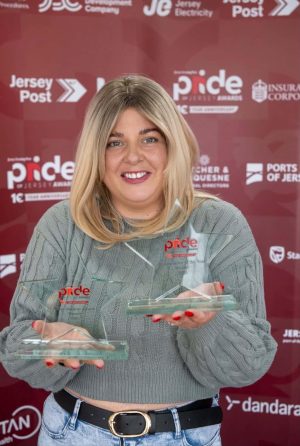
Recognition at the Pride of Jersey Awards
Sophie’s campaigning attracted attention within her local community.
She received a nomination for Ambassador of the Year at the Pride of Jersey Awards and went on to win.
She also received the Gary Burgess Award in recognition of her campaigning and advocacy.
For Sophie, these achievements represented something much more meaningful than personal recognition.
They showed that speaking openly about difficult experiences could help create change.
Life After Brain Tumour Surgery
Although Sophie has achieved a great deal through her campaigning, life after surgery has presented ongoing challenges.
The operation left her experiencing weakness on the left side of her body, including difficulties affecting her hand.
Her speech, word-finding and ability to process information also changed.
These neurological effects made returning to her previous working life extremely difficult.
As a salon owner, Sophie had previously spent long hours working with clients, managing her business and remaining constantly active.
After surgery and treatment, she needed to reconsider what her body and brain could manage.
Finding a New Purpose After Diagnosis
Instead of returning to exactly the life she had before, Sophie began directing more energy towards helping others.
She recognised that many people affected by neurological illness struggled to find the appropriate support.
Jersey has organisations offering different kinds of assistance, but patients may not always know which service to contact.
Sophie wanted to change that.
She began developing plans for a charity that could help people find the right services and support more easily.
Her Vision for Neurological Support in Jersey
Sophie’s idea centres on a clearer referral pathway.
She wants GPs, hospitals, A&E departments and other health services to have an easier way of directing patients towards organisations that can help them.
This could include charities supporting people with brain tumours, neurological conditions, cancer and the long-term effects of treatment.
She also wants money raised in Jersey to benefit local people.
The Hidden Costs of Travelling for Treatment
Sophie understands the financial and emotional impact of travelling away from Jersey for specialist medical care.
Even when patients qualify for funded travel, family members and carers may face additional costs.
During Sophie’s treatment, her family spent thousands of pounds on flights and accommodation.
The practical difficulties added to the stress of an already frightening experience.
Nobody should have to navigate these challenges without knowing where to find advice and support.
For Sophie, campaigning provides a way to turn those experiences into improvements that could help other families in the future.
What Sophie’s Grade 3 Astrocytoma Story Teaches Us
One of the things that stood out to me during my conversation with Sophie was how much her life had changed in such a short time.
She went from running a busy salon to facing a brain tumour diagnosis, major surgery and cancer treatment.
Alongside the physical effects came the emotional reality of worrying about her family, her future and the possibility of further tumour growth.
Yet Sophie found ways to use her experiences to support others.
Her story also highlights something I regularly hear when interviewing brain tumour patients.
The effects of a brain tumour do not always end when surgery or active treatment finishes.
Word-finding difficulties, fatigue, neurological changes, financial pressures and uncertainty about future scans can continue affecting daily life.
These challenges are not always visible to the people around us.
And although every diagnosis and recovery is different, listening to other people’s experiences can help us feel understood.
For Sophie, becoming an advocate has created a new sense of purpose during an incredibly difficult period of her life.
About Sophie’s Tumour: Grade 3 Astrocytoma
Sophie has shared that doctors diagnosed her with a grade 3 astrocytoma, a type of brain tumour within the glioma family.
Astrocytomas develop from cells known as astrocytes, which help support and maintain the brain and spinal cord.
Doctors use tumour grading, alongside other diagnostic information, to understand how a tumour is likely to behave.
Grade 3 astrocytomas are high-grade tumours and generally require specialist treatment and ongoing monitoring.
Today, molecular testing also plays an important role in classifying gliomas. A person’s individual diagnosis can depend on findings such as IDH mutation status.
How Do Doctors Treat Grade 3 Astrocytoma?
Treatment depends on several factors, including the tumour’s location, its molecular characteristics, the patient’s general health and how much of the tumour surgeons can safely remove.
Common approaches can include surgery, radiotherapy, chemotherapy and regular MRI scans.
For Sophie, treatment involved:
- Awake brain surgery to remove as much tumour tissue as safely possible.
- A course of radiotherapy.
- Chemotherapy, which she later stopped after discussing the side effects and scan findings with her medical team.
- Ongoing MRI monitoring.
Every person’s diagnosis is different, so another patient’s treatment plan may not follow the same pathway.
If you have questions about your own astrocytoma, your neurosurgeon or neuro-oncology team can explain your particular diagnosis, pathology results and treatment options.
If You Have Recently Been Diagnosed With an Astrocytoma
If you have arrived at this article after receiving an astrocytoma diagnosis, whether your own or someone you love, I hope Sophie’s experience helps you feel less alone.
Every astrocytoma story is different.
Tumours can vary in grade, location, molecular characteristics and how they affect a person’s everyday life.
Some people undergo surgery, radiotherapy or chemotherapy. Others may have regular scans or different treatment approaches.
Recovery also varies considerably.
Try not to compare your own situation too closely with somebody else’s.
Hearing other people’s stories can help you understand what they experienced, but their diagnosis or outcome does not determine yours.
Take things at your own pace, ask questions and reach out for support when you need it.
Where to Go After an Astrocytoma Diagnosis?
If you or someone you care about has been diagnosed with an astrocytoma, there are organisations offering information, emotional support, practical advice and opportunities to connect with others.
Local Support in Jersey
For people in Jersey, Sophie’s experience highlights the added pressures of travelling away from the island for specialist treatment. Local cancer support services, neurological charities, GP teams, hospital teams and community organisations may be able to help with practical advice, travel, emotional support and signposting.
Sophie is also working to improve this pathway herself, helping people find the right support sooner.
Astro Brain Tumour Fund
A UK charity dedicated to supporting people affected by low-grade gliomas, including Grade 1 and Grade 2 astrocytoma’s.
The charity provides information, opportunities to connect with others and funding for research into low-grade brain tumours.
The Brain Tumour Charity
Provides information about different types and grades of astrocytoma, possible treatments and living with a brain tumour.
It also offers emotional support, support groups and resources for patients, families and carers.
Read its information about astrocytomas
Brainstrust
Offers practical and emotional support to people living with brain tumours, including those affected by low-grade and high-grade gliomas.
Its services include individual support, coaching, information and opportunities to connect with others who understand life with a brain tumour.
Brain Tumour Support
A UK charity providing support for anyone affected by a brain tumour, including patients, families, carers and loved ones.
It offers individual and group support, opportunities to connect with others and specialist emotional support.
Brain Tumour Research
Funds research into brain tumours and campaigns for greater awareness and investment in research.
Its work aims to improve understanding, develop better treatments and ultimately find cures for all types of brain tumours.
NHS Neuro-Oncology and Rehabilitation Services
Your specialist medical team can help you understand your particular astrocytoma diagnosis, treatment options and follow-up care.
Depending on your needs, additional support may include physiotherapy, occupational therapy, speech and language therapy, psychological support or help managing seizures and fatigue.
Ask your GP, specialist nurse or neuro-oncology team about appropriate referrals.
Would You Like to Share Your Astrocytoma Story?
At Aunty M Brain Tumours, we believe every person’s experience deserves to be heard.
Whether you have recently been diagnosed, are undergoing treatment, living with long-term effects or supporting someone you love, your experience could help another person feel less alone.
Find out how to share your brain tumour story

Claire Bullimore is an influential figure in the brain tumour community. She embarked on her brain tumour journey and was diagnosed with an intraventricular meningioma. In response to her experiences, Claire founded ‘Aunty M Brain Tumours,’ a platform dedicated to sharing brain tumour stories. Based in London, England, Claire also identifies as a blogger and speaker for Aunty M Brain Tumours, shedding light on the challenges faced by those diagnosed and amplifying their voices for better awareness and support. Through her dedication and advocacy, Claire’s efforts have been recognized by Brain Tumour Research and other organizations, spotlighting her commitment to making a positive difference for individuals impacted by brain tumours.