Interview with Anna Gray: Living with Craniopharyngioma
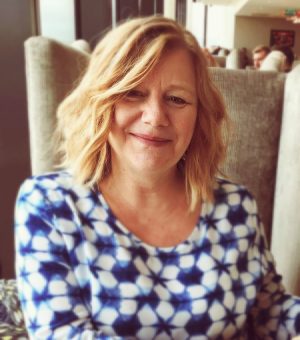
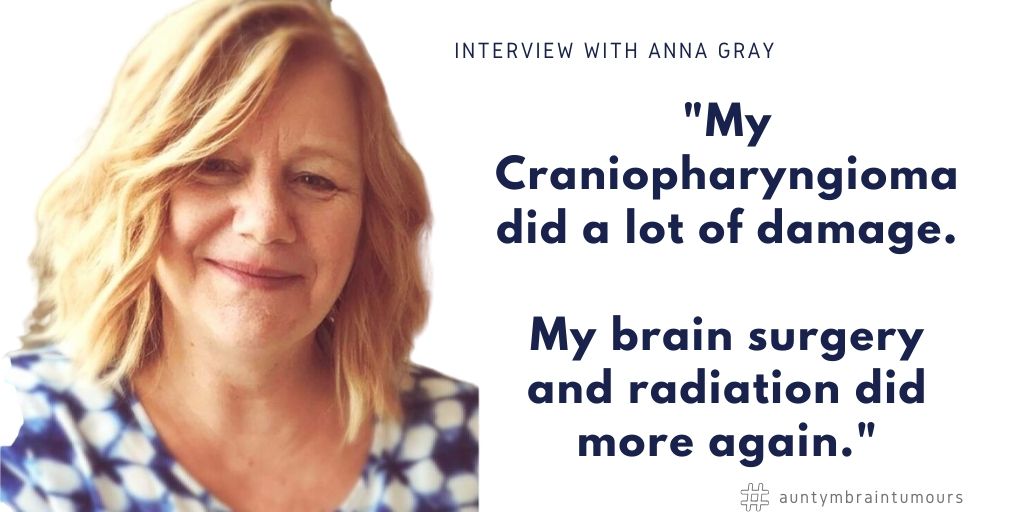
In 2013, Anna Gray began experiencing myoclonic jerks—a form of seizure—alongside extreme fatigue and other concerning symptoms. After months of uncertainty, she was diagnosed with a craniopharyngioma, a rare, non-cancerous brain tumour that develops near the pituitary gland and can significantly affect hormone levels, vision, and overall health.
This is Anna’s story.
How did you find out about your brain tumour diagnosis?
It all started in September 2012. I had just returned to work after the summer holidays, but I felt unusually exhausted—far more than normal. Towards the end of the month, I began experiencing myoclonic jerks.
At first, they only happened at night, but they quickly became more frequent and more severe. I was also having repeated low blood sugar episodes and felt constantly drained. My GP wasn’t sure whether to refer me to a neurologist or a diabetic consultant.
In February 2013, I had an MRI scan. A month later, I received a letter saying the scan was “essentially normal,” mentioning only a small cyst that was thought to be congenital.
But I knew that couldn’t be right—I had an MRI just four years earlier, and nothing had shown up then.
I decided to see a consultant privately, who referred me to a brain surgeon. A follow-up MRI in May confirmed that the tumour had grown.
After a change of surgeon, it was agreed that I would need brain surgery. However, the tumour unexpectedly shrank, delaying the operation until December 2014. It was then confirmed to be a craniopharyngioma.
Unfortunately, the tumour—and subsequent treatments—caused significant damage. I now live with multiple hormone deficiencies, including secondary Addison’s disease, an underactive thyroid, and diabetes insipidus. I also have a growth hormone deficiency, but I’m unable to receive treatment for that due to the risk of stimulating tumour growth.
Since then, I’ve also been diagnosed with fibromyalgia, degenerative disc disease, bulging discs, and inappropriate sinus tachycardia. A car accident in 2017 further worsened my neck pain.
What advice would you give to others facing a daunting diagnosis?
Stay calm.
Listen to your doctors.
Accept every offer of help.
If you have access to a support worker—such as through Macmillan or your healthcare team—ask questions and use their support. Let friends and family help you too. You don’t have to do it alone.
How are you doing now?
I live with constant pain, but I’ve learned to manage my life within my limitations. I still make time to go out, see friends, and enjoy life—just with rest days in between.
Some days are harder than others, but overall, I’m doing okay. I always try to stay positive—for myself and for my children.
What do you do now?
To keep myself occupied and earn a little income, I write books and create educational resources. I also run a blog called Be Your Own Sunshine.
These are things I can do in my own time, depending on how I feel. It gives me purpose.
I have written books which are available on Amazon HERE:
I also sell educational resources on the TES website and I have a BLOG called Be Your Own Sunshine
All of these I can do in my own time and when I’m up to it. It gives me some purpose.
Where does your passion for writing come from?
I’ve always enjoyed writing—whether it was witty poems for birthdays or essays during my degree. It’s something that’s always come naturally to me.
How do you manage to write so much?
I’ve kept diaries since I was a teenager, and when I became ill, I started writing more consistently. When I decided to tell my story, those diaries became the perfect foundation.
After writing three memoirs, I moved on to fiction. Interestingly, my old diaries still helped—some stories were based on my own experiences, while others came from friends.
I created detailed backstories for each character, mapped out the plot, and then just immersed myself in their world. Writing never felt like a struggle—I genuinely loved the process.
Do you have any new books planned?
Not at the moment, but I’d love to write again in the future. It’s something I truly enjoyed.
What motivates you?
My children, first and foremost. I don’t want them to just see me as “the sick person.” I want to be part of their lives and hopefully see my grandchildren one day.
I also try to always have something to look forward to—whether it’s a night out, a trip, or time with friends. Those moments help carry me through the harder days.
Who are your heroes?
Anyone who fights against the odds—people who rise above challenges and defy expectations. Paralympians, soldiers, teachers… they remind me that resilience is possible and give me hope.
What’s the most interesting thing you’ve done?
Buying a motorhome and travelling across Europe. In 2016, I spent more time away than at home. After my operation, I was so worried the tumour would return that I wanted to tick off as many bucket-list experiences as possible.
What is the toughest challenge survivors face?
Staying positive. It would be easy to give in to the pain and limitations, but maintaining a positive mindset is an ongoing battle.
You’re constantly fighting—your health, the system, your own thoughts. There’s always that fear the tumour might return, but I try not to let it take over.
Positivity is key to navigating it all.
What’s next for you?
I’d love to tour America—possibly next year. I’m also planning to downsize my home to something more manageable.
It will be a big change, especially as my children currently live with me and have been an incredible support. I’ll be adjusting to more independence.
Tell us something people might not know about you
As a child, I was an accomplished dancer and gymnast—very flexible! Ironically, now I’m as stiff as a board.
I also help promote my son Jack’s music. He’s an acoustic guitarist with an eclectic style, ranging from Oasis to Ed Sheeran.
Jack’s an acoustic guitarist and his music is quite eclectic; from Oasis to Ed Sheeran.
YouTube channel is HERE
And
Facebook Page: HERE
Final Thoughts
Anna’s journey has been incredibly challenging, yet her resilience and honesty shine through. By sharing her story, she continues to support and inspire others facing similar battles.
Her strength, creativity, and determination to live fully—despite everything—make her truly remarkable.
Find Anna on Social Media:
What is a Craniopharyngioma?
A craniopharyngioma is a rare, non-cancerous (benign) brain tumour that develops near the base of the brain, close to the pituitary gland and hypothalamus—areas responsible for hormone regulation, growth, metabolism, and many essential body functions.
Although benign, craniopharyngiomas can still have a serious impact because of their location. As they grow, they can press on surrounding structures in the brain.
Common symptoms can include:
- Persistent fatigue
- Hormonal imbalances
- Vision problems (due to pressure on the optic nerves)
- Headaches
- Seizures or neurological symptoms (such as myoclonic jerks)
- Changes in appetite, thirst, or growth
Treatment and long-term effects:
Treatment often involves a combination of surgery and radiotherapy, depending on the size and position of the tumour. However, because the tumour is located so close to critical structures, treatment can sometimes lead to long-term complications.
Many people, like Anna, may experience:
- Lifelong hormone deficiencies (requiring ongoing medication)
- Fatigue and chronic pain
- Additional health conditions linked to pituitary damage
Craniopharyngiomas are considered rare, and while survival rates are generally good, the condition can significantly affect quality of life, making ongoing support and management essential.

Claire Bullimore is an influential figure in the brain tumour community. She embarked on her brain tumour journey and was diagnosed with an intraventricular meningioma. In response to her experiences, Claire founded ‘Aunty M Brain Tumours,’ a platform dedicated to sharing brain tumour stories. Based in London, England, Claire also identifies as a blogger and speaker for Aunty M Brain Tumours, shedding light on the challenges faced by those diagnosed and amplifying their voices for better awareness and support. Through her dedication and advocacy, Claire’s efforts have been recognized by Brain Tumour Research and other organizations, spotlighting her commitment to making a positive difference for individuals impacted by brain tumours.