Taryn’s Grade 2 Astrocytoma Story: Seizures, Brain Surgery and Life in Zimbabwe
For almost a year, Taryn Baker knew something wasn’t right.
She was exhausted, experiencing seizures and struggling to get answers. Initially, her symptoms were attributed to epilepsy.
Eventually, an MRI revealed the real cause.
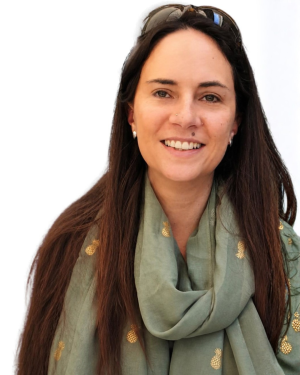
Taryn, who lives in Zimbabwe, had a Grade 2 astrocytoma.
Her diagnosis led to brain surgery, months of rehabilitation and the difficult task of relearning everyday skills many of us take for granted — including speaking, writing and using her right hand.
But there is much more to Taryn than her diagnosis.
She is someone who loves food, people, community and bringing others together. Her story is not only about what happened when a brain tumour entered her life, but also about the life she has continued to build around it.
When the Symptoms Started
In early 2018, Taryn began struggling with overwhelming tiredness.
Getting up for work became difficult, and by the end of the day she was so exhausted that she would fall asleep on the sofa.
She also experienced unexplained nausea.
Then, in March 2018, she began having seizures.
Concerned, Taryn went to her doctor and was referred for an EEG. The test showed unusual activity, but her symptoms were initially attributed to epilepsy.
She was prescribed anti-seizure medication and sent home.
But the seizures continued.
In fact, they became more frequent.
For around a year, Taryn repeatedly told her doctor that things were not getting better.
The MRI That Found Taryn’s Brain Tumour
Eventually, Taryn was referred to a specialist physician, who arranged an MRI scan.
This time, there was an explanation.
The scan showed a Grade 2 astrocytoma.
Taryn was booked for surgery on 19 March 2019.
After almost a year of seizures and uncertainty, she finally knew what had been causing them.
But removing the tumour would only be the beginning of her recovery.
Brain Surgery and the Start of Rehabilitation
Taryn’s surgery was successful, but afterwards she needed significant rehabilitation.
She required:
- Speech therapy
- Occupational therapy
- Physical therapy
Walking required work because she needed to rebuild her strength and coordination.
Her right hand also became extremely difficult to use. Taryn described it as feeling almost like a foreign object.
She began doing everyday things with her left hand instead — opening doors and windows, pouring drinks and eating.
She also couldn’t write.
These problems lasted for months.
Learning to Communicate Again
One of Taryn’s biggest challenges following surgery was communication.
She experienced apraxia of speech and Broca’s aphasia.
She knew what she wanted to communicate, but getting the words out was extremely difficult.
Instead of being able to speak normally, she might only manage a few essential words such as:
“Need drink.”
“Need up.”
“Need bathroom.”
Speaking required enormous concentration.
Even two years after surgery, Taryn said she still experienced problems finding words, particularly when she was in a group or around people she didn’t feel completely comfortable with. Aunty M Brain Tumours Podcast
For anyone who has experienced changes to speech or language after brain surgery, this part of Taryn’s story may feel particularly familiar.
When the Seizures Returned
Recovery wasn’t a straight line.
After surgery, Taryn went for a long period without seizures and began reducing her medication.
Unfortunately, the seizures returned.
She needed to restart her medication at a higher dose.
Her July 2020 MRI showed no tumour regrowth, although there was scar tissue. Her surgeon explained that the scar tissue could mean she would need to remain on anti-seizure medication long term. Aunty M Brain Tumours Podcast
Taryn later experienced further seizures, mainly while asleep, including nocturnal tonic-clonic seizures.
After doing so well for more than a year, their return understandably affected her confidence.
The Invisible Side of Brain Tumour Recovery
Taryn highlights something that many people affected by a brain tumour understand very well.
Not every consequence of a brain tumour or brain surgery can be seen.
She explained:
“I feel as it is an ‘unseen’ illness people expect you to get back to normal quickly.”
From the outside, someone may appear to have recovered.
But behind that appearance can be fatigue, communication difficulties, seizures, cognitive changes, loss of confidence and countless small challenges that other people never see.
For Taryn, recovery wasn’t simply about surviving an operation.
It was about learning how to live again afterwards.
Meet Taryn Beyond the Brain Tumour
This is an important part of Taryn’s story.
She is not defined by her astrocytoma.
Long before brain surgery and rehabilitation entered her life, Taryn loved bringing people together.
Food, celebrations and community have played a huge part in that.
As an outside caterer, she cooked for everything from weddings and board lunches to memorials.
At her home in Chisipite, Zimbabwe, she remembers hosting wonderful garden parties — relaxed, informal occasions filled with adults and children.
Creating food was about much more than cooking.
It was about connection.
Bringing People Together at Dusty Road
That same philosophy can be seen in Taryn’s work with Dusty Road Township Experience.
In her handwritten notes, she describes it as a cheerful space created to bring people together from around the world.
For Taryn, Dusty Road is about the people, décor, style, garden, community projects and, of course, Zimbabwean food.
It feels like a natural continuation of something she had been doing for years:
using food and hospitality to bring people together.
And that gives us another perspective on what it meant when brain surgery temporarily took away skills such as speaking, writing and using her right hand.
These weren’t abstract abilities.
They were part of a busy, social and creative life.
A Cup of Tea at the End of the Day
When asked how she deals with stress, Taryn’s answer reveals some of her humour.
She joked that perhaps she should say she goes jogging, does an hour of yoga or sits in a bubble bath.
But anyone who knows her, she says, would know that isn’t quite true.
Instead, after work she goes home, sits on the couch, chats to her cat and dog and has a cup of ordinary tea.
Then she winds down, showers and goes to bed.
As Taryn puts it:
“That sorts everything out!”
Sometimes recovery and self-care don’t need to look impressive.
Sometimes it’s simply home, animals, tea and rest.
Exploring Zimbabwe
Taryn’s handwritten pages also capture another side of her life: her interest in Zimbabwe and its extraordinary landscape and history.
She writes about travelling at sunrise with a group under the guidance of a professional geologist.
During one journey, the group travelled towards Guruwe, passing through Concession and Mvurwi before continuing through the Zimbabwean landscape.
One stop was a petrified forest, where ancient pieces of petrified wood lay scattered across the area.
Taryn describes seeing pieces several metres long that still resembled tree trunks.
Her notes also describe geological sites containing remarkable evidence of prehistoric life.
Walking Where Dinosaurs Once Walked
At one site, Taryn recorded seeing small dinosaur footprints preserved within red sandstone.
Other sites contained tracks from different dinosaurs, including sauropod footprints.
She wrote about seeing trackways containing numerous individual prints, some preserving distinctive features of the dinosaurs’ feet.
There were also fossils and other ancient formations within the sandstone.
Her handwritten notes convey genuine fascination with being able to stand there and see evidence of animals that lived millions of years ago.
It’s another lovely reminder that Taryn’s story continued outside hospitals, scans and rehabilitation rooms.
There was still a world to explore.
Faith, Family and Friends
Taryn describes losing a great deal of confidence through everything she experienced.
But she also describes what helped carry her through.
She calls them her:
“3 F’s – Faith, Family and Friends.”
Taryn is particularly grateful to her family, her husband, her neurosurgeon, the nurses who cared for her and everyone at the rehabilitation centre who helped her reach where she is today.
Taryn’s Advice to Someone Facing a Brain Tumour Diagnosis
After everything she has experienced, Taryn’s advice is wonderfully straightforward:
- Ask questions — even if you think they sound silly.
- Be kind and patient with yourself.
- Take time for yourself.
- It’s okay to be scared.
And most importantly:
Don’t give up.
More Than a Brain Tumour Diagnosis
Taryn’s story shows why I believe it is so important to listen to people’s lives beyond their diagnosis.
Yes, Taryn is a Grade 2 astrocytoma survivor.
She has experienced seizures, brain surgery, aphasia, apraxia, rehabilitation and the uncertainty that can accompany life after a brain tumour.
But she is also a wife, friend, traveller, caterer, animal lover and someone who has spent years bringing people together through food and community.
There are garden parties, Zimbabwean landscapes, dinosaur footprints, family, friends — and cups of tea.
A brain tumour became part of Taryn’s story.
It did not become her whole story.
A note from Aunty M
Thank you, Taryn, for trusting me with your story.
Brain tumour recovery doesn’t always end when someone leaves hospital. The effects can continue long after surgery, and many of them are invisible to everyone except the person experiencing them.
By sharing the difficult parts alongside the ordinary, funny and joyful parts of her life, Taryn helps other people understand what living beyond a brain tumour can really look like.
And perhaps her three F’s are something worth remembering:
Faith. Family. Friends.
Support for People With Astrocytoma or Brain Tumours
A brain tumour diagnosis can feel frightening and isolating, but support is available. Sophie’s story also shows how important it is to find people who understand — whether that is through charities, online communities, local support, specialist nurses, or others living with brain tumours.
Local Support in Jersey
For people in Jersey, Sophie’s experience highlights the added pressures of travelling away from the island for specialist treatment. Local cancer support services, neurological charities, GP teams, hospital teams and community organisations may be able to help with practical advice, travel, emotional support and signposting.
Sophie is also working to improve this pathway herself, helping people find the right support sooner.
Brainstrust
Brainstrust supports people with brain tumours and their families. They offer practical help, coaching, meet-ups and a helpline.


Claire Bullimore is an influential figure in the brain tumour community. She embarked on her brain tumour journey and was diagnosed with an intraventricular meningioma. In response to her experiences, Claire founded ‘Aunty M Brain Tumours,’ a platform dedicated to sharing brain tumour stories. Based in London, England, Claire also identifies as a blogger and speaker for Aunty M Brain Tumours, shedding light on the challenges faced by those diagnosed and amplifying their voices for better awareness and support. Through her dedication and advocacy, Claire’s efforts have been recognized by Brain Tumour Research and other organizations, spotlighting her commitment to making a positive difference for individuals impacted by brain tumours.