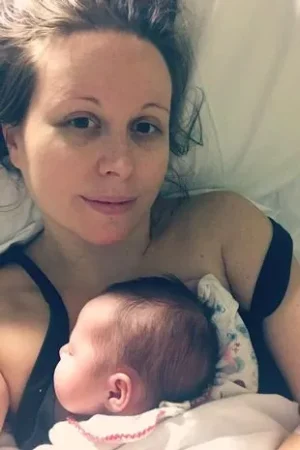
Just two weeks after giving birth to her fourth child, Hannah Grady was rushed to hospital following rapidly worsening neurological symptoms. An emergency scan revealed a large brain tumour, a cyst and hydrocephalus. It was a frightening diagnosis made even more extraordinary by the fact that Hannah had already undergone brain tumour surgery as a three-year-old child.
A Brain Tumour Diagnosis When Hannah Was Just Three
For Hannah Grady, from West Yorkshire, brain tumours were already part of her medical history long before she became a mum.
In 1993, when she was just three years old, Hannah was diagnosed with a juvenile pilocytic astrocytoma.
She remembers very little about that first experience.
She knows she underwent surgery to remove the tumour and was left with a large scar. She also had a ventriculoperitoneal (VP) shunt fitted to manage hydrocephalus, a condition in which excess cerebrospinal fluid builds up within the brain.
As Hannah grew older, life moved forward.
She became a mum, built a family with her partner Jordan and was busy raising their children.
But in October 2018, shortly after welcoming her fourth baby, Hannah became seriously unwell.
At first, the symptoms were thought to be caused by an ear infection and the physical effects of pregnancy.
Within days, however, she was struggling to walk, speak and care for her children.
The family was about to face another brain tumour diagnosis.

Feeling Unwell After Giving Birth to Pippa
On 1 October 2018, Hannah gave birth to her daughter, Pippa.
It should have been a time of settling into family life with a new baby.
Instead, Hannah began feeling increasingly poorly.
She visited her doctor several times and was told she had an inner ear infection.
Hannah thought her symptoms might be related to that infection, perhaps made worse by low iron following pregnancy.
But as the days passed, her condition deteriorated.
Her balance became increasingly poor.
She was walking into doors and experiencing the sensation that she was falling.
On 14 October, Hannah collapsed.
Jordan called an ambulance, and she was taken to hospital.
Hannah recalls being told that she had an infection related to giving birth and being sent home.
But her symptoms continued getting worse.
Her speech began to slur, and she developed weakness in her hands.
Even sending a text message or writing became difficult.
For Hannah, one of the hardest parts was no longer being able to look after her children.
She had a newborn baby and three other children who needed her, yet she was becoming increasingly unwell.
The Headache That Led to an Emergency Brain Scan
One night, Hannah developed an excruciating headache.
The pain was so severe that she could not sleep.
By the following morning, she knew she needed urgent medical attention.
She was unable to dress herself or walk properly.
Jordan helped her into the car and drove her to A&E, where he had to carry her because she could not walk.
After waiting for several hours, Hannah was finally sent for a CT scan.
She was frightened, but also relieved that her symptoms were being investigated.
The scan revealed a large brain tumour, an associated cyst and hydrocephalus.
For the second time in her life, Hannah was facing a serious brain tumour diagnosis.
She was admitted to hospital on 16 October 2018.
Because of swelling in her brain, doctors could not operate immediately.
Hannah was treated with steroids while the medical team prepared for surgery.
Five days later, she underwent a major operation.

Nine Hours of Brain Surgery
Hannah’s brain surgery lasted approximately nine hours.
The surgical team removed the tumour and cyst, relieving much of the hydrocephalus.
Before surgery, Hannah had been experiencing severe problems with her balance, speech and strength.
The symptoms had developed so rapidly that she had become dependent on Jordan for even the most basic activities.
But following the operation, she noticed a remarkable improvement.
Her symptoms eased dramatically.
Hannah felt much better and, despite how unwell she had been beforehand, did not require a formal rehabilitation programme at that stage.
It was an enormous relief.
After days of frightening deterioration, the operation had made a major difference.
But although Hannah had recovered from the immediate effects of the tumour, her experience was not over.
A Further Operation After a Pseudomeningocele
In 2019, Hannah experienced another setback.
She developed a fluid-related complication called a pseudomeningocele.
A pseudomeningocele is a collection of cerebrospinal fluid that can occur when fluid escapes through a defect in the protective covering around the brain or spinal cord, sometimes following surgery.
Hannah needed another operation and underwent a cranioplasty as part of the treatment.
After everything she had already experienced, facing more surgery was difficult.
She felt as though she was taking steps backwards in her recovery.
Fortunately, Hannah recovered well from the procedure.
When she shared her story in 2021, she was hopeful that no further complications would occur.
Living With Balance Problems and Sensory Overload
Although Hannah’s physical symptoms had improved significantly after her first operation, recovery was not simply a matter of returning to normal.
She continued experiencing mild problems with her balance.
Sometimes she felt as though her body was not positioned correctly or that she might fall.
The sensations were less severe than before surgery, but they continued affecting her confidence.
Hannah also found that she was much more sensitive to noise, crowds and busy environments.
Situations that she had previously managed without thinking could now feel overwhelming.
She often wore sunglasses outdoors, regardless of the weather, because they helped her cope with sensory stimulation.
These changes were not always obvious to other people.
Someone looking at Hannah might assume she had recovered completely.
But she was still adapting to the effects of her brain tumour and surgery.
Her experience highlights why recovery can be difficult to understand from the outside.
Medical treatment may be finished, yet the person can still be managing symptoms that affect everyday life.
The Emotional Impact of Brain Surgery
One of the most important parts of Hannah’s interview is her honesty about the emotional effects of what happened.
She spoke openly about experiencing post-traumatic stress disorder (PTSD), anxiety and a significant loss of confidence.
The frightening experience of collapsing, becoming seriously unwell and losing her balance had affected how safe she felt in everyday situations.
She was trying to adjust not only to physical changes but also to the feeling that she was no longer quite the person she had been before.
Looking back at older photographs could bring mixed emotions.
She remembered how she used to feel and missed aspects of her previous life.
There were moments when she recognised parts of her old confidence returning, but the process was gradual.
For Hannah, recovery involved more than healing from an operation.
It meant rebuilding trust in her body and learning how to manage situations that had once felt straightforward.
This is something I believe deserves more attention in brain tumour conversations.
When someone looks well, it does not necessarily mean they feel well.
Emotional recovery, confidence and the effects of trauma can continue long after someone leaves hospital.
Raising Four Children After a Brain Tumour Diagnosis
Throughout her experience, Hannah’s family remained one of her greatest motivations.
She and Jordan had four young children to care for, including Pippa, who had been born just two weeks before Hannah’s diagnosis.
The timing made everything particularly difficult.
Instead of being able to concentrate on her newborn baby and settling into family life, Hannah was dealing with hospital admissions and brain surgery.
She was grateful for Jordan’s support.
Having been together for 15 years at the time she shared her story, Hannah described him as someone she could depend on.
Her children also gave her a reason to keep moving forward through the difficult stages of recovery.
But being a mum after brain surgery was not always straightforward.
There were physical limitations, periods of anxiety and times when she needed additional help.
Hannah’s experience is a reminder that parents affected by brain tumours may be coping with their own recovery while worrying about the needs of their children.
Practical support from partners, family members and friends can make an enormous difference.
How Friendship and Community Helped Hannah
One of the things Hannah found most helpful was connecting with other women affected by brain tumours.
After her operation, she created a Facebook chat group where women could talk openly about their experiences.
By the time she shared her story, the group included around 20 people.
It gave Hannah somewhere to ask questions, share worries and speak with people who understood the challenges she was experiencing.
Her friends in the group were dealing with their own diagnoses and recoveries.
But they could also offer understanding in a way that was sometimes difficult for people who had never experienced a brain tumour.
Hannah formed meaningful friendships through those conversations.
She also received extraordinary support from another community she had been part of for several years.
When she became seriously unwell in 2018, a woman organised a GoFundMe appeal to help Hannah during her recovery.
The appeal raised approximately £5,000.
Hannah was deeply grateful, not only for the financial help but also for the practical and emotional support she received.
For her, it demonstrated what can happen when people come together to look after someone facing a difficult time.
Rebuilding Confidence Through Work
In 2020, Hannah began working for herself as a virtual assistant.
It was an important milestone in her recovery.
A woman who had become a close friend offered Hannah an opportunity to work as her assistant.
She believed in Hannah’s abilities and encouraged her to take on the role.
For Hannah, it meant far more than earning money.
After the uncertainty and loss of confidence that followed brain surgery, she was beginning to feel capable again.
She could contribute to her family financially, develop a skill and enjoy something outside her responsibilities as a mum.
The experience had a positive effect on her confidence and mental wellbeing.
It gave her a renewed sense of purpose.
For someone who had spent so much time dealing with illness and recovery, being able to do meaningful work was another step towards rebuilding her life.
The Little Things That Made Recovery More Comfortable
Towards the end of Hannah’s interview, I asked what she thought would make a thoughtful gift for someone recovering from a brain tumour.
Her answer was wonderfully practical.
She suggested a soft, comfortable pillow or a pillow spray.
After brain surgery, being able to rest your head comfortably can feel especially important.
Hannah remembered disliking the hospital pillow so much that Jordan brought her own pillow from home.
She also appreciated nice-smelling hand creams and other small comforts.
These weren’t expensive or elaborate gifts.
They were little things that helped her feel cared for during a difficult period.
I like this detail because it reminds us that support doesn’t always need to involve a grand gesture.
Sometimes a familiar pillow, a kind message or a small act of thoughtfulness can make somebody’s day easier.
What Hannah’s Experience Can Teach Someone Newly Diagnosed
Hannah’s story offers several useful lessons for people facing a pilocytic astrocytoma diagnosis or recovering from brain surgery.
1. Seek medical advice when symptoms are new, worsening or unexplained.
Hannah’s balance problems, weakness and speech difficulties became increasingly severe. Her experience highlights the importance of urgent assessment for significant neurological symptoms.
2. Write down your questions before appointments.
Hannah recommends preparing questions for your neurologist or specialist team. Having them written down can help when you’re feeling anxious or overwhelmed.
3. Find people who understand.
Hannah found considerable support through her online brain tumour group. Speaking to people who have experienced similar challenges may help you feel less isolated.
4. Take emotional changes seriously.
Hannah experienced anxiety, PTSD and loss of confidence after surgery. Emotional difficulties deserve care and attention just as physical symptoms do.
5. Give recovery time.
Even though Hannah’s symptoms improved significantly after surgery, she continued adjusting to balance problems and sensory overload. Progress was not always immediate.
6. Remember that small achievements matter.
For Hannah, starting work as a virtual assistant was an important part of regaining confidence and independence.
7. Accept practical help.
Support from Jordan, friends and her wider community helped Hannah through treatment and recovery. You don’t have to manage everything alone.
These lessons come from Hannah’s personal experience. Your own medical team can help you decide what is appropriate for your diagnosis and recovery.
Hannah’s Story: Finding Confidence After Brain Surgery
When Hannah gave birth to Pippa in October 2018, she could never have imagined that just two weeks later she would be facing another brain tumour diagnosis.
Having already undergone surgery for a pilocytic astrocytoma as a young child, she was now dealing with serious neurological symptoms, a large tumour, hydrocephalus and a nine-hour operation.
Although her symptoms improved dramatically after surgery, there were further complications and a long period of adjustment.
Hannah had to rebuild her confidence while raising four young children.
She also learned to manage the invisible effects of recovery, including anxiety, sensory overload and balance difficulties.
What stands out to me is the role that people played in helping her move forward.
Jordan’s support during the most frightening days.
The community that came together to help her family.
The women she met through her brain tumour group.
And the friend who believed in Hannah enough to offer her an opportunity to work again.
Hannah’s story is not simply about surviving brain surgery.
It is about rebuilding confidence, accepting support and recognising that life after a brain tumour may take time to find its rhythm again.
Thank you, Hannah, for sharing your experience with Aunty M Brain Tumours.
About Hannah’s Tumour: What Is a Pilocytic Astrocytoma?
A pilocytic astrocytoma is a type of brain tumour generally classified as CNS WHO grade 1.
It is usually slow-growing and more commonly diagnosed in children and young people, although adults can also develop this type of tumour.
Pilocytic astrocytomas are often relatively well-defined, which may make surgical removal possible.
However, their location can still cause serious symptoms or make treatment difficult.
Hannah was diagnosed with a juvenile pilocytic astrocytoma as a child and described another pilocytic astrocytoma diagnosis following the birth of Pippa.
Her original account does not establish whether the tumour discovered in 2018 was a recurrence of her childhood tumour or a separate tumour. That distinction would require her specialist medical records.
What Are the Symptoms of a Pilocytic Astrocytoma?
Symptoms depend on the tumour’s size and where it develops.
Possible symptoms include:
- Persistent or worsening headaches
- Nausea and vomiting
- Problems with balance and coordination
- Weakness in the arms or legs
- Changes in vision
- Speech difficulties
- Hydrocephalus caused by disrupted cerebrospinal fluid flow
For Hannah, worsening balance, weakness, slurred speech and severe headaches were particularly significant.
Sudden difficulty speaking, new weakness, collapse or other stroke-like symptoms require emergency medical assessment.
What Is Hydrocephalus?
Hydrocephalus occurs when cerebrospinal fluid builds up within the brain’s fluid-filled spaces, increasing pressure on surrounding structures.
It can develop when a tumour interferes with normal fluid circulation.
Symptoms may include headache, nausea, balance difficulties and other neurological problems.
Treatment depends on the underlying cause.
Some people require surgery to remove an obstruction, while others may need a shunt to help drain excess fluid.
Hannah had a VP shunt fitted during childhood. In 2018, removing her tumour and cyst relieved much of the hydrocephalus associated with that episode.
How Is a Grade 1 Pilocytic Astrocytoma Treated?
Treatment depends on the tumour’s location, size, symptoms and whether it can be safely removed.
Surgery: Often the preferred treatment when the tumour is accessible. Complete removal may provide long-term control in some cases.
MRI monitoring: Follow-up scans may be recommended to check for remaining or recurrent tumour.
Further treatment: Radiotherapy, chemotherapy or targeted treatments may be considered in selected circumstances, particularly when surgery is not possible or the tumour progresses.
Hydrocephalus treatment: Some patients may need additional procedures to manage a build-up of cerebrospinal fluid.
Rehabilitation and supportive care: Physiotherapy, occupational therapy, psychological support and other services can help with ongoing symptoms.
Treatment should always be planned by a specialist medical team.
Where to Find Support After a Pilocytic Astrocytoma Diagnosis
If you’ve recently been diagnosed with a pilocytic astrocytoma, or are supporting someone who has, these organisations may be helpful.
The Brain Tumour Charity
https://www.thebraintumourcharity.org/
Provides information about pilocytic astrocytoma, treatment and life after diagnosis, along with practical and emotional support.
Astro Brain Tumour Fund
Offers support and information for people affected by low-grade gliomas and helps fund research.
Brainstrust
Provides personalised practical and emotional support for people living with brain tumours.
Brain Tumour Support
https://www.braintumoursupport.co.uk/
Offers individual and group support for patients, families and carers.
Brain Tumour Research
https://braintumourresearch.org/
Funds research and campaigns for improved awareness and treatments.
If you’re having difficulties with balance, sensory overload, anxiety or confidence after surgery, ask your GP or neuro-oncology team whether rehabilitation or psychological support is available.
Read More Pilocytic Astrocytoma Stories
If Hannah’s experience has resonated with you, you may find these other stories helpful.
Mel Kelly’s Pilocytic Astrocytoma Story
https://auntymbraintumours.com/mel-pilocytic-astrocytoma-story/
Chelsea’s Pilocytic Astrocytoma Story
https://auntymbraintumours.com/chelseas-pilocytic-astrocytoma-story/
Explore All Pilocytic Astrocytoma Stories
https://auntymbraintumours.com/category/pilocytic-astrocytoma/
Would You Like to Share Your Brain Tumour Story?
At Aunty M Brain Tumours, I believe sharing personal experiences can help other people feel understood and less alone.
Whether you’re newly diagnosed, recovering from treatment or supporting somebody you love, your story may help another person find connection and encouragement.
If you’d like to share your experience, please get in touch through the website.
Hannah’s story is based on her original written interview, published on 20 February 2021. References to her family, work and recovery reflect that time. The medical information is provided for general awareness and does not replace advice from a specialist healthcare professional.


Claire Bullimore is an influential figure in the brain tumour community. She embarked on her brain tumour journey and was diagnosed with an intraventricular meningioma. In response to her experiences, Claire founded ‘Aunty M Brain Tumours,’ a platform dedicated to sharing brain tumour stories. Based in London, England, Claire also identifies as a blogger and speaker for Aunty M Brain Tumours, shedding light on the challenges faced by those diagnosed and amplifying their voices for better awareness and support. Through her dedication and advocacy, Claire’s efforts have been recognized by Brain Tumour Research and other organizations, spotlighting her commitment to making a positive difference for individuals impacted by brain tumours.