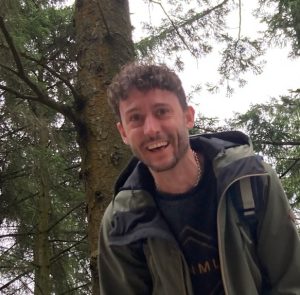
How an unexpected seizure during a football match led to Matthew White discovering he had an extensive astrocytoma brain tumour.
In October 2023, Matthew White was enjoying an ordinary game of football when something happened that would change his life.
He was a husband, a father of two and someone who considered himself relatively fit and healthy. Apart from feeling a little more tired than usual, there had been no obvious warning signs that anything was seriously wrong.
Then, around an hour into his football match, Matthew experienced an overwhelming sensation that he described as feeling like being struck by lightning.
He didn’t realise it at the time, but he had experienced a focal aware seizure.
More seizures followed, leading to urgent medical investigations and the discovery of an extensive astrocytoma brain tumour.
When Matthew joined me on the Aunty M Brain Tumours Talk Show, he shared what happened next: a ten-hour brain operation, radiotherapy, chemotherapy and the emotional reality of being told that his tumour was treatable but incurable.
From Playing Football to a Brain Tumour Diagnosis
Before that Thursday evening in October, Matthew had little reason to suspect he had a brain tumour.
He hadn’t been experiencing the persistent headaches, nausea or memory difficulties that many people associate with brain tumour symptoms.
What he did experience was something much harder to recognise.
His first focal aware seizure happened while he was playing football. Unlike some seizures, which cause a person to lose consciousness or experience visible convulsions, focal aware seizures can occur while someone remains fully conscious.
For Matthew, it was an incredibly strange and frightening sensation.
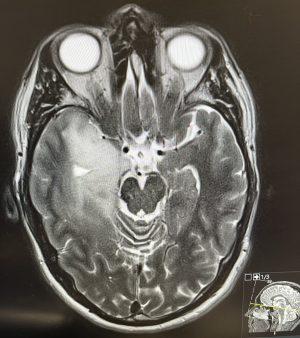
When further seizures followed, he sought medical attention and underwent investigations, including a CT scan.
The results revealed a brain tumour.
Within days, Matthew had gone from playing football and getting on with everyday life to facing a diagnosis he could never have imagined.
Doctors identified an extensive astrocytoma, a type of glioma that develops from cells called astrocytes in the brain.
The tumour would require major treatment, and Matthew was faced with the devastating news that although doctors could treat it, they could not cure it.
Listen to Matthew tell his story in his own words in the Aunty M Brain Tumours Talk Show, or continue reading below.
What Are Focal Aware Seizures?
One of the reasons Matthew’s experience is so important to share is that his first symptoms were not what many people expect from a brain tumour.
A focal aware seizure starts in a particular area of the brain, and the person remains aware of what is happening.
Symptoms can include unusual sensations, changes in vision, tingling, sudden emotional feelings or experiences that are difficult to describe.
For some people, seizures are the first noticeable indication of an underlying brain tumour.
However, seizures can have many causes, and experiencing one does not automatically mean someone has a brain tumour.
Matthew’s experience highlights why new or unexplained neurological symptoms should be medically investigated.
Undergoing Ten Hours of Brain Surgery
Following his diagnosis, Matthew faced the prospect of major brain surgery.
His operation lasted approximately ten hours.
Brain surgery for an astrocytoma can be particularly complex because some of these tumours grow into surrounding brain tissue, making complete removal difficult or impossible.
Neurosurgeons must balance removing tumour tissue with protecting areas of the brain responsible for important functions.
For Matthew, surgery was only one stage of his treatment.
There was the physical recovery from a major operation, the need to manage seizures and the knowledge that more treatment lay ahead.
Before his diagnosis, life had revolved around work, football and family.
Now, hospital appointments, medication and recovery had become part of his everyday routine.
Preparing for Radiotherapy: The Mask and Treatment Planning
After brain surgery, Matthew’s treatment journey continued with radiotherapy and chemotherapy.
One of the photographs Matthew shared shows him being fitted with a specially made radiotherapy mask.
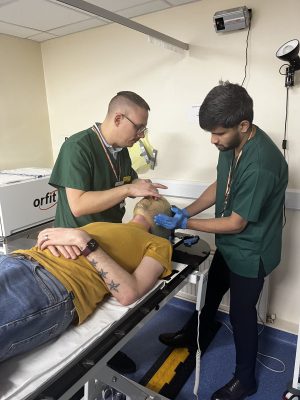
For people who have never experienced brain radiotherapy, the idea of wearing a mask can sound frightening.
The mask is designed to help keep the head still and in precisely the right position while treatment is delivered.
It is made to fit the individual patient and is used to improve the accuracy of treatment.
Although the mask itself does not deliver radiation, it plays an important role in ensuring the treatment is directed where it is needed.
For some patients, the experience can feel uncomfortable or claustrophobic, particularly during their first appointment.
Seeing photographs of the preparation process can help others understand what to expect.
Radiotherapy and Chemotherapy for Astrocytoma
Matthew’s treatment included radiotherapy and chemotherapy to help control the remaining tumour.
Radiotherapy uses carefully targeted radiation to damage tumour cells, while chemotherapy uses medication to help destroy or slow the growth of cancer cells.
The treatment recommended for an astrocytoma depends on several factors, including the tumour’s grade, molecular characteristics, location and how much could be removed during surgery.
For Matthew, this meant continuing to attend hospital while also trying to recover from everything he had already experienced.
His photograph shows one of the realities that can sometimes be overlooked when people talk about brain tumour treatment.
Behind every treatment plan is a person adjusting to hospital visits, unfamiliar equipment and the uncertainty of how their body will respond.
The physical effects of treatment can be demanding, with fatigue often becoming a significant challenge.
For Matthew, managing treatment was not simply about getting through appointments. It was also about finding a way to continue living his life alongside them.
Living with Seizures After Brain Surgery
Although Matthew had undergone surgery, seizures continued to be an important part of his experience.
He needed medication to help manage them, but as he explained during our conversation, medication can bring its own difficulties.
Side effects, tiredness and adjusting to different routines can all affect everyday life.
For someone who had previously enjoyed being active, these changes were understandably frustrating.
Recovery from brain surgery is not always a straight line.
Some days can feel encouraging, while others are more difficult.
There may be improvements in one area while another continues to cause problems.
Matthew’s experience reminds us that the effects of a brain tumour can continue long after the initial diagnosis and surgery.
Coming to Terms with an Incurable Brain Tumour
One of the most moving parts of my conversation with Matthew was his honesty about the emotional impact of his diagnosis.
Being told that a brain tumour is incurable is not something anyone can easily prepare for.
Matthew had to process the seriousness of his condition while also thinking about his wife, children and their future together.
There was fear, uncertainty and the difficult task of adjusting to a life that suddenly looked very different.
He also spoke about the importance of getting emotional support.
Counselling, conversations with loved ones and speaking to people who understood the realities of living with a brain tumour helped him manage some of these challenges.
There can be enormous pressure on people with serious illnesses to remain positive.
But patients do not always feel brave, and they should not have to pretend that they do.
Sometimes, being able to acknowledge the fear and talk openly about what is happening can be an important part of coping.
Finding Strength in the Brain Tumour Community
As Matthew began navigating life with his diagnosis, connecting with the wider brain tumour community became increasingly important.
He found support through his family, healthcare professionals, charities and others with similar experiences.
There is something valuable about speaking to another person who understands the uncertainty of waiting for scan results, the effects of medication or the challenges of recovering from brain surgery.
Even when two people have the same type of brain tumour, their experiences may be very different.
But having someone who understands part of what you are going through can make a meaningful difference.
That connection is one of the reasons Matthew wanted to share his story.
Using His Experience to Raise Brain Tumour Awareness
Matthew has also become involved in brain tumour awareness and campaigning.
Through his involvement with The Brain Tumour Charity, he has helped raise awareness of the need for better research, treatment and support for people affected by brain tumours.
For patients living with an incurable diagnosis, developments in research can represent the possibility of new treatment options and improved quality of life.
But awareness is also about helping people understand what happens beyond diagnosis.
It is about the families adjusting alongside their loved ones, the practical difficulties of treatment and the emotional support people may need.
By speaking openly about his own experience, Matthew is helping give a voice to those who may be facing similar challenges.
Learning to Live with Uncertainty
Matthew’s story is not one of pretending that everything is fine.
He understands the seriousness of his diagnosis and the challenges that lie ahead.
But he also speaks about the importance of family, gratitude and making the most of the opportunities in front of him.
His wife, children and the support he has received have been central to that outlook.
For Matthew, hope does not mean ignoring the reality of an incurable brain tumour.
It means focusing on the things that matter, finding support when he needs it and using his experience to help others.
What Matthew’s Astrocytoma Story Teaches Us
There are several important messages from Matthew’s experience.
First, brain tumour symptoms are not always obvious. Matthew’s focal aware seizures were his main warning sign, despite having none of the more commonly recognised symptoms.
Second, treatment involves much more than an operation. Recovery, seizures, medication, radiotherapy and chemotherapy can all affect everyday life.
Finally, emotional support matters. Having people to speak to, whether family members, counsellors or other brain tumour patients, can make an enormous difference.
Matthew’s story shows why it is so important to look beyond the diagnosis and understand the person experiencing it.
What Is an Astrocytoma Brain Tumour?
An astrocytoma is a type of brain tumour that develops from astrocytes, cells that support and protect nerve cells in the brain.
Astrocytomas belong to a wider group of tumours known as gliomas.
They can vary considerably in their growth, grade and response to treatment.
Possible symptoms include seizures, headaches, changes in vision, speech difficulties, weakness and changes in memory or concentration.
Treatment may involve surgery, radiotherapy, chemotherapy and regular MRI scans, depending on the individual diagnosis.
For more information, visit The Brain Tumour Charity’s astrocytoma information.
Thank You for Sharing Your Story, Matthew
I want to thank Matthew for joining me on the Aunty M Brain Tumours Talk Show and speaking so openly about his experience.
It is not easy to share the frightening and deeply personal parts of a brain tumour diagnosis.
But conversations like this help other people understand that behind every diagnosis is a person with a family, a life and hopes for the future.
Whether you are newly diagnosed, undergoing treatment, recovering from brain surgery or supporting someone you love, I hope Matthew’s story helps you feel less alone.
Every brain tumour story is different, and every person’s experience deserves to be heard.
Read More Astrocytoma Stories
Read more personal Astrocytoma stories on Aunty M Brain Tumours
If You Have Recently Been Diagnosed With an Astrocytoma
If you have landed on this page after an astrocytoma diagnosis, whether it is your own or someone you love, please know you are not alone.
Every astrocytoma story is different.
Astrocytomas can vary in grade, location and how they affect a person’s life. Some are slower-growing, while others are more aggressive.
Some people have surgery, radiotherapy or chemotherapy. Others may have regular scans to monitor their tumour. Some experience long-term effects, while others face different challenges during treatment and recovery.
Try not to compare your journey too closely with anyone else’s.
Reading other people’s experiences can offer comfort, understanding and reassurance. However, another person’s diagnosis or outcome does not determine what will happen to you.
Take things at your own pace, ask questions and remember that you do not have to face this journey alone.
Where to Go After an Astrocytoma Diagnosis?
If you or someone you care about has been diagnosed with an astrocytoma, there are organisations offering information, emotional support, practical advice and opportunities to connect with others.
Astro Brain Tumour Fund
A UK charity dedicated to supporting people affected by low-grade gliomas, including Grade 1 and Grade 2 astrocytomas.
The charity provides information, opportunities to connect with others and funding for research into low-grade brain tumours.
The Brain Tumour Charity
Provides information about different types and grades of astrocytoma, possible treatments and living with a brain tumour.
It also offers emotional support, support groups and resources for patients, families and carers.
Visit The Brain Tumour Charity
Read its information about astrocytomas
brainstrust
Offers practical and emotional support to people living with brain tumours, including those affected by low-grade and high-grade gliomas.
Its services include individual support, coaching, information and opportunities to connect with others who understand life with a brain tumour.
Brain Tumour Support
A UK charity providing support for anyone affected by a brain tumour, including patients, families, carers and loved ones.
It offers individual and group support, opportunities to connect with others and specialist emotional support.
Brain Tumour Research
Funds research into brain tumours and campaigns for greater awareness and investment in research.
Its work aims to improve understanding, develop better treatments and ultimately find cures for all types of brain tumours.
NHS Neuro-Oncology and Rehabilitation Services
Your specialist medical team can help you understand your particular astrocytoma diagnosis, treatment options and follow-up care.
Depending on your needs, additional support may include physiotherapy, occupational therapy, speech and language therapy, psychological support or help managing seizures and fatigue.
Ask your GP, specialist nurse or neuro-oncology team about appropriate referrals.
Would You Like to Share Your Astrocytoma Story?
At Aunty M Brain Tumours, we believe every person’s experience deserves to be heard.
Whether you have recently been diagnosed, are undergoing treatment, living with long-term effects or supporting someone you love, your experience could help another person feel less alone.
Find out how to share your brain tumour story

Claire Bullimore is an influential figure in the brain tumour community. She embarked on her brain tumour journey and was diagnosed with an intraventricular meningioma. In response to her experiences, Claire founded ‘Aunty M Brain Tumours,’ a platform dedicated to sharing brain tumour stories. Based in London, England, Claire also identifies as a blogger and speaker for Aunty M Brain Tumours, shedding light on the challenges faced by those diagnosed and amplifying their voices for better awareness and support. Through her dedication and advocacy, Claire’s efforts have been recognized by Brain Tumour Research and other organizations, spotlighting her commitment to making a positive difference for individuals impacted by brain tumours.