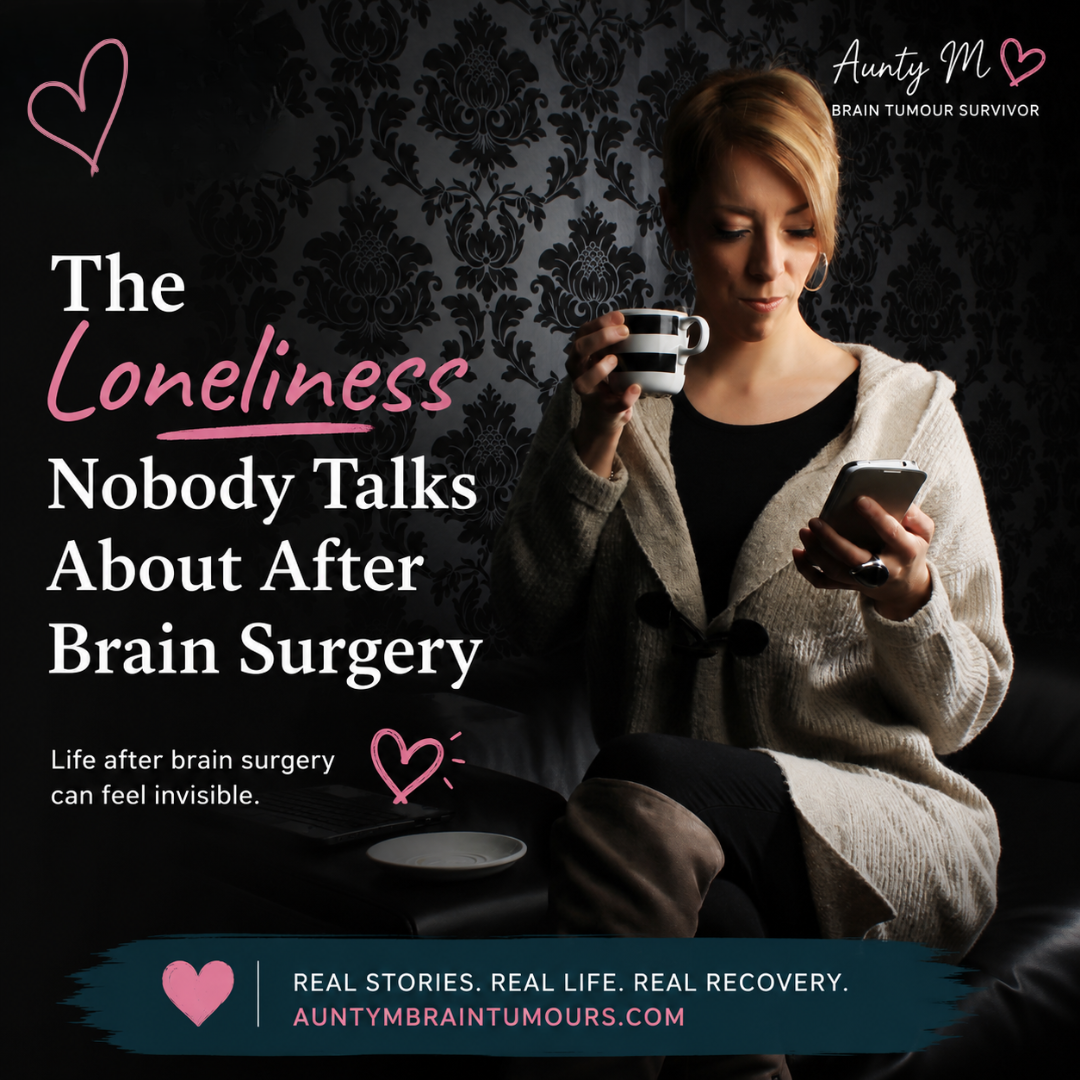
“You can survive something and still feel lonely afterwards.”
One of the most unexpected parts of surviving a brain tumour was how lonely recovery sometimes felt.
Not because I didn’t have supportive people around me.
I did.
But there’s a certain kind of loneliness that comes from realising your life has changed in ways other people can’t fully see or understand.
After brain surgery, people often assumed the difficult part was over.
The operation had finished.
I was alive.
I looked “well”.
And because of that, many people understandably thought life had simply returned to normal again.
But internally, I was still trying to process everything that had happened.
Physically, emotionally and mentally.
There were days where I felt disconnected from the person I used to be.
Days where exhaustion completely overwhelmed me.
Days where I struggled to explain what recovery actually felt like because I didn’t fully understand it myself.
One of the hardest things about invisible recovery is that people can’t always see the battles you’re fighting.
They can’t see:
- the anxiety
- the brain fog
- the emotional exhaustion
- the fear
- the pressure to appear “fine”
And sometimes that invisibility creates loneliness.
Not because people don’t care.
But because survival is often far messier than most people realise.
For a long time, I felt guilty for struggling emotionally after surviving something so serious.
I told myself I should simply feel grateful.
And of course I was grateful.
But gratitude and grief can exist together.
“Gratitude and grief can exist together.”
So can survival and sadness.
That’s something I wish more people openly talked about.
Over the years, I slowly started learning that loneliness after illness doesn’t mean you’re failing at recovery.
Sometimes it simply means you’re healing through experiences that changed you deeply.
And honestly?
I think many survivors carry that quiet loneliness far more than people realise.
One of the biggest lessons I’ve learnt after brain surgery is that emotional recovery deserves just as much compassion as physical recovery.
Tomorrow I’ll be sharing another lesson from the last 18 years of surviving, recovering and rebuilding life after a brain tumour.
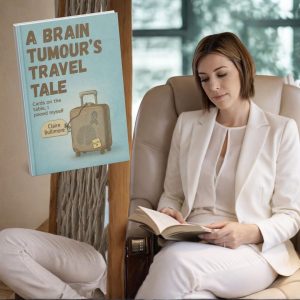
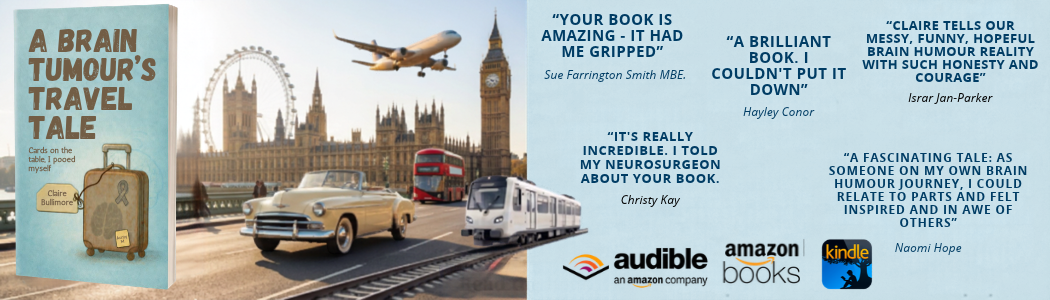
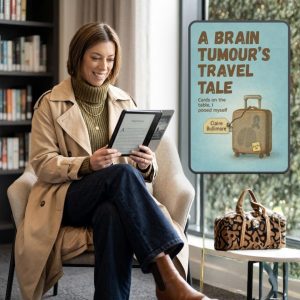
A Brain Tumour’s Travel Tale: Cards on the Table, I Pooed Myself
AVAILABLE NOW ON AMAZON
🎧 Audible Audiobook
Narrated by Lucy Brown and perfect for listeners who want an immersive, emotional experience.

📖 Kindle eBook
Take Claire’s story anywhere with the Kindle edition.
📚 Paperback Edition
A beautiful physical copy to keep, gift, underline, cry over, and laugh through.
👉 Order the Paperback on Amazon