Epilepsy and a DNET Brain Tumour: Joss Fleming’s Story
When Déjà Vu Turned Out to Be Seizures
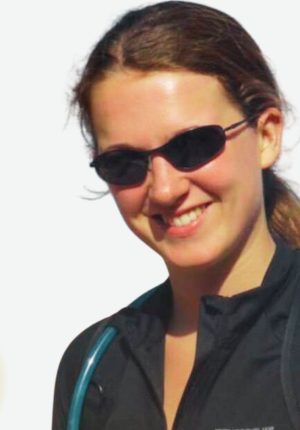
Joss Fleming was just 16 when she began experiencing something strange.
At first, the episodes felt like déjà vu.
They were unusual, but she did not realise they were seizures — or that something was happening inside her brain.
Like many teenagers, Joss carried on with life.
But the episodes continued.
Eventually, one frightening incident made it impossible to ignore what was happening.
The Tennis Court Incident That Changed Everything
While away with her family, Joss was on a tennis court when something alarming happened.
She suddenly began running backwards and afterwards had no memory of what she had done.
For her family, this was the moment when things became much more serious.
They insisted that Joss needed medical investigation.
She eventually had an MRI scan.
The scan revealed a tumour in the right temporal lobe of her brain.
Joss’s strange episodes finally had an explanation.
She had epilepsy caused by a brain tumour.
The tumour was a dysembryoplastic neuroepithelial tumour, commonly shortened to DNET.
Watch Joss Tell Her Story
Joss joined me on the Aunty M Brain Tumours Talk Show to talk about her experience of epilepsy, DNET, brain surgery and life after treatment.
Watch Joss tell her story in full in the interview below, or keep reading for the written version.
Listen to Joss tell her story in full in the Aunty M Brain Tumours Talk Show interview below, or keep reading for the written version
Living With Epilepsy and a DNET
Receiving a diagnosis gave Joss an explanation for her seizures, but it did not immediately solve them.
For around three years, she tried different anti-seizure medications in an attempt to control the epilepsy.
Finding the right treatment was difficult.
Some medications did not control the seizures effectively, and at times Joss was experiencing as many as 15 seizures a week.
Living with seizures on that scale affected everyday life.
There was also the uncertainty of never quite knowing when the next seizure might happen.
Eventually, it became clear that medication alone was not giving Joss the seizure control she needed.
Her medical team began discussing another option.
Brain surgery.
Deciding to Have Brain Surgery
The idea of brain surgery can be frightening for anyone.
For Joss, however, continuing to experience frequent seizures was also having a significant impact on her life.
Her medical team recommended surgery to treat the tumour and epilepsy.
In 2011, Joss underwent two operations at the National Hospital for Neurology and Neurosurgery in London.
Her surgery used advanced neuroimaging technology to help the surgical team locate and remove the tumour as precisely as possible.
It became a major turning point in her life.
Two Brain Operations in 2011
Joss’s treatment was not simply a case of having an operation and immediately returning to normal life.
She underwent two surgeries and experienced swelling afterwards.
Recovery took time.
Brain surgery can affect people very differently, and the experience does not end when someone leaves the operating theatre.
There is healing, uncertainty and the gradual process of discovering what life will look like afterwards.
For Joss, however, the outcome would eventually be life-changing.
Becoming Seizure-Free
After years of living with epilepsy and frequent seizures, surgery gave Joss something she had desperately hoped for.
She became seizure-free.
Going from experiencing up to 15 seizures a week to life without seizures opened possibilities that had previously seemed difficult or impossible.
It also gave Joss the opportunity to start thinking about what she wanted from life beyond being a patient.
Life After DNET Surgery
Joss did not want her brain tumour or epilepsy to define what she could do with the rest of her life.
After recovering from surgery, she began embracing adventure.
She has gone bungee jumping.
She has skydived.
She has even been deep-sea diving.
For someone whose teenage years and early adulthood had been shaped by seizures, these experiences represented something much bigger than simply ticking activities off a list.
They were about living.
Joss’s experience also taught her an important lesson: having a medical condition does not necessarily mean automatically giving up the things you dream of doing.
It does mean being sensible, understanding your own circumstances and discussing activities with the medical professionals looking after you.
Every person’s situation is different.
Not Letting a Diagnosis Decide Your Whole Future
One of the strongest messages from Joss’s story is about possibility.
A brain tumour diagnosis can suddenly make life feel smaller.
Epilepsy can add another layer of restrictions and uncertainty.
But Joss encourages people to talk to their doctors, ask questions and understand what is genuinely possible for them rather than assuming they can never do something again.
Her life after treatment has been very different from those early years of frequent seizures.
The diagnosis is part of her story.
It is not the whole story.
Supporting The National Brain Appeal
Joss’s experience as a patient also led her to support The National Brain Appeal.
She had been treated at the National Hospital for Neurology and Neurosurgery and benefited from specialist facilities and technology used in neurological and neurosurgical care.
Her experience gave her a personal understanding of why investment in specialist brain tumour services, research and technology matters.
Giving something back became another part of life after treatment.
My Adventure Journal
Joss also went on to write My Adventure Journal.
The journal was created to help young people prepare for adventures away from their normal homes and routines.
Whether that means a day trip, a weekend away or a school holiday, the journal gives young people space to understand what is coming, record their experiences and keep memories from their adventure.
It feels particularly fitting considering the role adventure has played in Joss’s own life after brain tumour treatment.

Important Takeaways From Joss’s Story
Joss’s experience is a reminder that seizures do not always look the way we might expect.
Her earliest episodes felt like déjà vu.
It was only when the episodes became more obvious that the possibility of a neurological cause was investigated.
Her story also highlights that:
- Some brain tumours can cause epilepsy.
- Seizures can take different forms and may not always involve collapsing or convulsions.
- Finding the right anti-seizure medication can take time.
- For some people with DNET and difficult-to-control epilepsy, surgery may be considered.
- Recovery after brain surgery is different for everyone.
- Life after treatment can contain possibilities that may have seemed impossible during diagnosis and treatment.
Understanding DNET Brain Tumours
DNET stands for dysembryoplastic neuroepithelial tumour.
It is a rare type of brain tumour that is typically slow-growing and is particularly associated with seizures.
DNETs are often found in areas of the brain involved in seizure activity, including the temporal lobe.
Because they can grow slowly, seizures may be the main symptom that eventually leads to investigation and diagnosis.
Joss’s tumour was found in her right temporal lobe after investigations into her seizures.
Why Can a DNET Cause Epilepsy?
A seizure happens when there is a sudden burst of abnormal electrical activity in the brain.
Brain tumours can sometimes interfere with the normal electrical activity of surrounding brain tissue.
DNETs have a particularly strong association with epilepsy, which means seizures can be one of the main reasons someone with this type of tumour first seeks medical help.
Seizures can also look very different from person to person.
Some may involve loss of consciousness and obvious physical movements.
Others can be much more subtle.
They may involve unusual sensations, changes in awareness, strange smells or tastes, confusion, or experiences that feel like déjà vu.
This is one reason Joss’s early symptoms were so easy to misunderstand.
DNET, Epilepsy and Brain Surgery
Treatment for a DNET depends on the individual.
Doctors consider factors such as where the tumour is located, the person’s symptoms and how well seizures are controlled.
For some people, anti-seizure medication may help manage epilepsy.
When seizures remain difficult to control, surgery may be considered if doctors believe it can be carried out safely and is appropriate for that individual.
Joss’s experience shows why treatment decisions are highly personal.
What was right for her will not automatically be right for somebody else with the same diagnosis.
If You Have Recently Been Diagnosed With a DNET
Being told you have a rare brain tumour can feel frightening — particularly when you have never heard the name before.
You may suddenly find yourself trying to understand words such as DNET, temporal lobe, epilepsy and neurosurgery all at once.
You do not have to understand everything immediately.
It may help to:
- Write down questions before appointments.
- Ask your medical team to explain unfamiliar terminology in plain language.
- Keep a record of seizures or unusual episodes if your medical team recommends it.
- Take someone you trust to important appointments where possible.
- Ask what treatment options are available and why a particular option is being recommended.
- Ask who you should contact if your seizures or symptoms change.
Most importantly, remember that another person’s DNET story cannot predict your own.
Joss’s experience is her experience.
Your tumour, seizures, treatment options and recovery may be different.
Where to Find Support
If you or someone you love has been diagnosed with a DNET, epilepsy or another brain tumour, support is available.
You may find information and support through:
Joss’s story began with strange episodes of déjà vu at 16 years old.
It led through epilepsy, a rare brain tumour diagnosis, years of seizures, medication and two brain operations.
But that is not where her story ends.
Life afterwards has included adventure, fundraising, writing and experiences she may once have wondered whether she would ever be able to have.
Her story is an important reminder that life after a brain tumour diagnosis can look very different from the life you imagined — without necessarily becoming a smaller one.

Claire Bullimore is an influential figure in the brain tumour community. She embarked on her brain tumour journey and was diagnosed with an intraventricular meningioma. In response to her experiences, Claire founded ‘Aunty M Brain Tumours,’ a platform dedicated to sharing brain tumour stories. Based in London, England, Claire also identifies as a blogger and speaker for Aunty M Brain Tumours, shedding light on the challenges faced by those diagnosed and amplifying their voices for better awareness and support. Through her dedication and advocacy, Claire’s efforts have been recognized by Brain Tumour Research and other organizations, spotlighting her commitment to making a positive difference for individuals impacted by brain tumours.