Brain Tumour Surgery Recovery: Julia Lavington’s Story
What will life be like after brain tumour surgery?
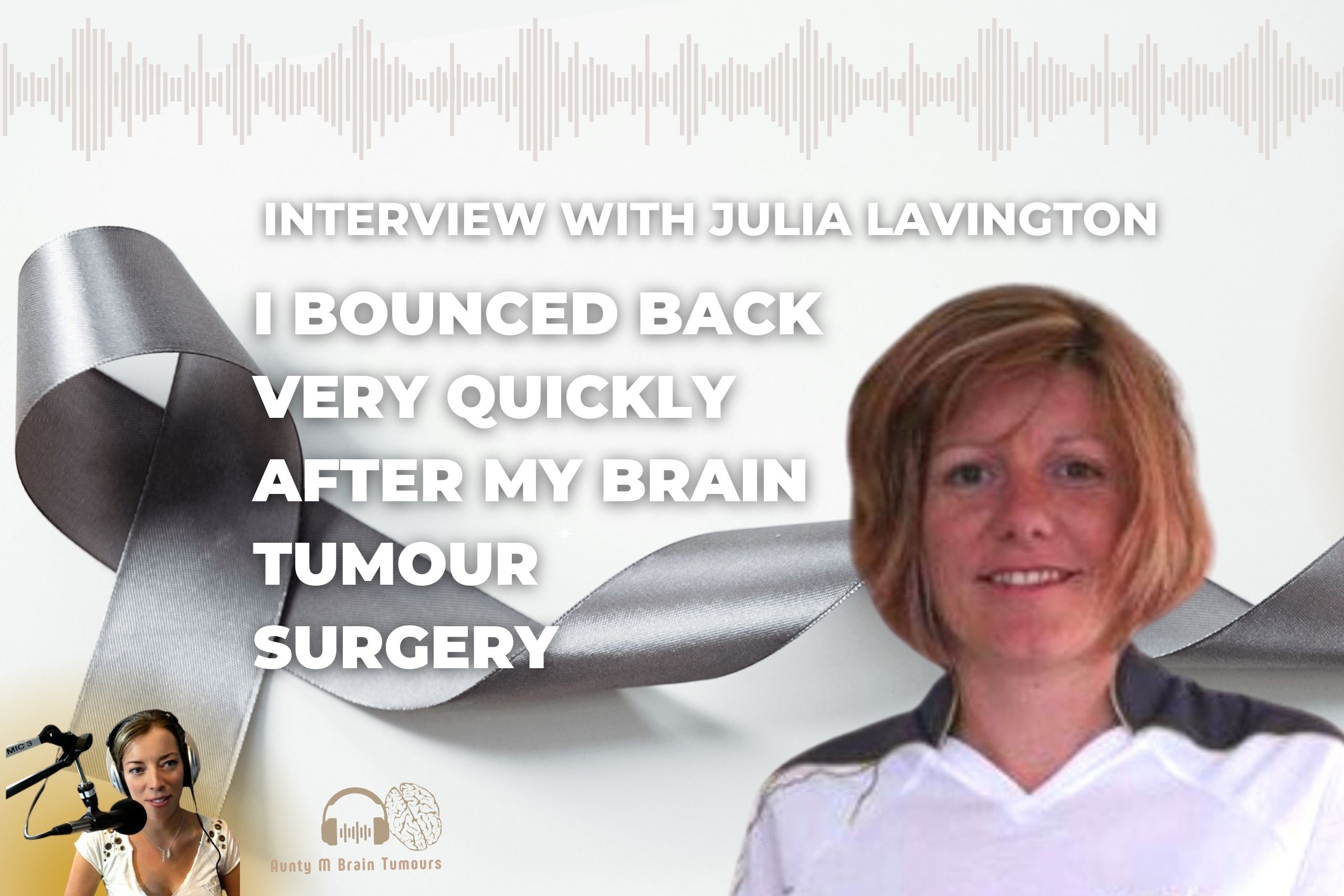
Julia Lavington shares an encouraging experience. In her interview with Claire and Eileen, she describes recovering quickly and having no ongoing problems at the time of recording.
Her story offers one perspective on recovery, alongside practical advice for getting through follow-up MRI scans.
Listen To Julia’s Interview
Listen to Julia’s conversation about her diagnosis, family life and recovery.
When Dizziness Led to a Brain Tumour Diagnosis
In 2011, Julia developed severe dizziness. Initially treated for a sinus infection and later labyrinthitis, she continued to feel unwell.
Nausea and difficulty walking followed. After seeking a private consultation, she eventually attended A&E, where investigations revealed a brain tumour.
Facing the News With Two Young Children
Julia’s children were seven and ten when she was diagnosed.
In the interview, she reflects on their different reactions and remembers the sensitive care she received at Maidstone Hospital before her referral to King’s.
Recovering Well After Surgery
Julia describes a quick recovery without ongoing difficulties. She also discusses follow-up appointments and a simple MRI coping strategy: listening to music and counting songs to help judge the passing time.
Is It Possible to Recover Well After Brain Tumour Surgery?
Recovery varies considerably. Some people recover quickly, while others need longer or experience lasting changes.
There is also a difference between having no lasting difficulties and having no temporary effects after an operation. Early recovery can involve tiredness, mild headaches and tenderness around the wound, even when the overall outcome is good.
One person’s experience cannot predict another’s. Your healthcare team can explain what recovery may involve in your circumstances.
What Can Affect Everyday Life After Surgery?
Brain surgery can affect people in different ways. Possible difficulties include changes in balance, strength, speech, concentration or memory.
Some effects improve as recovery progresses. Others require ongoing support or rehabilitation.
Fatigue can be especially frustrating because it may not be visible to other people. It can affect how much someone can manage, even when they appear physically well.
Tell your healthcare team about difficulties that affect daily life. They can assess your needs and discuss support, including rehabilitation where appropriate.
Giving Yourself Time to Recover
Returning home does not necessarily mean feeling ready to resume your usual routine.
It can help to plan smaller tasks, allow time for rest and accept practical support. Recovery should follow the advice given by your own clinical team.
For people experiencing fatigue, The Brain Tumour Charity recommends approaches such as planning, prioritising and pacing activities. This can mean choosing what matters most that day and taking breaks before becoming exhausted.
If fatigue is affecting your quality of life, mention it at an appointment. Your team may be able to address contributing factors or refer you for further help.
Making MRI Scans More Manageable
The enclosed space and noise of an MRI scanner can feel uncomfortable. Let the scanning department know beforehand if you feel anxious or claustrophobic.
You can ask:
- How long is my scan likely to take?
- Is music available?
- How do I communicate with the radiographer?
- Can someone come with me for support?
- What help is available if I find enclosed spaces difficult?
During an MRI, staff can communicate with you, and you will normally have a call button to attract their attention. Some departments offer music through headphones.
Scan lengths vary, so counting songs can be a distraction rather than a precise countdown.
Questions to Ask About Your Own Recovery
If you are preparing for surgery or recovering at home, these questions may help you get clear information:
- What changes should I expect after my operation?
- Which symptoms mean I should contact you urgently?
- Who should I call if I am worried at home?
- Would physiotherapy or other rehabilitation help me?
- When can I build up everyday activities?
- What is my follow-up plan?
Write down your main concerns before the appointment. You do not have to remember every question on the spot.
Finding Support After a Brain Tumour Diagnosis
An encouraging recovery story can offer hope. A more difficult recovery deserves just as much understanding and support.
Whether you need practical information, help with fatigue or someone to talk to, you can explore:
- The Brain Tumour Charity — brain tumour information and support.
- Brainstrust — support for people living with a brain tumour and their loved ones.
- More brain tumour stories from Aunty M — experiences shared by patients and families.
This article combines a personal interview with general information. Your healthcare team can advise you about your own treatment and recovery.

Claire Bullimore is an influential figure in the brain tumour community. She embarked on her brain tumour journey and was diagnosed with an intraventricular meningioma. In response to her experiences, Claire founded ‘Aunty M Brain Tumours,’ a platform dedicated to sharing brain tumour stories. Based in London, England, Claire also identifies as a blogger and speaker for Aunty M Brain Tumours, shedding light on the challenges faced by those diagnosed and amplifying their voices for better awareness and support. Through her dedication and advocacy, Claire’s efforts have been recognized by Brain Tumour Research and other organizations, spotlighting her commitment to making a positive difference for individuals impacted by brain tumours.