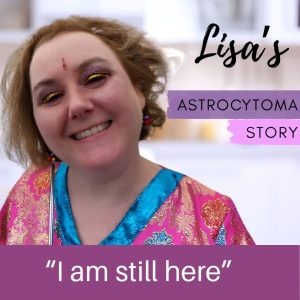
Lisa Meenan’s Low-Grade Astrocytoma Story: A Seizure at 21 and Life Beyond Brain Surgery
Lisa Meenan was just 21 when severe headaches and an unexpected seizure led to the discovery of a low-grade astrocytoma in 1993. Already grieving the loss of her seven-year-old cousin to a brain tumour, Lisa suddenly found herself facing the same frightening diagnosis.
Sometimes the smallest details of a brain tumour story stay with you long after the hospital appointments have finished.
For Lisa Meenan, from London, those memories include her mum discovering her collapsed in the bathroom, the fear of being told she had a brain tumour and the friendship she formed with another young patient during treatment.
Lisa had been studying architecture at the Kent Institute of Art and Design in Canterbury. She was preparing for her second year, spending long hours working on drawings and enjoying university life.
But headaches had become a regular problem.
At first, Lisa blamed the late nights and the strain of studying. She had no reason to imagine that something serious was happening inside her head.
Then, on 17 August 1993, everything changed.
Lisa experienced a major seizure and was rushed to hospital.
She was later diagnosed with a low-grade astrocytoma.
In her interview with Aunty M Brain Tumours, Lisa shares what happened, how her family coped, her experience of surgery and radiotherapy, and the incredible moment she was finally discharged from follow-up care in 2014.
Her story is also about the people who helped her through those frightening years and why she became determined to support brain tumour charities.
Severe Headaches Were Lisa’s First Warning Sign
Lisa first began experiencing severe headaches during the summer of 1992.
They were unusual because they would come on suddenly and disappear just as quickly.
As an architecture student, Lisa regularly spent long hours leaning over her drawing board and working late into the night.
She convinced herself that the headaches were connected to her studies.
Her mum, however, was concerned.
She encouraged Lisa to visit the doctor, but Lisa was reluctant. When she eventually went, she was told the headaches were migraines.
Lisa’s mum remained unconvinced.
She arranged an optician’s appointment, but no obvious problem was found. Lisa also tried treatment with the family osteopath.
The headaches continued.
At the same time, the family was still grieving the loss of Lisa’s seven-year-old cousin, Francis, who had died from a brain tumour.
Brain tumours were already something the family knew about in the most heartbreaking way.
Nobody expected that Lisa would soon receive a diagnosis of her own.
The Day Lisa’s Mum Found Her Having a Seizure
On Tuesday 17 August 1993, Lisa was at home with her mum.
She had planned to visit a friend for dinner, but a severe headache was developing.
She felt sick and could not tolerate bright light.
Because the family had a relative visiting from Australia, Lisa had given up her bed and was sleeping on a mattress.
Her mum moved the mattress into her parents’ bedroom so she could keep an eye on her.
Throughout the evening, Lisa repeatedly went to the bathroom feeling as though she needed to be sick.
Eventually, her mum realised she had not heard Lisa for a while.
She went to check on her.
What she found was terrifying.
Lisa had collapsed in the bathroom and was experiencing a seizure.
Her mum laid her on the landing and desperately tried to get a response.
Lisa remembers being told that her mum was shouting:
“Can you hear me? Are you dead?”
Somehow, Lisa managed to answer.
“I’m here! I’m not dead!”
Her mum called an ambulance.
By the time it arrived, Lisa was sitting up and was apparently able to walk into the vehicle.
But the danger had not passed.
A Second Seizure and an Unexpected Brain Tumour Diagnosis
Lisa was initially taken to Chase Farm Hospital in Enfield.
While she was there, she experienced another seizure.
She was transferred to Barts Hospital for further investigation.
Lisa remembers very little of that night. Much of what she knows has been pieced together through conversations with her family.
Her dad later described a frightening moment in hospital when Lisa’s pulse monitor suddenly changed from its regular beeping to one continuous sound.
He thought she had died.
Fortunately, medical staff quickly explained that Lisa had simply removed the pulse monitor clip from her finger.
For Lisa’s family, it was another terrifying moment.
After further investigations and a brain scan, a consultant explained that Lisa had a cyst and a brain tumour.
Lisa had only one question.
“Am I going to die?”
The consultant appeared taken aback by how directly she asked.
But Lisa needed an answer.
She had already watched her young cousin Francis become seriously ill and die from a brain tumour.
Now she was frightened that the same thing could happen to her.
Her diagnosis was not just a medical shock.
It brought back the grief and fear her family was already carrying.
Watch Lisa Share Her Low-Grade Astrocytoma Story
Lisa joined me on the Aunty M Brain Tumours Talk Show to share her experiences of diagnosis, brain surgery, radiotherapy and life afterwards.
In our conversation, Lisa talks about the frightening events of August 1993, her family’s support, the young woman who inspired her during treatment and the importance of helping others affected by brain tumours.
Watch Lisa’s interview below, or continue reading her story.
Surgery for Lisa’s Low-Grade Astrocytoma
Following further investigations, Lisa was told that her tumour was a low-grade astrocytoma.
Fortunately, the medical team considered the tumour operable.
Lisa underwent brain surgery, during which the tumour and associated cyst were successfully removed.
Her surgeon was Mr Hamlyn, and Lisa and her family remain grateful for the treatment and care she received at Barts.
For Lisa, undergoing brain surgery at just 21 was a frightening experience.
But she also remembers moments of humour during recovery.
Her mum was understandably worried about Lisa having another seizure after returning home.
One day, Lisa was enjoying a bath and taking rather longer than her mum expected.
Concerned that something might have happened, her mum came into the bathroom and pulled out the plug.
Lisa still finds the memory amusing.
It is one of those little family moments that captures the mixture of fear, love and humour that can surround recovery.
Radiotherapy and the Physical Effects of Treatment
After surgery, Lisa received radiotherapy as part of her treatment.
Radiotherapy is sometimes recommended after surgery for an astrocytoma, depending on the tumour’s characteristics and the individual treatment plan.
For Lisa, the treatment had lasting effects on her hair.
Her hairline receded, particularly on the right side of her head where much of the treatment was focused.
It never fully returned to the way it had been before.
But rather than feeling ashamed of the change, Lisa began to see it differently.
She described it as her “war wound”, something she had learned to feel proud of.
It was a reminder of everything she had been through.
The physical effects were only part of the experience, however.
Emotionally, Lisa was still coming to terms with what had happened.
Staying Positive While Hiding Her Fear
One of the most moving parts of Lisa’s experience is her honesty about the fear she tried to hide.
Her family had already lost Francis to a brain tumour.
Now they were terrified they might lose Lisa too.
Some relatives would telephone her and become upset, convinced she was going to die.
Lisa tried to reassure them.
She told people she would be fine and focused on staying positive.
But there were moments when she could no longer keep the fear inside.
She remembers going out onto the balcony beside the hospital ward and crying privately.
For Lisa, there was a difference between the reassurance she wanted to give other people and the fear she was actually feeling.
This is something many brain tumour patients may recognise.
Sometimes, the person receiving treatment feels they must comfort everybody else.
Family and friends are frightened, and you understand why.
But you are frightened too.
Lisa’s experience shows why patients need space to express difficult emotions without feeling they must always appear strong.
Val: The Young Woman Who Inspired Lisa in Hospital
During her hospital stay, Lisa met another young woman called Val.
Val was 20 years old and had already experienced enormous challenges following her own brain tumour diagnosis.
She had been diagnosed at 16 and had undergone several major operations.
By the time Lisa met her, Val had experienced three craniotomies, a stroke and other serious complications.
She was learning to walk, talk and write again, using her left hand after previously being right-handed.
Despite everything, Val continued to work towards her recovery.
Her boyfriend would take her out in a wheelchair so they could explore London together.
Lisa found her determination inspiring.
Then, while Lisa was undergoing radiotherapy, she received devastating news.
Val had developed a blood clot on her brain and was in a coma. Her outlook appeared extremely serious.
But Val regained consciousness.
Lisa never forgot her.
Her resilience and determination left a lasting impression, encouraging Lisa during her own recovery.
For Lisa, Val became one of her personal heroes.

The People Who Helped Lisa Through Recovery
Lisa is very clear about how important her family and friends were during her treatment.
During her three weeks in hospital, she received more than 120 cards and gifts, along with visits and telephone calls from people around the world.
Her mum and dad were closely involved throughout her diagnosis and recovery.
Their support helped Lisa through some of the most frightening moments of her life.
She also remembers the care she received from the medical staff at Barts.
Recovery was not simply about healing from surgery.
It was about rebuilding confidence, coping with fear and gradually believing that life could move forward.
Lisa found that having things to look forward to helped.
One goal was particularly important.
She wanted to attend Madonna’s concert at Wembley.
Her parents were understandably concerned about the crowds and flashing lights, particularly after her seizures.
But for Lisa, having something she wanted to do gave her motivation.
It was about looking forward to life again rather than allowing everything to revolve around illness.
St Patrick’s Day 2014: Lisa Receives Her All-Clear
On 17 March 2014, St Patrick’s Day, Lisa received news she had been hoping for.
Her medical team told her she no longer needed routine MRI scans or follow-up appointments.
After years of monitoring following her brain tumour diagnosis, Lisa was discharged from further routine hospital follow-up.
She left the outpatient clinic with tears in her eyes.
One of the first things she did was telephone her husband and parents to share the news.
But there was another moment from that day that stayed with her.
Lisa sat on a bench outside the hospital and watched another patient arriving for an appointment with someone supporting them.
It made her think about the difference between their journeys.
Her own hospital chapter was coming to an end.
For somebody else, it might only just be beginning.
It was a moment of gratitude, but also an awareness of how many other people were still facing uncertainty.
Life After Brain Surgery: Making Dreams Happen
For Lisa, life after treatment involved looking towards the future and finding things that brought her happiness.
After almost 20 years working for the same organisation, she took redundancy in June 2019.
The career break gave her an opportunity to experience something she had always wanted to do.
She fulfilled a lifelong dream of riding a horse along a beach, right beside the sea.
It was a very different kind of milestone from the hospital appointments and scans that had occupied so much of her earlier life.
But it mattered.
After experiencing a serious illness at such a young age, there is something particularly meaningful about being able to enjoy the things you once dreamed of doing.
When Lisa shared her written reflections in 2020, she was also focusing on becoming fitter and healthier.
She spoke openly about weight changes following treatment, including the effects of steroids and the challenges of managing her weight over the years.
She had already made progress and had set herself another personal goal: fitting into a pair of bright red jeans.
These may seem like everyday ambitions, but they are part of Lisa’s wider story.
Life after a brain tumour can involve rediscovering confidence, setting new goals and recognising personal achievements.
Turning Her Experience Into Brain Tumour Fundraising
Following her treatment, Lisa found it difficult to discover support organisations and other people who understood what she had experienced.
She began searching online for brain tumour forums and charities.
This led her to Brain Tumour Research and The Brain Tumour Charity.
Lisa wanted to do something to help.
She organised bake sales at work, supported Wear A Hat Day, bought charity merchandise and took part in fundraising events.
One particularly successful event involved persuading a friend to join her for a 10km charity walk.
They originally hoped to raise around £150.
Instead, they raised approximately £1,300.
For Lisa, fundraising became a way of giving something back.
She knew how frightening a diagnosis could be and how important it was for patients and families to find information and support.
Her involvement with brain tumour charities helped turn her personal experience into something that could benefit others.
Lisa’s Advice to Someone Newly Diagnosed
Lisa believes determination, support and having goals can make a meaningful difference when coping with a brain tumour diagnosis.
One of the things that helped her was having people around her who cared.
Her family, friends and hospital team provided reassurance during some very frightening moments.
She also found motivation in having things to look forward to, whether that was attending a concert or achieving another personal goal.
But Lisa’s experiences show that staying positive does not mean never being afraid.
She remembers hiding her tears from family members while trying to reassure them that everything would be fine.
It is important to allow space for those difficult feelings too.
Lisa also learned that every patient’s circumstances are different.
During her hospital stay, she met people whose diagnoses and recoveries were very different from her own.
Those experiences helped her recognise the importance of understanding her individual situation rather than assuming that another person’s outcome would be hers.
For anyone recently diagnosed, the message is to ask questions, seek support and allow yourself time to process what has happened.
About Lisa’s Tumour: What Is a Low-Grade Astrocytoma?
Lisa was diagnosed with a low-grade astrocytoma in 1993.
An astrocytoma is a type of glioma, a brain tumour that develops from cells associated with the brain’s supporting tissue.
Astrocytomas can affect children and adults and can develop in different areas of the brain or spinal cord.
The term low-grade generally refers to grade 1 or grade 2 tumours, which tend to grow more slowly than higher-grade astrocytomas.
However, low-grade does not always mean harmless.
These tumours may still cause serious symptoms because of their location, and some can return or change over time.
Modern diagnosis also uses molecular testing, such as IDH mutation status, to help classify astrocytomas more precisely.
Because Lisa was diagnosed in 1993, this article retains the terminology she was originally given. Her exact modern tumour classification cannot be determined from her interview alone.
What Are the Symptoms of a Low-Grade Astrocytoma?
Symptoms depend on the tumour’s size, location and the area of the brain affected.
Possible symptoms include:
- Persistent or unusual headaches
- Seizures
- Nausea and vomiting
- Changes in vision
- Weakness or problems with movement
- Difficulties with speech or language
- Changes in memory or concentration
- Changes in mood or behaviour
For Lisa, the first warning signs were severe headaches, followed by seizures that led to her diagnosis.
Not everyone experiences the same symptoms, and headaches or other symptoms do not necessarily mean someone has a brain tumour.
However, persistent or worsening neurological symptoms should be assessed by a healthcare professional. A first seizure requires urgent medical attention.
How Are Low-Grade Astrocytomas Treated?
Treatment depends on the tumour’s location, grade, molecular characteristics, symptoms and the person’s individual circumstances.
Possible options include:
Surgery: Where possible, surgeons aim to remove as much of the tumour as safely as they can.
Active monitoring: In some circumstances, a specialist team may recommend regular MRI scans rather than immediate further treatment.
Radiotherapy: Radiotherapy may be recommended after surgery or if the tumour changes or progresses.
Chemotherapy: Some patients may be offered chemotherapy depending on the precise tumour type, their age, the amount of tumour remaining and other factors.
Follow-up and rehabilitation: Patients may need scans, seizure management or support with physical, cognitive and emotional difficulties.
Lisa underwent surgery to remove her tumour and associated cyst, followed by radiotherapy.
Treatment recommendations have developed considerably since 1993, so people newly diagnosed should discuss their specific tumour classification and treatment options with their specialist team.
Support for People With Low-Grade Astrocytoma
A low-grade astrocytoma diagnosis can feel frightening, particularly when someone has experienced seizures, brain surgery or uncertainty about the future.
Whether you are newly diagnosed, undergoing treatment or living with long-term effects, there are organisations offering information and support.
The Brain Tumour Charity
Website: https://www.thebraintumourcharity.org/
Provides information about astrocytoma, brain tumour treatment and life after diagnosis.
They also offer practical and emotional support for patients, families and carers.
Brainstrust
Website: https://brainstrust.org.uk/
Offers personalised support for people living with brain tumours, including help preparing for appointments, understanding treatment decisions and managing life after diagnosis.
Brain Tumour Support
Website: https://www.braintumoursupport.co.uk/
Provides practical and emotional support for people affected by brain tumours, including support for patients, partners, families and carers.
Astro Brain Tumour Fund
Website: https://www.astrofund.org.uk/
A UK charity focusing on low-grade gliomas, particularly grade 1 and grade 2 astrocytomas, oligodendrogliomas and ependymomas.
Its resources may be especially relevant to people diagnosed with a low-grade glioma.
Brain Tumour Research
Website: https://braintumourresearch.org/
Funds research, raises awareness and campaigns for better treatments and improved outcomes for people affected by brain tumours.
Lisa has supported Brain Tumour Research through fundraising and awareness activities.
NHS and Specialist Neuro-Oncology Services
Your GP, neurologist, neurosurgeon or neuro-oncology team can provide advice about your individual diagnosis.
If you are experiencing seizures, ongoing fatigue, memory problems or emotional difficulties, ask whether additional specialist support or rehabilitation would be appropriate.
Read More Astrocytoma Stories
Every astrocytoma story is different.
Some people experience seizures before diagnosis, while others discover their tumour following headaches or other neurological symptoms.
You may also find these interviews helpful.
Taryn’s Grade 2 Astrocytoma Story
Read another personal experience of living with an astrocytoma and adapting to life beyond diagnosis.
https://auntymbraintumours.com/astrocytoma-seizures/
Sophie’s Grade 3 Astrocytoma Story
Sophie shares how a seizure at work led to her brain tumour diagnosis, awake surgery, radiotherapy and chemotherapy.
https://auntymbraintumours.com/sophies-grade-3-astrocytoma-story/
Jaime’s IDH-Mutant Astrocytoma Story
Jaime shares another perspective on astrocytoma diagnosis, treatment and recovery.
https://auntymbraintumours.com/jaime-idh-mutant-astrocytoma-story/
Lisa’s Story: Life Beyond a Brain Tumour
Lisa’s story began with headaches she thought were connected to studying.
Then came the seizure, the hospital investigations and the frightening news that she had a brain tumour.
Having already lost her young cousin Francis, Lisa and her family knew all too well how serious the diagnosis could be.
She went through surgery, radiotherapy and years of follow-up appointments.
There were frightening moments, private tears, unexpected friendships and enormous support from the people who loved her.
But there was also life beyond treatment.
There was the joy of receiving her all-clear on St Patrick’s Day 2014.
There were dreams to fulfil, including riding a horse along a beach.
And there was Lisa’s determination to give something back by supporting brain tumour charities.
For me, one of the most moving parts of her story is the moment she sat outside the hospital after being discharged and watched another patient arriving for their appointment.
It captures something that many people affected by brain tumours understand.
Every person is at a different stage of their journey.
And sometimes, sharing what happened to us can help somebody who is only just beginning theirs.
Thank you, Lisa, for sharing your experience with Aunty M Brain Tumours.
Lisa’s story is presented from her original interview and written reflections, including her 2020 update. Medical information is for general awareness and is not a substitute for advice from a specialist healthcare professional.


Claire Bullimore is an influential figure in the brain tumour community. She embarked on her brain tumour journey and was diagnosed with an intraventricular meningioma. In response to her experiences, Claire founded ‘Aunty M Brain Tumours,’ a platform dedicated to sharing brain tumour stories. Based in London, England, Claire also identifies as a blogger and speaker for Aunty M Brain Tumours, shedding light on the challenges faced by those diagnosed and amplifying their voices for better awareness and support. Through her dedication and advocacy, Claire’s efforts have been recognized by Brain Tumour Research and other organizations, spotlighting her commitment to making a positive difference for individuals impacted by brain tumours.