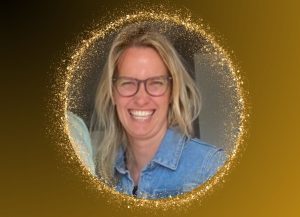
When Sarah Kelly first noticed weakness in her left hand, she thought it might be arthritis or repetitive strain. She never imagined that she was living with a grade 3 brain tumour.
Sarah Kelly was a busy mum and marketing professional living in Melbourne, Australia, when she began noticing something strange happening to her left hand.
At first, it seemed like a relatively ordinary problem. Perhaps it was repetitive strain, arthritis or something connected to everyday activities.
But her symptoms gradually became more worrying.
Her left hand was becoming weaker. She also began experiencing facial drooping and difficulties with coordination.
Eventually, an MRI revealed something Sarah had never expected.
She had a grade 3 anaplastic astrocytoma, a high-grade brain tumour.
Diagnosed in 2021, during Melbourne’s COVID-19 lockdown, Sarah found herself facing brain surgery, radiotherapy, chemotherapy and a difficult recovery while also trying to be there for her young daughter.
In this Aunty M Brain Tumours interview, Sarah shares how her diagnosis changed her life, the challenges of regaining movement after surgery and why her family, faith and community became such important sources of support.
The First Warning Sign: Weakness in Sarah’s Left Hand
Sarah’s journey began with a change that could easily have been explained away.
Her left hand was not functioning properly.
At first, she suspected a problem such as repetitive strain or arthritis. Nothing immediately suggested that the cause might be inside her brain.
But over time, things became more concerning.
The weakness in her hand was accompanied by facial drooping and changes in her coordination.
These were no longer symptoms Sarah could easily dismiss.
Further investigation was needed.
An MRI revealed a brain tumour, and Sarah was diagnosed with a grade 3 anaplastic astrocytoma.
Her life, and her family’s life, suddenly changed.
A Brain Cancer Diagnosis During Melbourne’s Lockdown
Being told you have a brain tumour is frightening at any time.
For Sarah, the experience was made even harder by the circumstances surrounding her diagnosis.
It was 2021, and Melbourne was experiencing COVID-19 lockdown restrictions.
Hospital appointments, treatment and recovery were taking place at a time when family members could not always provide the usual face-to-face support.
Sarah was facing a serious diagnosis while also dealing with separation from loved ones during some of the most difficult moments of her life.
There were medical decisions to make, fears to process and the uncertainty of what would happen next.
Sarah’s faith became an important source of strength.
As she explained in our interview:
“I just felt like it wasn’t my time.”
For Sarah, those words reflected her determination to keep moving forward, even when the future felt uncertain.
Watch Sarah Share Her Anaplastic Astrocytoma Story
Sarah joined me on the Aunty M Brain Tumours Talk Show to talk openly about her diagnosis, brain surgery, treatment and recovery.
We also discuss how her experience affected motherhood, how she worked towards regaining her independence and the changes she made to her lifestyle after treatment.
Watch Sarah’s full interview below, or continue reading her story.
Brain Surgery and the Difficult Road to Recovery
Following her diagnosis, Sarah underwent brain surgery.
The tumour was located close to an area of the brain involved in movement, making surgery particularly challenging.
The surgical team needed to balance removing as much tumour as safely possible with protecting the brain structures responsible for physical movement.
Recovery was not straightforward.
Sarah’s left hand had become severely affected.
She described it as being almost claw-like, making ordinary movements and activities extremely difficult.
For someone accustomed to working, caring for her family and managing everyday responsibilities, losing the ability to use her hand normally was a major adjustment.
But Sarah was determined to regain as much function as possible.
Learning to Use Her Hand Again
After surgery, Sarah worked hard on her rehabilitation.
She received occupational therapy and neurostimulation treatment to help improve the movement and function of her affected hand.
Gradually, she began regaining abilities that had previously been difficult or impossible.
It was not an instant recovery.
It required time, repetition, determination and support from rehabilitation professionals.
Sarah also experienced foot drop, a condition that can make lifting the front part of the foot difficult and affect walking.
These physical changes meant she had to approach everyday activities differently.
Progress came gradually, and there were still limitations to manage.
Her experience highlights something many brain tumour patients know: surviving surgery is one milestone, but rebuilding the ability to do ordinary things can be a much longer journey.
Radiotherapy and Chemotherapy: The Impact of Treatment
Following surgery, Sarah underwent further treatment, including radiotherapy and chemotherapy.
She found radiotherapy more manageable than chemotherapy.
Chemotherapy was particularly exhausting.
At times, the fatigue was so severe that Sarah was confined to bed for extended periods.
Everyday activities became difficult, and her ability to participate in family life was affected.
For many cancer patients, treatment-related fatigue is different from ordinary tiredness.
It can be overwhelming, persistent and difficult to improve through rest alone.
For Sarah, however, the most painful part was not simply how physically unwell she felt.
It was the time she was missing with her young daughter.
“I Felt Like I Lost a Year of Her Life”
One of the most emotional moments in Sarah’s interview is when she describes the effect of treatment on motherhood.
She wanted to be present for her daughter, take part in family activities and enjoy the ordinary moments of watching her grow up.
But chemotherapy left her with very little energy.
Looking back on that period, Sarah shared:
“I felt like I lost a year of her life.”
It is a heartbreaking feeling that many parents living with cancer may recognise.
Treatment does not just affect the person receiving it.
It can change family routines, relationships and the everyday moments that parents and children share.
Sarah had to accept that, for a time, looking after her health meant she could not always be the active mum she wanted to be.
Her experience is a reminder of why families may need support throughout cancer treatment, not only during the initial diagnosis.
The Health Retreat That Became a Turning Point
After experiencing the physical and emotional impact of treatment, Sarah wanted to find ways of improving her quality of life.
With financial support from her community, she was able to attend a ten-day health retreat in Byron Bay, Australia.
For Sarah, the experience was an important turning point.
The retreat introduced her to different approaches to wellbeing and nutrition, including the ketogenic diet.
Sarah began making changes to her eating habits and daily routine.
She describes these changes as having a significant effect on how she felt physically and emotionally.
Her experience also gave her a renewed sense of control after a period when so much of life had revolved around medical treatment.
Sarah’s Experience With the Ketogenic Diet
One of the topics Sarah speaks passionately about is the ketogenic diet.
In our interview, she described it as life-changing.
“The ketogenic diet has been life-changing.”
Sarah believes the changes she made to her diet helped improve her quality of life, and she reported that her seizures stopped after adopting this approach.
For Sarah, this was a significant part of her recovery experience.
However, it is important to distinguish her personal experience from established medical evidence.
There is currently insufficient reliable evidence that a ketogenic diet can treat or control brain cancer. Although ketogenic diets have recognised uses for certain types of epilepsy, their benefits and risks depend on an individual’s medical circumstances.
Anyone considering significant dietary changes during or after brain tumour treatment should discuss them with their neurologist, oncologist or an appropriately qualified dietitian.
Sarah’s experience is valuable as part of her personal story, but it should not be interpreted as a treatment recommendation or an alternative to prescribed medication or cancer treatment.
Finding Strength Through Faith and Community
Throughout her diagnosis and recovery, Sarah has spoken about the importance of her faith.
It helped her cope with fear, uncertainty and some of the most difficult periods of treatment.
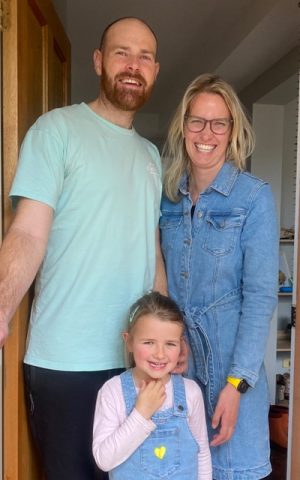
Her family and community also played a major part.
When she wanted to attend the health retreat, people around her came together to help fund the experience.
That support meant Sarah could explore ways of improving her wellbeing at a time when she needed encouragement.
For Sarah, having people who cared made a meaningful difference.
A brain tumour diagnosis can make someone feel isolated, particularly when the condition is rare or when treatment affects their ability to work and socialise.
Support from others can help someone feel connected and understood.
Sarah’s experience shows the value of finding a community that can offer encouragement, practical help and companionship.
Living With the Long-Term Effects of Brain Surgery
Although Sarah has made significant progress since surgery, her recovery has involved ongoing challenges.
She has continued working to improve the function of her left hand and manage difficulties affecting her foot.
These changes can affect independence and everyday activities in ways that are not always obvious to other people.
Even when someone appears well, they may still be working hard to perform movements that previously came naturally.
For Sarah, rehabilitation has meant learning to recognise progress without expecting everything to return to normal immediately.
She has also had to adjust emotionally to life after diagnosis.
The uncertainty of follow-up scans, the possibility of further treatment and the memories of what happened can remain difficult.
But Sarah has continued finding ways to enjoy family life and work towards her own goals.
Why Sarah Wants to Share Her Story
When someone receives a diagnosis of anaplastic astrocytoma, they may search online for stories about people living with the same tumour.
Medical websites can explain tumour grades, surgery and treatment.
But another patient’s experience can offer something different.
It can help people understand how treatment affects ordinary life, how rehabilitation may feel and why emotional support matters.
Sarah has shared her story through Sarah’s Hope, encouraging other people facing brain cancer to recognise that they are not alone.
Her experience brings attention to several important areas of brain tumour care: recognising neurological symptoms, accessing rehabilitation, managing treatment fatigue, supporting families and finding ways to live with uncertainty.
Every brain tumour journey is different.
What helps one person may not be appropriate for another.
But sharing those experiences can encourage useful conversations with medical teams and help people find the support they need.
About Sarah’s Tumour: What Is an Anaplastic Astrocytoma?
Sarah was diagnosed with a grade 3 anaplastic astrocytoma in 2021.
An astrocytoma is a type of glioma, a brain tumour arising from glial cells in the brain or spinal cord.
The term anaplastic astrocytoma was historically used for certain grade 3 astrocytic tumours.
Grade 3 means the tumour is considered high-grade and generally behaves more aggressively than a grade 2 astrocytoma.
Modern brain tumour classification also uses molecular information, particularly IDH mutation status, to identify the precise tumour type.
For example, some tumours previously called anaplastic astrocytomas are now classified as astrocytoma, IDH-mutant, CNS WHO grade 3.
However, the original terminology alone does not confirm a tumour’s modern molecular classification.
Because Sarah uses the term anaplastic astrocytoma, that is the terminology retained in her personal story.
What Are the Symptoms of a Grade 3 Astrocytoma?
Symptoms depend on the tumour’s location, size and the parts of the brain affected.
Possible symptoms include:
- Weakness in an arm, hand or leg
- Changes in coordination or balance
- Seizures
- Persistent or worsening headaches
- Nausea or vomiting
- Speech or language difficulties
- Changes in vision
- Memory or concentration difficulties
- Changes in mood, behaviour or personality
For Sarah, weakness in her left hand was one of the earliest warning signs.
She later experienced facial drooping and coordination difficulties.
Not everyone has the same symptoms, and many neurological symptoms have causes unrelated to brain tumours.
Sudden facial drooping or weakness may be a sign of stroke and requires emergency medical attention.
How Is a Grade 3 Astrocytoma Treated?
Treatment depends on the tumour’s location, molecular characteristics, the person’s general health and the recommendations of their specialist team.
Possible treatments include:
Brain surgery: Neurosurgeons may aim to remove as much tumour as possible while protecting important areas involved in movement, speech and other functions.
Radiotherapy: Radiation treatment may be used after surgery to help control remaining tumour cells.
Chemotherapy: Medicines such as temozolomide may be recommended, depending on the precise tumour classification and treatment plan.
MRI monitoring: Regular scans help doctors assess how the tumour responds to treatment and monitor for changes.
Rehabilitation: Physiotherapy, occupational therapy and other specialist services may help people manage difficulties with movement, coordination or everyday activities.
Sarah underwent brain surgery, radiotherapy, chemotherapy and rehabilitation.
Her experience highlights the importance of a treatment plan that addresses not only the tumour but also the person’s life afterwards.
Support for People With Grade 3 Astrocytoma in Australia and Beyond
A high-grade astrocytoma diagnosis can affect patients, partners, children and the wider family.
Support may be needed for medical decisions, treatment side effects, emotional wellbeing, rehabilitation and practical matters.
Several organisations can help.
Cancer Council Australia
Website: https://www.cancer.org.au/
Cancer Council provides information and support for people affected by cancer in Australia.
Its resources cover treatment, side effects, nutrition, emotional wellbeing and living with cancer.
Australians can call 13 11 20 to enquire about cancer information and support.
Brain Cancer Centre
Website: https://www.braincancercentre.org.au/
An Australian organisation focused on brain cancer research, awareness and improving outcomes for people affected by brain cancer.
Brain Tumour Alliance Australia
Website: https://www.btaa.org.au/
Provides information and support for Australian brain tumour patients, families and carers.
The Brain Tumour Charity
Website: https://www.thebraintumourcharity.org/
Offers information about astrocytoma, brain tumour treatment and living with a diagnosis.
Although based in the UK, many of its online resources may be useful to readers internationally.
Brainstrust
Website: https://brainstrust.org.uk/
Provides practical information and personalised support for people affected by brain tumours.
Rehabilitation and Psychological Support
If you are experiencing weakness, seizures, fatigue or emotional difficulties after brain tumour treatment, speak to your specialist team about appropriate services.
Depending on your needs, support may include occupational therapy, physiotherapy, neuropsychology, counselling, epilepsy care or specialist rehabilitation.
Connect With Sarah Kelly
Sarah shares more about her brain cancer experience through Sarah’s Hope.
Instagram: @sarahs_hope_
Facebook: Sarah’s Hope
You can also watch her full interview on the Aunty M Brain Tumours Talk Show.
Sarah’s experiences are personal to her and should not be used to predict another patient’s treatment or recovery.
Read More Astrocytoma Stories
Every astrocytoma story is different.
If Sarah’s experience has resonated with you, you may also find these interviews helpful.
Sophie’s Grade 3 Astrocytoma Story
Sophie shares how an unexpected seizure at work led to her diagnosis, awake brain surgery, radiotherapy and chemotherapy.
https://auntymbraintumours.com/sophies-grade-3-astrocytoma-story/
Jenny’s Anaplastic Astrocytoma Story
Jenny discusses living with a grade 3 astrocytoma, undergoing three brain surgeries and navigating treatment and recovery.
https://auntymbraintumours.com/jenny-anaplastic-astrocytoma-story/
Jaime’s IDH-Mutant Astrocytoma Story
Jaime shares her experience of diagnosis, treatment decisions and living with an IDH-mutant astrocytoma.
https://auntymbraintumours.com/jaime-idh-mutant-astrocytoma-story/
Sarah’s Story: Finding Hope After Brain Cancer
Sarah’s experience began with something that seemed relatively minor: weakness in her left hand.
But the symptoms led to the discovery of a grade 3 brain tumour.
What followed was brain surgery, radiotherapy, chemotherapy and a difficult period of recovery.
Sarah had to work hard to regain movement, cope with exhausting treatment and accept that she could not always be there for her daughter in the way she wanted.
Those experiences affected her physically and emotionally.
But her story is also about the people who supported her, the importance of faith and her determination to find ways of improving her quality of life.
For me, one of the most important messages in Sarah’s interview is that brain tumour care does not end with surgery or chemotherapy.
People may need rehabilitation, emotional support, help with fatigue and practical support for their families long after treatment has finished.
Sarah’s story is another reminder of why we need to keep sharing experiences and raising awareness.
Thank you, Sarah, for sharing your journey with Aunty M Brain Tumours.
Every brain tumour story deserves to be heard.
This article reflects Sarah’s experience as shared in her original interview. The medical information is provided for general awareness and does not replace individual advice from a qualified healthcare professional.

Claire Bullimore is an influential figure in the brain tumour community. She embarked on her brain tumour journey and was diagnosed with an intraventricular meningioma. In response to her experiences, Claire founded ‘Aunty M Brain Tumours,’ a platform dedicated to sharing brain tumour stories. Based in London, England, Claire also identifies as a blogger and speaker for Aunty M Brain Tumours, shedding light on the challenges faced by those diagnosed and amplifying their voices for better awareness and support. Through her dedication and advocacy, Claire’s efforts have been recognized by Brain Tumour Research and other organizations, spotlighting her commitment to making a positive difference for individuals impacted by brain tumours.