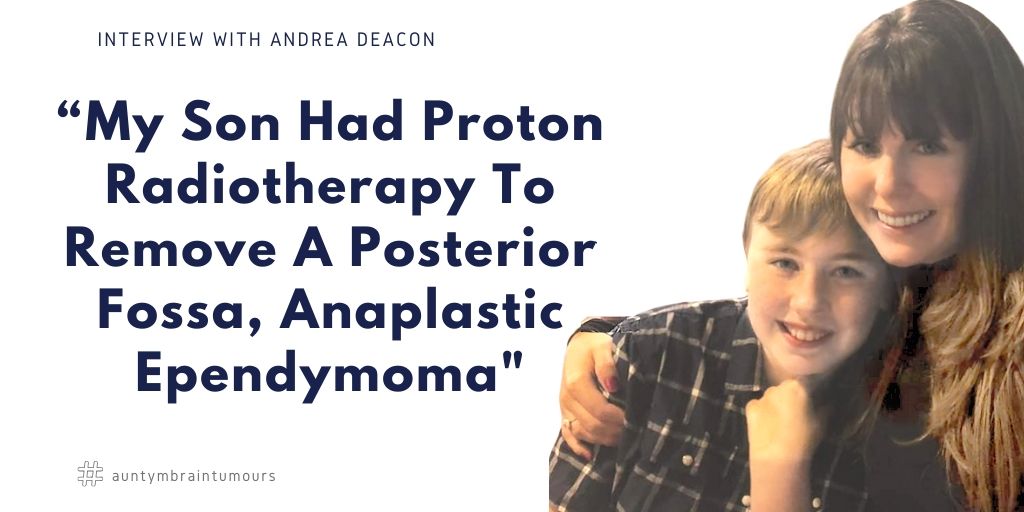
When three-year-old Fletcher Deacon developed persistent sickness and unexplained weight loss, his family never imagined he had a brain tumour. His mum, Andrea, shares their journey through a frightening diagnosis, nine-hour brain surgery, fundraising £130,000 and travelling to America for proton beam therapy.
When a Three-Year-Old’s Illness Turned Out to Be a Brain Tumour
In June 2009, Andrea Deacon noticed that her little boy Fletcher was becoming increasingly unwell.
He had been experiencing sickness and diarrhoea, symptoms that initially appeared to be caused by a stomach bug.
But as the weeks passed, Fletcher did not improve.
Doctors repeatedly diagnosed gastroenteritis, yet his symptoms continued.
By early August, his weight had dropped dramatically.
Andrea knew something was seriously wrong.
Fletcher was admitted to hospital, where doctors carried out further investigations, including a CT scan.
The results revealed something no parent ever wants to hear.
Her three-year-old son had an aggressive brain tumour.
On 12 August 2009, Fletcher was diagnosed with a grade 3 posterior fossa anaplastic ependymoma.
Just two days later, he underwent nine hours of brain surgery.
What followed was an extraordinary journey involving difficult treatment decisions, an international fundraising campaign and three months living in America while Fletcher received proton beam therapy.
When Andrea shared their story with Aunty M Brain Tumours in May 2020, Fletcher had reached the ten-year milestone following treatment and was enjoying life as a teenager.
But getting there had been anything but straightforward.
The Symptoms That Were Initially Diagnosed as Gastroenteritis
Looking back, Andrea remembered some earlier signs that something might have been wrong.
During the first part of 2009, Fletcher had experienced night terrors and stomach problems.
However, his more noticeable symptoms began in June.
He was repeatedly sick and experienced diarrhoea.
For a young child, these symptoms can easily resemble a common stomach infection.
Doctors believed Fletcher had gastroenteritis.
But his illness continued, and his family became increasingly concerned.
By early August, Fletcher had lost a worrying amount of weight.
He was admitted to hospital for further investigations.
It was only after a CT scan that doctors discovered the true cause of his deteriorating health.
Fletcher had a brain tumour.
For Andrea, the diagnosis was devastating.
She had been trying to understand why her little boy was so unwell.
Now she was facing the possibility that he might not survive.
Diagnosed With a Grade 3 Posterior Fossa Ependymoma
Fletcher had celebrated his third birthday in May 2009.
Just three months later, he was diagnosed with a grade 3 posterior fossa anaplastic ependymoma.
An ependymoma is a rare tumour of the central nervous system that can develop in the brain or spinal cord.
The posterior fossa is the area at the lower back of the skull. It contains important structures involved in movement, balance and other essential functions.
The tumour’s location can make treatment particularly challenging.
For Fletcher, surgery was urgently needed.
His family had very little time to come to terms with the diagnosis before he was taken into the operating theatre.
Nine Hours of Brain Surgery at Just Three Years Old
On 14 August 2009, two days after his diagnosis, Fletcher underwent a nine-hour brain operation.
The surgeons worked to remove as much of the tumour as safely possible.
They successfully removed approximately 90%.
However, around 10% remained.
Removing the rest surgically was considered too risky.
For Andrea and her family, the operation was an important first step, but they knew Fletcher needed further treatment.
Their medical team recommended radiotherapy to treat the remaining tumour.
Unfortunately, they were also warned about the possibility of significant long-term side effects.
These included potential difficulties with learning, hearing and vision.
For the parents of a three-year-old boy, these were frightening possibilities.
Andrea wanted Fletcher to have the best opportunity for a healthy future.
Then the family heard about another type of radiotherapy.
Discovering Proton Beam Therapy
While considering Fletcher’s treatment options, Andrea and her family came across a television news story about proton beam therapy.
At the time, this technology was attracting attention because of its potential advantages in treating certain childhood cancers.
Unlike conventional radiotherapy using X-rays, proton beam therapy uses beams of protons to deliver radiation to a targeted area.
The way protons release their energy can allow specialists to reduce radiation exposure to some healthy tissues surrounding the tumour.
This can be particularly important when treating children, whose developing brains and bodies may be more vulnerable to certain long-term effects of radiation.
However, proton therapy is not free from risks or side effects, and it is not necessarily the most suitable treatment for every child.
For Fletcher’s family, it offered another option worth exploring.
There was just one enormous obstacle.
The treatment would cost approximately £130,000.
Raising £130,000 to Give Fletcher Another Treatment Option
The cost of proton beam therapy was more than most families could imagine finding at short notice.
But Andrea’s parents were determined to help.
They offered to pay the initial deposit and organise fundraising to cover the remaining cost.
The family quickly began preparing for Fletcher’s treatment abroad.
Friends, relatives and members of the local community rallied around them.
A friend created a website to help share Fletcher’s story.
A Facebook group called Friends of Fletcher was established, allowing people to follow his journey and support the fundraising campaign.
The response was extraordinary.
People began organising events and raising money in whatever ways they could.
A Community Coming Together for Fletcher
Fundraising events included a Halloween boat party, an auction and a giant indoor picnic.
Others made donations or helped spread Fletcher’s story through social media.
The family’s campaign also attracted attention from the Evening Standard, helping them reach a much wider audience.
Andrea remembered how generous people had been.
Some were friends and family, while others had never met Fletcher.
They simply wanted to help a little boy receive the treatment his family had chosen.
In total, Andrea recalled that the fundraising campaign raised approximately £70,000.
Her father contributed the remaining amount needed to pay for treatment.
For Andrea, the generosity of everyone involved was something she would never forget.
While she and her husband concentrated on Fletcher, trusted relatives took responsibility for the fundraising.
That support allowed the family to focus on the most important thing: getting their little boy through treatment.
Travelling to America for Proton Beam Therapy
In early September 2009, just weeks after Fletcher’s brain surgery, the family travelled to America.
Andrea, her husband and their two children left their home in Bexley, London, to begin the next stage of Fletcher’s treatment.
They travelled to the Midwest Proton Radiotherapy Institute (MPRI), where Fletcher would receive proton beam therapy.
The family spent approximately three months living in America.
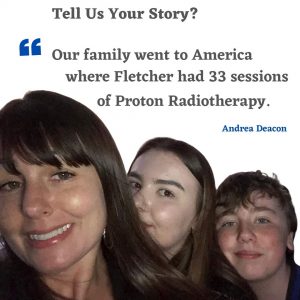
Fletcher underwent 33 treatment sessions.
It was an enormous undertaking for a family with two young children.
They were away from their home, friends and normal routines.
At the same time, they were coping with the emotional impact of Fletcher’s diagnosis and the uncertainty surrounding his recovery.
For Andrea, those months were among the most stressful of her life.
But the family remained focused on completing Fletcher’s treatment and returning home together.
Thirty-Three Sessions of Proton Radiotherapy
Proton beam therapy involves directing carefully planned radiation beams towards the area requiring treatment.
The aim is to damage tumour cells and reduce the likelihood of further growth while limiting unnecessary radiation exposure to surrounding healthy tissue where possible.
Fletcher needed 33 sessions.
Each was another step towards completing the treatment plan his medical team had recommended.
For a child of just three, repeated hospital visits and unfamiliar medical procedures were a significant experience.
But because Fletcher was so young, he would later remember very little of his illness or treatment.
Andrea, however, remembered everything.
The frightening diagnosis.
The brain surgery.
The difficult decisions about radiotherapy.
The fundraising campaign.
And the months spent in America hoping that treatment would be successful.
Eventually, Fletcher completed his course of proton beam therapy.
The family returned home to London and began the next chapter of their lives.
Ten Years After Ependymoma Treatment
November 2019 marked an extraordinary milestone for Fletcher and his family.
It had been ten years since he finished treatment.
Andrea described him as having reached ten years cancer-free.
His MRI scans had remained stable, with no further tumour growth reported.
For a family who had originally been given such a frightening prognosis, this was an emotional achievement.
When Fletcher was first diagnosed, Andrea remembered being told that he had approximately a 50% chance of surviving five years after treatment.
Hearing those figures had been terrifying.
At the time, she feared she might lose her son.
Yet here they were, a decade later.
Fletcher was growing up, going to school and enjoying the ordinary experiences of being a teenager.

The Lasting Effect on Fletcher’s Eyesight
Although Fletcher’s treatment had been successful in controlling his tumour, he did experience one lasting difficulty.
He had a slight loss of peripheral vision in one eye.
Peripheral vision allows us to see objects towards the edges of our field of vision without turning our heads.
Changes to peripheral vision can affect everyday activities, depending on their severity.
However, Andrea explained that Fletcher was otherwise doing extremely well.
His experience was a reminder that even when treatment achieves long-term tumour control, some children may continue living with effects from the tumour or treatment.
That is why ongoing medical monitoring remains so important.
The Teenager Who Loves Football and His Xbox
By the time Andrea shared their story in May 2020, Fletcher was 13 years old.
He attended a grammar school and was enjoying life as a teenager.
Andrea described him as an exceptionally kind and thoughtful young man.
He loved playing football and spending time on his Xbox.
His sporting hero was Frank Lampard.
These might sound like ordinary details, but they are some of the most meaningful parts of Fletcher’s story.
When he was three, his family had been faced with a frightening diagnosis and the possibility that he might not survive.
Now, ten years after treatment, he was enjoying school, football and video games.
He was simply getting on with his life.
Andrea explained that if you met Fletcher, you probably would not realise everything he had experienced as a little boy.
For her, that was something to be enormously grateful for.
Why Fletcher Continued Having Regular MRI Scans
Although Fletcher had reached ten years following treatment without reported tumour progression, his medical care had not finished.
He continued attending regular appointments at The Royal Marsden in Surrey.
By 2020, his MRI scans were taking place annually.
His medical team planned to continue yearly scans until he reached 15 years after treatment.
For Fletcher, these hospital visits had become part of ordinary life.
Because he was so young when he underwent surgery and radiotherapy, he did not remember much about the original experience.
Andrea, on the other hand, knew how important those scans were.
Follow-up MRI scans help doctors monitor for tumour recurrence or changes that may require further investigation.
Childhood ependymomas can sometimes recur years after treatment, so long-term surveillance may be recommended.
Fletcher’s stable scans were reassuring, but his family continued following the advice of his specialist team.
The Emotional Impact of a Childhood Brain Tumour Diagnosis
When Andrea reflected on Fletcher’s diagnosis, she remembered the fear more than anything else.
She had initially believed that her little boy was going to die.
For a parent, receiving a serious diagnosis for a young child can be overwhelming.
There may be unfamiliar medical terminology, urgent treatment decisions and difficult conversations about possible outcomes.
All of this happens while trying to remain strong for a frightened child and the rest of the family.
Andrea remembered the months following Fletcher’s diagnosis as the most stressful of her life.
But she also remembered the extraordinary kindness of the people who helped them.
The grandparents who stepped in to organise fundraising.
The friends who created websites and social media groups.
The community members who donated money or organised events.
And the medical professionals who cared for Fletcher throughout his treatment.
Their support made an enormous difference.
Andrea’s Advice for Parents Facing a Brain Tumour Diagnosis
Having experienced Fletcher’s diagnosis and treatment firsthand, Andrea had important advice for other families.
Her message was shaped by both the fear she remembered and the relief of seeing her son reach the ten-year milestone.
Try to Hold On to Hope
Andrea understood how difficult it was to remain hopeful after hearing frightening medical information.
When Fletcher was diagnosed, she immediately feared the worst.
But she wanted other parents to remember that statistics cannot predict exactly what will happen to one individual child.
Fletcher’s experience had been very different from what she originally feared.
Every child’s tumour, treatment and outcome will be different, and medical decisions should always be guided by specialist advice.
But Andrea hoped their story might offer reassurance to families facing the uncertainty of a new diagnosis.
Let Trusted Family and Friends Help
One of Andrea’s strongest pieces of advice concerned fundraising and practical support.
If a family needs help organising a campaign, she recommended asking trusted relatives or friends to take responsibility.
During Fletcher’s treatment, Andrea had enough to manage without also organising fundraising events.
Her parents and wider community handled much of that work while she concentrated on her son.
It is an important lesson for anyone supporting a family affected by childhood cancer.
Sometimes the most helpful thing you can do is take responsibility for a practical task without placing additional pressure on the parents.
Ask Questions About Treatment Options
Fletcher’s experience also highlights the importance of understanding the different treatments that may be available.
For some children, surgery may be followed by conventional radiotherapy, proton beam therapy or other specialist treatments.
Not every option will be appropriate for every diagnosis.
However, families can ask their medical team about the expected benefits, possible risks and whether a specialist second opinion may be helpful.
They should also ask about available NHS referral pathways and financial support before assuming private fundraising is necessary.
Giving Back After Fletcher’s Treatment
After experiencing such overwhelming generosity during Fletcher’s illness, Andrea and her family wanted to give something back.
They became supporters of The Royal Marsden Cancer Charity.
The hospital had been an important part of Fletcher’s follow-up care, and supporting its work was one way to express their gratitude.
Andrea’s daughter also became involved in fundraising.
She organised school events to support Macmillan Cancer Support.
For a family who had received so much help during an incredibly difficult time, supporting others affected by cancer became especially meaningful.
Their experiences had shown them what a difference fundraising and community support could make.
What Is an Anaplastic Ependymoma?
An anaplastic ependymoma is a term historically used for a grade 3 ependymoma, a tumour of the central nervous system.
Ependymomas can develop in the brain or spinal cord and affect both children and adults.
Fletcher was diagnosed with a grade 3 posterior fossa ependymoma.
The posterior fossa is the lower, back part of the skull. It contains important structures including the cerebellum, brainstem and fourth ventricle.
Tumours developing in this region may interfere with the normal circulation of cerebrospinal fluid or put pressure on surrounding neurological structures.
Why Is It Called an Anaplastic Ependymoma?
The term anaplastic ependymoma was used for tumours with certain high-grade microscopic features.
However, brain tumour classification has changed since Fletcher was diagnosed in 2009.
Modern classification takes account of the tumour’s location and molecular characteristics, alongside its appearance under a microscope.
The term anaplastic ependymoma is no longer used as a distinct tumour type in the current World Health Organization classification.
For historical patient stories, it remains appropriate to preserve the diagnosis originally given.
Fletcher’s exact classification under the modern system cannot be determined without reviewing his pathology and molecular results.
What Are the Symptoms of Childhood Ependymoma?
Symptoms depend on the size and location of the tumour, as well as the child’s age.
Possible symptoms include:
- Persistent or recurring vomiting
- Headaches, particularly when associated with increased pressure in the skull
- Balance or coordination difficulties
- Changes in walking
- Unusual tiredness
- Changes in behaviour or development
- Problems with vision
- Poor feeding or unexplained weight loss in younger children
For Fletcher, sickness, diarrhoea and weight loss were the main symptoms his family noticed.
These symptoms can also be caused by common childhood illnesses and do not automatically indicate a brain tumour.
However, persistent or worsening symptoms should be reassessed by a healthcare professional.
What Is Proton Beam Therapy for Ependymoma?
Proton beam therapy is a type of radiotherapy that uses proton particles to deliver radiation to a targeted area.
It is sometimes used to treat childhood brain tumours, including selected ependymomas.
One potential advantage is that proton beams can be planned to reduce radiation exposure to some healthy tissues beyond the treatment area.
This is particularly important for children because their brains and bodies are still developing.
Radiation exposure can sometimes affect learning, hearing, hormonal function or other aspects of long-term health.
Proton beam therapy may reduce certain risks for some patients, but it does not eliminate the possibility of side effects.
It also does not physically remove tumour tissue in the way surgery does.
Instead, radiation damages tumour cells to help control growth.
Why Did Fletcher Travel to America?
When Fletcher was diagnosed in 2009, proton beam therapy was not available in the UK through the NHS facilities that exist today.
His family therefore chose to travel to America and raise money to fund his treatment.
Since then, NHS proton beam therapy services have developed significantly.
Families considering treatment today should speak to their child’s specialist team about the treatment options and NHS referral pathways currently available.
Private overseas treatment and fundraising may not be necessary or appropriate.
Fletcher’s Ependymoma Story: Ten Years of Hope
Fletcher’s story began with symptoms that appeared to be a common childhood illness.
What initially seemed like gastroenteritis turned out to be a grade 3 brain tumour.
At just three years old, he underwent nine hours of surgery to remove approximately 90% of the ependymoma.
His family then faced the daunting task of raising £130,000 and moving temporarily to America so he could receive proton beam therapy.
Thanks to the efforts of family, friends and an extraordinary fundraising community, Fletcher completed 33 treatment sessions.
Ten years later, his MRI scans had remained stable.
He was attending school, playing football and enjoying his Xbox.
For Andrea, the years between diagnosis and that milestone had been filled with fear, hope, difficult decisions and enormous gratitude.
What stands out most is not simply the treatment Fletcher received.
It is the family and community who came together around a little boy when he needed them most.
Their story is a reminder of how important access to specialist treatment, reliable information and practical family support can be following a childhood brain tumour diagnosis.
It also highlights why raising awareness of rare tumours such as ependymoma matters.
Behind every childhood brain tumour diagnosis is a family trying to make the best possible decisions for someone they love.
Thank you to Andrea Deacon for sharing Fletcher’s story with Aunty M Brain Tumours.
And thank you to everyone who helped the family through their extraordinary fundraising and treatment journey.
This article reflects Andrea and Fletcher’s experiences as shared in May 2020. Fletcher’s health, education and personal circumstances may have changed since the original interview.
Read More Ependymoma Stories
Fletcher’s experience is one of several stories from people and families affected by ependymoma.
You can also read:
Steve underwent nine hours of brain surgery for a 4 cm ependymoma. While recovering, his wife Barbara was diagnosed with a glioblastoma.
Kristina’s Posterior Fossa Ependymoma Story
Kristina experienced a 16-hour brain operation and later faced tumour recurrence involving the membranes around her spinal cord.
More Ependymoma Brain Tumour Stories
Explore personal experiences of childhood and adult ependymoma, including diagnosis, surgery, radiotherapy and life after treatment.
Every person’s experience will be different, but sharing these stories can help others feel less alone.
Where to Go After an Ependymoma Diagnosis
If your child or someone you love has been diagnosed with an ependymoma, these organisations can provide reliable information and practical or emotional support.
The Brain Tumour Charity
https://www.thebraintumourcharity.org/
Provides information on childhood brain tumours, treatment, recovery, and support for children, parents and families.
The Royal Marsden Cancer Charity
Supports the work of The Royal Marsden, including cancer care and research.
Young Lives vs Cancer
https://www.younglivesvscancer.org.uk/
Provides practical, emotional and financial support for children and young people with cancer and their families.
The Brain Tumour Charity — Support for Children and Families
https://www.thebraintumourcharity.org/
Offers information, family support and opportunities to connect with other people affected by childhood brain tumours.
NHS Proton Beam Therapy
https://www.nhs.uk/conditions/proton-beam-therapy/
Explains how proton beam therapy works and when it may be considered as part of cancer treatment.
National Cancer Institute — Childhood Ependymoma
https://www.cancer.gov/types/brain/patient/childhood-ependymoma
Provides medically reviewed information about childhood ependymoma, diagnosis, treatment and follow-up.
Your Child’s Specialist Medical Team
Children diagnosed with ependymoma may require ongoing care from paediatric neurosurgeons, neuro-oncologists, radiotherapy specialists and other healthcare professionals.
Their team can explain treatment options, long-term monitoring and support for any lasting difficulties.
Medical disclaimer: This article shares Andrea and Fletcher’s personal experiences and provides general information for awareness and peer support. It should not replace advice, diagnosis or treatment from qualified healthcare professionals.

Claire Bullimore is an influential figure in the brain tumour community. She embarked on her brain tumour journey and was diagnosed with an intraventricular meningioma. In response to her experiences, Claire founded ‘Aunty M Brain Tumours,’ a platform dedicated to sharing brain tumour stories. Based in London, England, Claire also identifies as a blogger and speaker for Aunty M Brain Tumours, shedding light on the challenges faced by those diagnosed and amplifying their voices for better awareness and support. Through her dedication and advocacy, Claire’s efforts have been recognized by Brain Tumour Research and other organizations, spotlighting her commitment to making a positive difference for individuals impacted by brain tumours.