Brain Surgery, Invisible Symptoms and Finding Her Voice
As a mother of four, Jo Barlow was trying to carry on with everyday life while experiencing worsening headaches, dizziness and balance problems. In April 2016, an MRI scan finally revealed a haemangioblastoma. Although surgery removed the tumour, Jo discovered that recovery was far more complicated than she had expected.
When Walking Felt Like Being on a Boat
For Jo Barlow, the first signs that something was seriously wrong were difficult to explain.
She felt dizzy, struggled with her balance and began walking into things.
Sometimes, even when she had not been drinking, she felt as though she were drunk.
Walking could feel like being on a moving boat.
Alongside the dizziness came sharp pains in her neck and pounding headaches at the base of her skull.
Turning her head too quickly could cause pain, while coughing or straining made her symptoms worse.
At times, the headaches even woke her during the night.
Jo knew that something was not right.
But getting answers was proving difficult.
After several appointments and delays in seeing a neurologist, her condition deteriorated to the point where she could barely walk around her home.
Eventually, a private consultant recognised that her symptoms needed urgent investigation.
An MRI scan revealed a haemangioblastoma, a rare, usually non-cancerous brain tumour.
Jo underwent surgery on 18 May 2016.
Although the tumour was believed to have been completely removed, her journey was far from over.
When Jo shared her story with Aunty M Brain Tumours in February 2020, she spoke openly about her continuing symptoms, the frustration of looking well while feeling unwell, and how she turned her experiences into a book to help others.
Jo’s Story: The Symptoms That Gradually Took Over Her Life
Jo’s symptoms developed progressively.
At first, there was the dizziness and the strange sensation of being unsteady on her feet.
She found herself struggling to judge where objects were around her and became concerned about walking into things.
Then the headaches became increasingly severe.
The pain was concentrated around the lower part of her skull, accompanied by sharp shooting pains in her neck.
Jo also noticed that certain movements made the symptoms worse.
Lying on her stomach, tilting her head upwards, coughing or straining could increase the pain and dizziness.
Her eyesight was affected, too.
She struggled to focus straight ahead, sometimes squinting as her vision seemed to jolt.
There were also strange tingling and numb sensations around her head and neck.
These were not occasional inconveniences.
They were symptoms that increasingly interfered with ordinary life.
Jo was trying to understand what was happening while continuing to manage the responsibilities of being a mother of four.
But as time passed, her condition became more difficult to ignore.
When You Know Something Is Not Right
Jo visited her GP several times.
She was eventually referred to a neurologist, but only after asking for a referral on three occasions.
When the appointment came through, it was more than a month away.
Meanwhile, Jo was getting worse.
She was struggling to move around safely and found herself spending more and more time sitting down because of the dizziness and difficulties walking.
Her husband became increasingly concerned.
When Jo reached the point where she could barely move from the sofa, he contacted her parents.
They offered to pay for a private consultation.
At the time, Jo and her family wondered whether the problem might be connected to her neck.
She had been experiencing severe neck pain and difficulty turning her head.
So she attended an appointment with a consultant rheumatologist.
That appointment changed everything.
The Consultant Who Recognised the Warning Signs
Within minutes of meeting Jo, the consultant noticed how unsteady she was when walking.
Her movements immediately raised concerns.
Although she had attended the appointment because of her neck symptoms, he suspected there could be a neurological cause.
He recommended an MRI scan.
For Jo, it was a turning point after weeks of worsening symptoms and uncertainty.
Two days later, she underwent a private MRI.
Afterwards, she returned home and had lunch.
But approximately an hour later, she received a call asking her to return to see the doctor.
Jo immediately feared that something serious had been found.
She was right.
22 April 2016: The Day Jo Was Diagnosed With a Brain Tumour
On 22 April 2016, Jo sat in the doctor’s consulting room and looked at the MRI images on his computer screen.
There was a large white area visible on the scan.
She could see that something was wrong.
The doctor explained that the neuroradiologist was approximately 99% certain she had a non-cancerous haemangioblastoma.
The positive news was that surgery was considered possible.
But for Jo, hearing that she had a brain tumour was still frightening.
After so many appointments and weeks of deterioration, she finally had an explanation for the dizziness, headaches, visual problems and loss of balance.
Yet that explanation brought a whole new set of questions.
What would brain surgery involve?
Would the tumour be removed completely?
And would she return to the way she had been before?
Less than a month after receiving the diagnosis, Jo underwent surgery.
Brain Surgery on 18 May 2016
Jo’s operation took place on 18 May 2016.
The aim was to remove the haemangioblastoma that had been causing her increasingly severe symptoms.
Following surgery, Jo was told that the tumour was believed to have been completely removed.
It was a significant relief.
The tumour that had caused so much worry and disruption was no longer thought to be present.
From a surgical perspective, the outcome was encouraging.
But recovering from a brain tumour operation is not always as straightforward as waiting for the incision to heal.
Jo soon discovered that many of the symptoms she had experienced before surgery were still affecting her.
Some became part of her everyday life.
And that was something she had not anticipated.
When the Tumour Is Gone but the Symptoms Remain
One of the most important parts of Jo’s story is what happened after surgery.
Although her neurosurgeon considered the tumour successfully removed, Jo did not feel that she had returned to her previous health.
She continued experiencing significant neurological difficulties.
These included:
- Persistent fatigue
- Balance and coordination problems
- Changes to her vision
- Numbness around her head
- Headaches and soreness
- Tightness in her neck
- Difficulty finding or expressing words
- Speech problems when tired
- Short-term memory and concentration difficulties
- Brain fog and difficulty multitasking
For Jo, these symptoms could become much worse when she was exhausted.
Sometimes, she knew exactly what she wanted to say but struggled to get the words out quickly enough.
Tasks that had once been straightforward now required more concentration and effort.
She could no longer manage several things at once as easily as she had before.
It was a frustrating change for someone who had been used to a busy family life.
Living With the Invisible Effects of Brain Surgery
One of Jo’s greatest difficulties was that other people could not necessarily see what she was experiencing.
She might look well.
She might be smiling, talking or enjoying time with family and friends.
But that did not mean she felt well.
Jo found it difficult when people assumed that because her tumour had been removed, everything should have returned to normal.
Her headaches, fatigue, balance difficulties and cognitive changes were not always obvious to the people around her.
And because of that, others could underestimate their impact.
Jo explained that one of the hardest parts was:
Knowing that when you look alright on the outside, people can assume everything must be alright on the inside too.
It is something many brain tumour survivors will recognise.
You may appear physically recovered while still living with effects that change the way you manage everyday life.
For Jo, recovery involved learning to adjust to those changes, even when other people struggled to understand them.
The Frustration of Not Being Able to Do Things as Before
Jo was honest about the emotional impact of her long-term symptoms.
She found it frustrating when she needed more sleep than other people.
She became upset when she could not respond to conversations as quickly as she wanted.
And she struggled with having to change plans because of fatigue or physical symptoms.
Sometimes, she wanted to do something but knew she might not have the energy or coordination to manage it.
Other times, she felt overwhelmed by the expectation that she should be able to do everything she had done before surgery.
These experiences affected more than her physical health.
They also influenced her confidence and the way she approached daily activities.
Jo recognised that her outcome could have been much worse.
She was grateful that the tumour had been removed.
But she also wanted people to understand that gratitude and frustration can exist together.
Being thankful to be alive does not mean someone must pretend that the lasting effects of treatment are easy.
Learning to Adjust to Life After a Haemangioblastoma
Following surgery, Jo began looking at life differently.
She appreciated things she might previously have taken for granted.
At the same time, she was learning to recognise her own limits.
She could no longer assume she would have the same energy or ability to multitask as before.
Some days were better than others.
And when fatigue became overwhelming, she needed to rest.
Part of her adjustment involved making decisions about how she wanted to respond to difficult circumstances.
Jo believed that although she could not control everything happening to her body, she could sometimes influence how she approached the situation emotionally.
That did not remove her symptoms.
But it helped her work towards a different relationship with the changes she was experiencing.
For Jo, learning to live after brain surgery was an ongoing process rather than a single moment when she could declare herself recovered.
Turning Her Brain Tumour Experience Into a Book
One of the most memorable parts of Jo’s story is what she did after her operation.
Just 16 months after brain surgery, she self-published a book called:
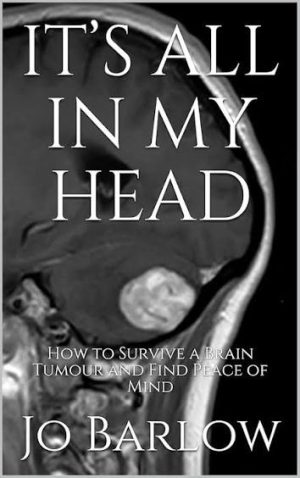
The title reflects the extraordinary experience of being diagnosed with a brain tumour and dealing with the consequences afterwards.
Jo wanted to share an honest account of what she had been through.
She did not want to pretend that everything had been straightforward or that she had coped perfectly every day.
Instead, she hoped her experiences might help others facing a similar diagnosis.
She wanted them to feel less frightened, less angry and less alone.
Her book became a way to speak openly about the parts of brain tumour recovery that can be difficult to explain.
It also allowed Jo to turn an unexpected and frightening experience into something that might help other people.
Why Jo Wanted to Share Her Story
Jo had never imagined that she would write about brain surgery or create a website dedicated to her experiences.
Before her diagnosis, these things simply had not been part of her plans.
But after living through the uncertainty of symptoms, the shock of diagnosis and the frustration of ongoing difficulties, she realised how valuable personal stories could be.
She wanted to share what she had learned.
Not because she believed everyone would have the same experience.
But because she understood how lonely it could feel when people around you did not recognise the lasting effects of a supposedly benign brain tumour.
By writing about her experiences, Jo hoped to offer honesty, understanding and reassurance.
Finding Joy in Live Music
There is another side to Jo that has nothing to do with hospitals, MRI scans or brain surgery.
She loves live music.
When she shared her story, Jo explained that she attended gigs almost every weekend.
Her husband played guitar and her son played bass in the same band.
It was a wonderful family connection.
But attending gigs could also be challenging after brain surgery.
Loud music, busy surroundings and sensory stimulation could sometimes feel overwhelming.
Jo recognised that she could react by becoming distressed or frustrated.
Or, when she felt able, she could try to relax, enjoy the music and focus on being present.
It was not always easy.
But she did not want the difficulties caused by her operation to take away everything she enjoyed.
Live music remained part of her life, and Jo found ways to approach it that worked for her.
For someone whose health had changed so dramatically, those ordinary pleasures mattered.
Jo’s Advice for People Facing a Brain Tumour Diagnosis
When Jo was asked what advice she would give to someone facing a frightening diagnosis, she spoke about the importance of understanding your own needs and making informed decisions.
Her experiences had taught her that everyone approaches illness differently.
She encouraged people to take time to think about what mattered to them rather than feeling pressured to react in a particular way.
Listen to Your Own Concerns
Jo knew what it was like to feel that something was wrong without getting an explanation.
She had repeatedly asked for further assessment while her symptoms worsened.
Her experience demonstrates why it can be important to return to your GP or seek further medical advice when symptoms persist or change.
Ask Questions About Your Treatment
Jo encouraged people to understand the options being discussed and to participate in decisions about their care.
If something is unclear, ask your specialist to explain it.
If you remain concerned, a second medical opinion may sometimes help.
Any complementary therapies should also be discussed with your medical team, particularly after brain surgery, to ensure they do not interfere with treatment or create additional risks.
Allow Yourself to Recover at Your Own Pace
Brain tumour recovery can be unpredictable.
Some people regain much of their previous function, while others continue living with neurological difficulties.
Jo’s experience shows why there should not be pressure to return immediately to previous routines or abilities.
Rest, rehabilitation and emotional support may all be important parts of recovery.
Sometimes the Best Support Is Simply Listening
Jo also had a message for loved ones.
When someone has received a frightening diagnosis, you do not always need to find the perfect words.
You may not be able to solve the problem.
But you can listen.
You can offer comfort when it is needed and help the person find reliable information and appropriate support.
Sometimes that quiet reassurance means more than advice.
What Is a Haemangioblastoma?
A haemangioblastoma is a rare, usually non-cancerous (benign) tumour associated with blood vessels.
These tumours can develop in the brain or spinal cord, particularly in an area of the brain called the cerebellum, which plays an important role in balance and coordination.
Most haemangioblastomas are classified as CNS WHO grade 1.
Although they are usually slow-growing, their location can cause serious symptoms.
As a tumour grows, it may place pressure on nearby brain structures or interfere with the normal movement of cerebrospinal fluid.
This is why even a benign haemangioblastoma can require surgery or other specialist treatment.
What Are the Symptoms of a Haemangioblastoma?
Symptoms depend on the tumour’s size and location.
Possible symptoms include:
- Persistent or worsening headaches
- Dizziness and problems with balance
- Difficulty walking or coordinating movements
- Nausea or vomiting
- Neck pain
- Blurred vision or unusual eye movements
- Weakness or changes in sensation
- Symptoms associated with increased pressure within the skull
For Jo, some of the most noticeable symptoms were dizziness, loss of balance, severe headaches, neck pain and changes to her vision.
She also described feeling as though she were walking on a boat.
These symptoms can occur for many reasons and do not automatically indicate a brain tumour.
However, new, persistent or worsening neurological symptoms should be assessed by a healthcare professional.
How Is a Haemangioblastoma Treated?
Treatment depends on the tumour’s location, size, growth and effect on the person’s health.
Surgery is often the main treatment when a haemangioblastoma is causing symptoms and can be removed safely.
Some smaller tumours that are not causing symptoms may be monitored with regular MRI scans.
Radiotherapy may be considered in selected cases, particularly when surgery is not suitable or a tumour recurs.
The medical team will consider the potential benefits and risks of each option.
Jo underwent surgery in May 2016, and her tumour was believed to have been completely removed.
However, she continued living with symptoms that affected her daily life.
Her experience illustrates why successful tumour removal and complete recovery from neurological symptoms are not necessarily the same thing.
Is a Haemangioblastoma Linked to Von Hippel-Lindau Disease?
Some haemangioblastomas occur on their own.
Others are associated with von Hippel-Lindau (VHL) disease, a rare inherited condition that can increase the likelihood of developing certain tumours and cysts in different parts of the body.
Not everyone diagnosed with a haemangioblastoma has VHL disease.
Whether genetic assessment is appropriate depends on factors such as age, family history and whether multiple tumours are present.
If you have been diagnosed with a haemangioblastoma, you can ask your specialist whether VHL assessment is relevant to your circumstances.
Jo’s original story does not identify a diagnosis of VHL, so her tumour should not be assumed to be associated with the condition.
Why Jo’s Haemangioblastoma Story Matters
Jo Barlow was a busy mother of four when she began experiencing symptoms that gradually took over her everyday life.
She struggled with dizziness, headaches, neck pain, visual disturbances and an increasingly unsteady walk.
Despite repeated appointments, getting answers was difficult.
Eventually, a private consultant recognised the seriousness of her symptoms and recommended an MRI scan.
On 22 April 2016, Jo learned that she had a haemangioblastoma.
Less than a month later, she underwent surgery.
Although the tumour was believed to have been successfully removed, Jo continued living with fatigue, balance difficulties, cognitive changes and other neurological symptoms.
She had to adjust to a life that no longer worked quite as it had before.
But her story is also about finding ways to move forward.
She wrote a book, shared her experiences and continued enjoying live music with her family.
One of the most important messages from Jo’s story is that a benign brain tumour can still have a profound and lasting impact on someone’s life.
The word benign describes the tumour’s biological behaviour. It does not guarantee that someone will have no symptoms or long-term difficulties.
For Jo, learning to live with those effects became an important part of her journey.
Thank you to Jo Barlow for sharing her experiences with Aunty M Brain Tumours and for speaking so openly about the reality of life after haemangioblastoma surgery.
Her story is a reminder that people may continue needing understanding, reassurance and support long after their tumour has been removed.
This article reflects Jo’s experiences as shared in February 2020. It is not an update on her current health or personal circumstances.
Read More Haemangioblastoma Stories
Every haemangioblastoma story is different.
Some people are diagnosed after headaches or balance problems. Others discover a tumour during investigations for another condition or through monitoring associated with VHL disease.
Treatment and recovery also vary.
You can read more personal stories from people affected by haemangioblastoma on Aunty M Brain Tumours.
Read more Haemangioblastoma Brain Tumour Stories
You may also like to read Brenda Ravening’s Haemangioblastoma Story, which explores diagnosis, surgery and the lasting effects of a haemangioblastoma affecting her spinal cord.
If You Have Recently Been Diagnosed With a Haemangioblastoma
If you have found this page after being diagnosed with a haemangioblastoma, please know you are not alone.
You may have been told that your tumour is benign or non-cancerous.
While that can be reassuring, it does not necessarily make the diagnosis any less frightening.
You may still be facing surgery, regular scans or symptoms affecting your balance, movement, vision or everyday life.
Every person’s experience is different.
Some people recover with relatively few long-term difficulties. Others, like Jo, continue living with symptoms even after their tumour has been removed.
Try not to compare your journey too closely with anyone else’s.
Another person’s diagnosis or recovery does not determine what will happen to you.
Take things at your own pace, ask questions and remember that you do not have to face the experience alone.
Where to Go After a Haemangioblastoma Diagnosis
If you or someone you care about has been diagnosed with a haemangioblastoma, there are organisations that offer reliable information, emotional support and practical guidance.
The Brain Tumour Charity
Provides information about brain tumours, diagnosis, treatment, recovery and support for patients and families.
Visit The Brain Tumour Charity
Brainstrust
Offers individual support, coaching and practical guidance for people affected by brain tumours, including those living with long-term neurological difficulties.
Brain Tumour Support
Provides emotional and practical support for people living with brain tumours, their families and carers.
Brain Tumour Research
Funds research into brain tumours and campaigns for greater awareness and investment.
Cancer Research UK
Provides medical information about haemangioblastomas, symptoms, surgery, radiotherapy and monitoring.
VHL UK & Ireland
Provides information and support for people and families affected by von Hippel-Lindau disease.
VHL is relevant to some people with haemangioblastomas, although not everyone with this tumour has the condition.
NHS Neuro-Oncology and Rehabilitation Services
Your specialist team can help you understand your particular diagnosis, follow-up care and any continuing symptoms.
Depending on your needs, support may include:
- Physiotherapy for balance and movement difficulties
- Occupational therapy for everyday activities
- Speech and language therapy for communication difficulties
- Neuropsychology for memory, concentration and cognitive changes
- Psychological support for emotional adjustment
- Specialist assessment of ongoing headaches, fatigue or visual symptoms
Ask your GP, specialist nurse or neurosurgical team about appropriate referrals.
Would You Like to Share Your Haemangioblastoma Story?
At Aunty M Brain Tumours, I believe every person’s experience deserves to be heard.
Whether you have recently been diagnosed, undergone surgery, are attending regular scans or are living with long-term effects, your story could help someone else feel less alone.
Find out how to share your brain tumour story
Medical disclaimer: This article shares Jo’s personal experiences and provides general information for awareness and peer support. It is not a substitute for individual medical advice, diagnosis or treatment from qualified healthcare professionals.


Claire Bullimore is an influential figure in the brain tumour community. She embarked on her brain tumour journey and was diagnosed with an intraventricular meningioma. In response to her experiences, Claire founded ‘Aunty M Brain Tumours,’ a platform dedicated to sharing brain tumour stories. Based in London, England, Claire also identifies as a blogger and speaker for Aunty M Brain Tumours, shedding light on the challenges faced by those diagnosed and amplifying their voices for better awareness and support. Through her dedication and advocacy, Claire’s efforts have been recognized by Brain Tumour Research and other organizations, spotlighting her commitment to making a positive difference for individuals impacted by brain tumours.

Refreshing to read your story
I also had the same but had to have
A shunt since it was found late
I also had a brain bleed
I cannot walk and have swallow problems
But I am all there !!!
I am in uk
Author
Hi Joe, thank you for sharing. You can find out more about Jo on her FB Page https://www.facebook.com/benignbraintumour