
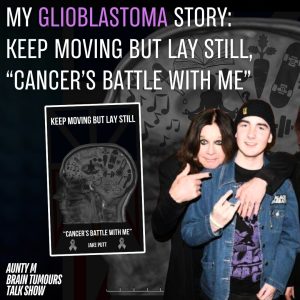
Jake’s Glioblastoma Story: Diagnosed With Inoperable Brain Cancer at 16
Diagnosed with an inoperable glioblastoma at just 16 years old, Jake shares his experience of brain cancer, intensive treatment and the long-term challenges of rebuilding his life. Through writing, music and daily routines, he has found ways to adapt to the changes brought by his diagnosis.
Facing an Inoperable Glioblastoma Diagnosis at Just 16
At 16 years old, most teenagers are beginning to think about exams, friendships, relationships and what they might want to do with their future.
For Jake Putt, life took an entirely different direction.
He was diagnosed with an inoperable glioblastoma (GBM), an aggressive form of brain cancer.
At an age when he should have been discovering his independence and making plans for adulthood, Jake suddenly found himself facing a life-threatening illness.
His experience began with an initial misdiagnosis before the true cause of his health problems was discovered.
What followed was intensive treatment, uncertainty and the difficult reality of living with the physical and neurological effects of brain cancer.
But Jake’s story does not end with his diagnosis.
In our Aunty M Brain Tumours Talk Show interview, he reflects on surviving, adapting and finding ways to rebuild his identity after such a life-changing experience.
His story is not simply about living with glioblastoma. It is about what happens when the life you expected changes, and how you begin to find your place in the world again.
Watch Jake share his experience in the Aunty M Brain Tumours Talk Show interview below, or continue reading about his journey.
From an Initial Misdiagnosis to Brain Cancer
One of the difficult aspects of Jake’s experience was that his glioblastoma was not immediately identified.
Before receiving the correct diagnosis, he experienced an initial misdiagnosis.
When someone is young, serious neurological conditions may not be among the first explanations considered for their symptoms.
However, brain tumours can affect people of all ages, including children and teenagers.
For Jake, discovering that he had glioblastoma changed everything.
Glioblastoma is a fast-growing, grade 4 brain tumour. It can affect movement, speech, thinking, memory and other neurological functions, depending on where it develops.
Being diagnosed at 16 meant that Jake was confronting serious medical decisions and uncertainty while still navigating adolescence.
It was the beginning of a very different journey from the one he might have imagined.
Being Told His Glioblastoma Was Inoperable
Jake’s tumour was described as inoperable.
This means that surgery to remove the tumour was not considered a safe or suitable option.
Whether a glioblastoma can be surgically removed depends on several factors, including its position and relationship to areas of the brain responsible for essential functions.
For some people, surgery may be possible. For others, treatment focuses on different approaches.
Jake underwent intensive treatment following his diagnosis.
Living with an inoperable tumour presents particular challenges, both physically and emotionally.
It can mean adapting to medical treatment while also dealing with the uncertainty of what the future may hold.
For a teenager, these experiences may have a lasting effect on education, friendships, independence and the transition into adulthood.
Life After Brain Cancer Treatment
One of the most important messages from Jake’s interview is that surviving treatment does not necessarily mean returning to the life someone had before their diagnosis.
Jake continues to live with neurological and physical challenges.
Brain cancer and its treatments can affect many aspects of daily living, including energy levels, movement, concentration and the ability to carry out familiar activities.
For some people, these difficulties improve over time. For others, they become long-term conditions that require continuing adjustments.
Jake’s experience highlights an important part of life after a brain tumour diagnosis that is sometimes overlooked.
Finishing treatment is not always the end of the journey.
It may be the beginning of learning how to live with a different set of abilities, limitations and priorities.
Rebuilding Identity After a Life-Changing Diagnosis
Being diagnosed with brain cancer during adolescence can affect far more than physical health.
The teenage years are often a time of discovering who you are, developing independence and making decisions about the future.
When serious illness interrupts those years, it can change how someone sees themselves and the world around them.
In our interview, Jake talks about adaptation, mindset and rebuilding his identity.
Rather than focusing only on what he has experienced medically, his story also explores the personal work involved in learning to live after treatment.
This does not mean ignoring the difficulties or pretending everything is positive.
It means acknowledging that a person can face significant challenges while continuing to develop new interests, routines and ways of expressing themselves.
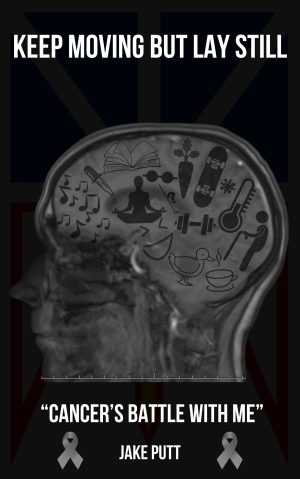
Writing as Therapy: Keep Moving But Lay Still: Cancer’s Battle With Me
Writing has become an important outlet for Jake.
His book, Keep Moving But Lay Still: Cancer’s Battle With Me
draws on his experiences and reflects the complicated reality of living after brain cancer.
Through honesty, humour and personal reflection, Jake explores the ways his life has changed.
Writing can provide an opportunity to process emotions, organise thoughts and express experiences that may be difficult to explain in conversation.
For some people affected by brain tumours, putting experiences into words can also provide a way to reconnect with their identity.
Jake’s book is part of how he shares his perspective with others.
It offers an insight into a life shaped by a serious diagnosis, but not defined entirely by it.
Finding Rehabilitation Through Music
Another interesting part of Jake’s experience is his use of music.
In the interview, he discusses music as a form of rehabilitation.
Music can be meaningful for many reasons. It may provide enjoyment, encourage concentration, support motivation or offer a way of expressing emotions.
Some people affected by neurological conditions also use structured music-based activities as part of rehabilitation.
For Jake, music has become one of the ways he works with the ongoing effects of his illness.
His experience is a reminder that rehabilitation does not always look the same for everyone.
Alongside formal medical support, people may develop personal activities that help them manage daily life and maintain a sense of purpose.
Daily Wellness and Living With Long-Term Effects
Jake also speaks about the daily practices he uses to manage the lasting effects of his diagnosis and treatment.
Long-term neurological and physical difficulties can make everyday life unpredictable.
Some days may be more manageable than others.
Building routines can help people organise their time, recognise their limitations and find a balance between activity and rest.
However, there is no single routine that works for everyone living with a brain tumour.
Jake’s approach reflects the importance of finding what works for his own circumstances.
His story also highlights the need for ongoing rehabilitation and support after cancer treatment, particularly when neurological changes continue to affect day-to-day life.
Survival Is Not the End of the Story
One of the most meaningful themes of Jake’s interview is that survival is not the end of someone’s experience with brain cancer.
It is possible to survive treatment and still face considerable challenges.
There may be changes to physical abilities, confidence, relationships, independence and future plans.
For Jake, rebuilding his life has involved finding new ways to adapt and express himself.
Writing, music and everyday practices have all become part of that process.
His experience reminds us why brain tumour awareness needs to include conversations about life after treatment, not only diagnosis and survival.
People living with the long-term effects of brain cancer deserve recognition, understanding and appropriate support.
What Jake’s Glioblastoma Story Can Teach Others
Jake’s experience highlights several important messages for people affected by brain tumours.
- Brain cancer can affect young people. Although glioblastoma is more common in older adults, Jake was diagnosed at just 16.
- A diagnosis may not be immediately recognised. Jake experienced an initial misdiagnosis before his brain cancer was identified.
- Not every tumour can be surgically removed. Inoperable tumours require specialist assessment and individual treatment planning.
- The effects of treatment can last for years. Surviving brain cancer does not necessarily mean returning to the same level of physical or neurological functioning.
- Rehabilitation is individual. Jake uses writing, music and daily routines as part of adapting to life after treatment.
- Emotional recovery matters. Rebuilding identity and confidence can be as important to a person’s wellbeing as managing physical difficulties.
Jake’s story reminds us that behind every diagnosis is a person with their own experiences, interests and hopes for the future.
Understanding Glioblastoma (GBM)
Glioblastoma is an aggressive, grade 4 malignant brain tumour.
Under the current World Health Organization classification, glioblastoma is defined as an IDH-wildtype diffuse adult-type glioma. Older diagnoses may have been made using different terminology and classification criteria.
Although glioblastoma is more commonly diagnosed in older adults, rare cases can occur in teenagers and young adults.
Brain tumours diagnosed in younger people may require specialist molecular testing to establish the precise tumour type.
What Does Inoperable Glioblastoma Mean?
An inoperable brain tumour is one that cannot be safely removed through surgery, or where surgery is not considered appropriate.
This may be because of the tumour’s location, its relationship to important brain structures or other medical considerations.
Inoperable does not necessarily mean that no treatment is available.
Depending on the diagnosis and individual circumstances, doctors may recommend radiotherapy, chemotherapy, medication to manage symptoms or supportive care.
Treatment decisions should always be discussed with a specialist neuro-oncology team.
What Are the Possible Long-Term Effects of Glioblastoma?
Glioblastoma and its treatment may cause neurological and physical difficulties.
These can include:
- Problems with memory and concentration.
- Speech and language difficulties.
- Fatigue and reduced stamina.
- Weakness or mobility difficulties.
- Seizures.
- Changes in emotional wellbeing.
- Difficulties with everyday activities and independence.
The effects vary considerably between individuals.
Rehabilitation services can help people manage symptoms, adapt to changes and maintain their quality of life.
Frequently Asked Questions About Glioblastoma
Can a 16-Year-Old Be Diagnosed With Glioblastoma?
Yes. Although glioblastoma is most commonly diagnosed in older adults, it can occur in younger people.
Brain tumours in children and teenagers require specialist evaluation, including molecular testing where appropriate, because some tumours have different biological characteristics from adult glioblastoma.
Can Someone Survive an Inoperable Glioblastoma?
Some people live longer than expected following a diagnosis of inoperable glioblastoma, although outcomes vary greatly.
Glioblastoma remains a serious, life-limiting cancer.
The outlook depends on the individual tumour, its molecular characteristics, the person’s general health and the treatments available.
Can Brain Cancer Cause Permanent Neurological Problems?
Yes. Both brain tumours and their treatment can cause long-term changes in movement, memory, speech, concentration and other neurological functions.
Some difficulties improve with time or rehabilitation, while others may be permanent.
Can Music and Writing Help After Brain Cancer?
Writing and music can offer emotional expression, enjoyment and opportunities for personal development.
Structured music therapy may also be used in certain rehabilitation settings.
However, they should not replace appropriate neurological rehabilitation or medical care.
Read More Glioblastoma Stories
Read more personal Glioblastoma stories on Aunty M Brain Tumours
If You Have Recently Been Diagnosed With Glioblastoma
If you have landed on this page after a glioblastoma diagnosis, whether it is your own or someone you love, please know you are not alone.
Every glioblastoma story is different.
Glioblastoma (GBM) is an aggressive, grade 4 brain tumour. Although it is a serious diagnosis, the way it affects each person, their treatment options and their experiences can be different.
Some people have surgery, radiotherapy and chemotherapy. Others may have fewer treatment options because of the tumour’s location, their general health or other medical factors.
Some experience long-term effects from the tumour or its treatment, while others face challenges with mobility, speech, memory, fatigue or seizures.
Families and carers may also face considerable emotional and practical difficulties.
Try not to compare your journey too closely with anyone else’s.
Reading other people’s experiences can offer comfort, understanding and a sense of connection. However, another person’s treatment experience or survival does not determine what will happen to you.
Take things at your own pace, ask questions and remember that you do not have to face this journey alone.
Where to Go After a Glioblastoma Diagnosis?
If you or someone you care about has been diagnosed with glioblastoma, there are organisations offering information, emotional support, practical advice and opportunities to connect with others.
The Brain Tumour Charity
A UK charity providing information about glioblastoma, possible treatments, symptoms and living with a brain tumour.
It also offers emotional support, support groups and resources for patients, families and carers.
Visit The Brain Tumour Charity
brainstrust – Glioblastoma Support
Offers practical and emotional support to people living with glioblastoma, including those facing a new diagnosis or tumour recurrence.
Its services include individual support, coaching, patient guides and opportunities to connect with others.
Brain Tumour Support
A UK charity providing support for anyone affected by a brain tumour, including patients, families, carers and loved ones.
It offers individual and group support, opportunities to connect with others and specialist emotional support.
Macmillan Cancer Support
Provides information, emotional support and practical guidance for people affected by cancer, including glioblastoma.
Its services include help with understanding treatment, managing side effects, financial concerns, benefits and employment.
Visit Macmillan Cancer Support
Cancer Research UK
Provides information about glioblastoma, including symptoms, diagnosis, treatment and ongoing research.
Read its information about Glioblastoma
Brain Tumour Research
Funds research into brain tumours and campaigns for greater awareness and investment in research.
Its work aims to improve understanding, develop better treatments and ultimately find cures for all types of brain tumours.
NHS Neuro-Oncology, Rehabilitation and Palliative Care Services
Your specialist medical team can help you understand your glioblastoma diagnosis, treatment options and ongoing care.
Depending on your needs, additional support may include physiotherapy, occupational therapy, speech and language therapy, psychological support or help managing seizures and fatigue.
Palliative care and hospice services can also provide valuable support for people living with glioblastoma and their families.
Palliative care is not only for end-of-life care. It can help manage symptoms, provide emotional support and improve quality of life at different stages of illness.
Ask your GP, clinical nurse specialist or neuro-oncology team about appropriate referrals.
Would You Like to Share Your Glioblastoma Story?
At Aunty M Brain Tumours, we believe every person’s experience deserves to be heard.
Whether you have recently been diagnosed, are undergoing treatment, living with glioblastoma, supporting someone you love or remembering someone you have lost, your experience could help another person feel less alone.
Find out how to share your brain tumour story
Medical disclaimer: This article includes an individual’s experience and general educational information. It is not a substitute for professional medical advice. Brain tumour diagnosis, treatment and prognosis vary between individuals.

Claire Bullimore is an influential figure in the brain tumour community. She embarked on her brain tumour journey and was diagnosed with an intraventricular meningioma. In response to her experiences, Claire founded ‘Aunty M Brain Tumours,’ a platform dedicated to sharing brain tumour stories. Based in London, England, Claire also identifies as a blogger and speaker for Aunty M Brain Tumours, shedding light on the challenges faced by those diagnosed and amplifying their voices for better awareness and support. Through her dedication and advocacy, Claire’s efforts have been recognized by Brain Tumour Research and other organizations, spotlighting her commitment to making a positive difference for individuals impacted by brain tumours.