Living Fully With a Grade 3 Astrocytoma
The First Seizure at Work
Sophie was 36, fit, healthy, running her own hair salon in Jersey, when one ordinary day at work changed everything.
She suddenly became vacant, lost her speech, and collapsed onto a client having a seizure.
“I knew something was happening,” Sophie says, “but I couldn’t explain to anybody what was going on.”
Within minutes, paramedics were there. Sophie was taken to hospital by ambulance, but after blood tests and several hours of waiting, she was discharged with a leaflet for a First Seizure Clinic and told she would be booked for a CT scan.
The following day, Sophie went to her GP. He immediately took her symptoms seriously. An urgent head CT was arranged.
“Young, fit, healthy 36-year-old women don’t normally just have an unprovoked seizure.”
Watch Sophie tell her story in full in the Aunty M Brain Tumours Talk Show interview below, or keep reading for the written version
Being Told “You Have a Brain Tumour”
Sophie had her CT scan on 3 October. What started as a routine scan quickly became something much more frightening. The radiographer returned and explained that contrast was needed. His tone changed, and Sophie immediately sensed something was wrong.
After the scan, Sophie went back to work and started colouring a client’s hair. Then her phone rang. In Jersey, hospital numbers begin with 44, so when she saw the number, she answered straight away.
She was told to come back to the hospital.
“They said they had found lesions on my brain.”
Sophie’s first instinct was to call her husband, Jordan. Her colleague Charlotte, who had worked with her for around 15 years, saw her face and knew something was seriously wrong.
Sophie broke down.
“I don’t want to die.”
But then, in the practical way so many patients describe, she pulled herself together. She went home, packed an overnight bag, called her mum, and headed back to the hospital.
When Sophie returned to the hospital, there was confusion. A&E did not know why she was there, and there were no beds available. Eventually, a nurse found a room, and Sophie was told that a doctor needed to speak to her immediately.
That was when Sophie heard the words no one ever wants to hear. “You’ve got a brain tumour.”
Travelling from Jersey to Southampton for Specialist Care
She was told it was quite large and that she needed an MRI. Her scans were sent to Southampton Hospital for review.
The language used by the doctor stayed with Sophie.
“He said, unfortunately, these things are sinister, and in most cases, there’s not much we can do.”
Sophie was sitting there with her mum and husband when she heard this. As a mother herself, she could not stop thinking about what it must have felt like for her own mum to hear that her child had a brain tumour.
“I can’t imagine being a parent myself and ever being told your child is going to die, basically.”
The next morning brought more fear. Sophie was told it looked like the tumour could be metastatic cancer, meaning cancer that had spread to the brain from somewhere else. She was sent for full-body scans to look for a primary cancer.
“At that point, I really did genuinely think I was dying.”
Getting a Private Consultation
Sophie’s husband’s employer suggested they use his work health insurance to arrange a private consultation. That led them to Professor Paul Grundy in Southampton.
For Sophie, that consultation changed everything.
After looking at her scans, he said it looked more like a low-grade glioma, although he could not confirm anything until surgery or biopsy. Sophie was given three options: watch and wait, biopsy, or surgery.
She chose surgery.
Sophie was offered a date quickly, but her daughter’s birthday was approaching. As a mum, she wanted to protect that day.
“I didn’t want her to have a crap birthday. I didn’t want her to have that in future.”
At the same time, Sophie knew the tumour needed to come out.
Sophie’s Awake Brain Surgery
Sophie had awake brain surgery on 1 December 2024.
Although the thought of awake brain surgery might terrify many people, Sophie says she would choose to have it awake again if she ever needed to.
“I think it’s so clever.”
She even asked the team to take pictures and said they could film it for a documentary if it helped raise awareness.
The most traumatic part for Sophie was not being awake. It was the sound.
“The bit I remember vividly was the sound of them sawing my skull.”
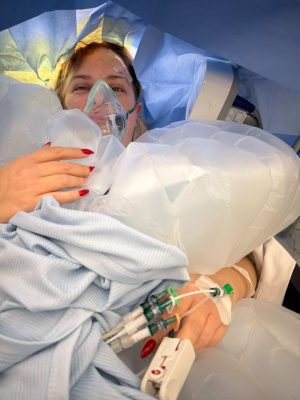
Once the surgeons reached the brain itself, Sophie could not feel pain because the brain has no pain receptors. She was allowed to bring her own playlist and listened to Christmas songs and Taylor Swift until the team needed to test her speech, words and vocabulary.
During surgery, the team stimulated parts of her brain, which brought on sensations similar to her original seizure.
“That’s exactly what it felt like when I had my seizure.”
Sophie’s tumour was near areas connected to speech. One section could not be removed because it was too close to her speech function. Her surgeon told her he had never seen a case quite like hers and asked whether she would be willing to be used as a case study.
Sophie’s response was simple.
“If it helps someone else, every brain matters, right?”
Recovery After Surgery
After surgery, Sophie’s husband and mum were shocked by how awake and alert she was. A few hours later, the pain hit, and she needed strong medication.
Her speech was slow, and even now Sophie still experiences word-finding and processing difficulties. She was also very nauseous and was sick a lot after surgery.
But the surgery itself did not frighten her as much as people might expect.
“It’s important to stay calm, collected and positive.”
Ten days later, Sophie had her staples removed. She was told around 95% of the tumour had been removed.
Because brain tumours can grow into surrounding brain tissue, Sophie was advised to have further treatment: six weeks of radiotherapy followed by 12 months of chemotherapy.
Radiotherapy and Chemotherapy for Grade 3 Astrocytoma
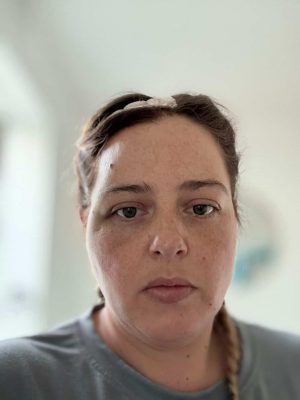
Sophie started radiotherapy on 13 January. She had 33 sessions in total, five days a week for six and a half weeks.
After radiotherapy, she knew chemotherapy was next. Like many people, the word “chemo” frightened her. She worried about sickness, not being able to eat, and losing her quality of life.
Sophie asked for a break before starting chemotherapy and began treatment on 21 April.
At first, she coped better than expected. She did not lose weight; in fact, she put weight on. Sophie jokes with the kind of dark humour many cancer patients will recognise:
“God gave me a brain tumour and then also didn’t let me have the chemo diet.”
But over time, the side effects built up. The first cycle was manageable. By the second, she was more fatigued. By the third, she was exhausted. By the fifth, Sophie told her oncologist she could not continue.
She had gone from being sociable, working 40 to 45 hours a week and running a salon, to living around a 28-day chemotherapy cycle.
“I was just stuck.”
Sophie asked whether she could pause chemotherapy and keep the remaining months in reserve in case the tumour started growing again. After speaking with her neuro-oncologist in Southampton, and with a stable scan, Sophie stopped chemotherapy and moved to watch-and-wait monitoring.
She is now waiting for her next scan results.
Finding Her Voice on TikTok
When Sophie was first diagnosed, she started recording herself talking about what was happening. She had never been someone who sat down and wrote her feelings, but recording herself gave her a way to let everything out.
She shared the video with close friends. They encouraged her to put it on TikTok.
Sophie had three reasons for going public:
- To raise awareness of brain tumours.
- To hold people accountable where patients are failed.
- To create a place where others going through something similar could reach out.
Her TikTok handle is @bobtheglobcast.
The name came from a friend who encouraged Sophie to name the tumour as a way of separating herself from it. On scans, Sophie says it looked like a giant glob in her head.
So “Bob the Glob” was born.
What began as a personal outlet quickly became a community. Sophie started hearing from other people affected by brain tumours and cancer. She realised that speaking openly was helping people.
“I found a whole little community.”
@bobtheglobcast
Campaigning in Jersey
Sophie’s voice has grown beyond TikTok.
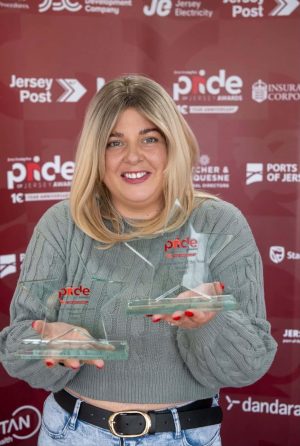
In Jersey, she has become known for campaigning and speaking up for cancer patients, especially those affected by brain tumours and neurological illness. She was nominated for Ambassador of the Year at the Pride of Jersey Awards and won.
She also won the Gary Burgess Award, one of Jersey’s most significant awards, for her campaigning and advocacy.
Sophie says she has always felt she was put on this earth to help other people. She never imagined that brain cancer would become the way she did that.
“It’s a horrible way, but in another way, it’s like I knew I was always meant to help people.”
Life After Brain Tumour Surgery
Sophie was left with neurological difficulties after surgery, including weakness down the left side of her body, which affected her hand and prevented her from returning to work as she had before.
Her word-finding, processing and speech have also been affected.
But rather than stepping back, Sophie has channelled her energy into helping others. She saw a gap in Jersey: while there are charities, there was not one central place linking people with neurological illnesses to the right support.
So Sophie decided to set up her own charity.
Her vision is to create a simple referral pathway so that health departments, A&E teams and other services can refer people with neurological illness to the right charity or support service quickly.
She also wants money raised in Jersey to stay in Jersey, helping islanders who often have to travel off-island for specialist treatment.
Sophie knows this hardship first-hand. Patients may have travel funded, but partners, parents or carers may not always be covered. Sophie and her family spent thousands on accommodation and flights while she received treatment away from home.
“It was hard work being away.”
About Sophie’s Tumour: Grade 3 Astrocytoma
Sophie has shared that she was diagnosed with a grade 3 astrocytoma.
Astrocytomas are a type of glioma, meaning they begin in glial cells, the supportive cells of the brain and spinal cord. The grade gives doctors an idea of how quickly the tumour is likely to grow. Grade 3 astrocytomas are considered high-grade brain tumours.
Treatment can vary depending on the tumour’s location, how much can safely be removed, the person’s general health, and the tumour’s molecular markers, such as IDH status. Common treatment may include surgery, radiotherapy and chemotherapy.
For Sophie, treatment included:
- Awake brain surgery
- Radiotherapy
- Chemotherapy
- Ongoing MRI monitoring
Sophie has been honest about the reality of living with an incurable but treatable brain tumour: the uncertainty, the side effects, the scan anxiety, the neurological changes, and the emotional toll on the whole family.
But her story is also one of advocacy, community and purpose.
Support for People With Astrocytoma or Brain Tumours
A brain tumour diagnosis can feel frightening and isolating, but support is available. Sophie’s story also shows how important it is to find people who understand — whether that is through charities, online communities, local support, specialist nurses, or others living with brain tumours.
Local Support in Jersey
For people in Jersey, Sophie’s experience highlights the added pressures of travelling away from the island for specialist treatment. Local cancer support services, neurological charities, GP teams, hospital teams and community organisations may be able to help with practical advice, travel, emotional support and signposting.
Sophie is also working to improve this pathway herself, helping people find the right support sooner.
Brainstrust
Brainstrust supports people with brain tumours and their families. They offer practical help, coaching, meet-ups and a helpline.
Find Sophie on Instagram:
View this post on Instagram

Claire Bullimore is an influential figure in the brain tumour community. She embarked on her brain tumour journey and was diagnosed with an intraventricular meningioma. In response to her experiences, Claire founded ‘Aunty M Brain Tumours,’ a platform dedicated to sharing brain tumour stories. Based in London, England, Claire also identifies as a blogger and speaker for Aunty M Brain Tumours, shedding light on the challenges faced by those diagnosed and amplifying their voices for better awareness and support. Through her dedication and advocacy, Claire’s efforts have been recognized by Brain Tumour Research and other organizations, spotlighting her commitment to making a positive difference for individuals impacted by brain tumours.