Pineal Cyst Story: Charlotte Light’s Brain Surgery in Australia
After being told her pineal cyst was too risky to remove in the UK, Charlotte Light travelled to Australia for brain surgery. She shares her experience of debilitating symptoms, difficult treatment decisions and the long road to recovery.
There are some diagnoses that change your life overnight. For Charlotte Light, a mother of two who had always enjoyed running, working and spending time with her family, that moment came in May 2017.
What began with a blinding headache, severe dizziness and unusual neurological symptoms led to the discovery of a growth in the pineal region of her brain.
Within months, Charlotte’s life had changed almost beyond recognition.
She went from being an active, busy mum to spending much of her time confined to bed, struggling with relentless headaches and unable to manage the simplest everyday activities.
Doctors in the UK advised that surgery was too risky because of the cyst’s location.
But Charlotte’s symptoms continued to worsen, and she felt desperate for another option.
Her search eventually took her halfway around the world to Australia, where she underwent brain surgery in April 2018.
This is Charlotte’s pineal cyst story, from diagnosis and the search for treatment to surgery, recovery and rebuilding her confidence.

When a Blinding Headache Changed Everything
Charlotte’s first serious symptoms appeared over the late May bank holiday weekend in 2017.
She was experiencing an unbearable headache and severe dizziness. Her husband took her to A&E when it became clear that something was very wrong.
Charlotte recalls being so dizzy that she could barely walk in a straight line.
More frighteningly, she began losing sensation down the right side of her body, and her speech became slurred.
Doctors initially suspected she might be having a stroke.
However, an MRI scan revealed a growth inside her brain.
Although she was discharged from hospital and told to rest while waiting for a neurology appointment, Charlotte’s symptoms continued.
Walking made her feel seasick, and the headaches were extreme.
She was frightened, confused and desperate for answers.
“I’d come from running regularly and living the life of a busy mum, to bed-bound and desperate in just a few weeks.”
For somebody who had always been active, the sudden loss of independence was particularly difficult.
A Pineal Cyst Diagnosis — But Surgery Was Considered Too Risky
When Charlotte eventually met with a neurologist, she learned that the growth was in the pineal region, deep within her brain.
She was told that it was not cancerous, but that removing it would be extremely difficult because of its location.
Charlotte described being astonished that something approximately the size of a walnut could be considered harmless when she was experiencing such debilitating symptoms.
Although she accepted the initial advice and began taking medication to manage her symptoms, her condition continued to deteriorate.
Over the following six months, the headaches, dizziness and difficulties with everyday life became increasingly severe.
By January 2018, Charlotte was spending most of her time in bed.
Even helping her children get ready for school and managing their evening routines had become exhausting.
The medication also left her feeling unwell and woozy.
Charlotte sought advice from three different neurologists, but she was repeatedly told that surgery was not recommended unless she developed severe hydrocephalus, a condition involving a build-up of fluid inside the brain.
The doctors considered the risks of operating greater than the likely benefits.
For Charlotte, however, the symptoms had become almost impossible to live with.
Searching for a Second Opinion Abroad
Feeling that she had exhausted her options in the UK, Charlotte began researching neurosurgeons who had experience operating in the pineal region.
She identified three possible surgeons, two in the United States and one in Australia.
After considering the options, including the cost, she decided to pursue treatment with neurosurgeon Charlie Teo in Sydney.
It was an enormous decision.
Travelling abroad for major brain surgery meant leaving the familiarity of home and arranging treatment thousands of miles away.
But Charlotte felt she needed to explore another possibility.
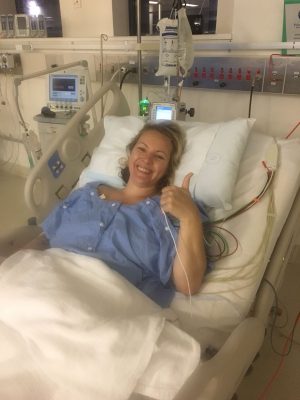
In late April 2018, she travelled to Sydney to undergo surgery.
Her story highlights the difficult decisions some patients face when symptoms are severe but the benefits and risks of treatment are uncertain.
Seeking another specialist opinion can help patients understand their options, although surgery for a pineal cyst is not appropriate for everyone.
Brain Surgery in Australia: A Turning Point
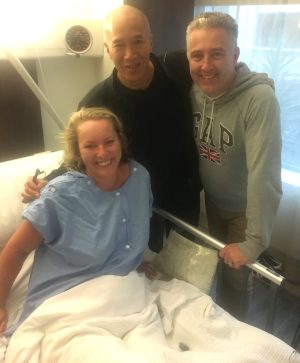
Following her operation, Charlotte described feeling enormous relief that the debilitating symptoms she had experienced before surgery had improved.
After spending so long unwell, she was eager to return to the activities and routines she had missed.
But recovery was not quite as straightforward as she had hoped.
She quickly discovered that although she wanted to return to normal life, her body was not ready to do everything at once.
She needed time to adjust.
Everyday environments that had once seemed completely ordinary became difficult.
Crowds, bright lights and noise could leave her feeling overwhelmed and anxious.
Sometimes the sensory stimulation became so intense that she needed to leave the situation entirely.
Charlotte gradually learned to recognise the warning signs and understand which environments she could comfortably manage.
It was a different kind of recovery from what she had expected.
Life After Pineal Cyst Surgery: Learning to Slow Down
Before her diagnosis, Charlotte had enjoyed running, exercise, busy social environments and an active lifestyle.
After surgery, she found herself adapting to a quieter way of life.
She began avoiding overstimulating environments and paying closer attention to how she felt.
At first, it was frustrating.
She wanted to reclaim everything that the previous year had taken from her.
But recovery happened gradually.
Over the following 15 months, Charlotte noticed that she was no longer planning every detail of her day around her symptoms.
Shopping and socialising became more manageable, and she started enjoying experiences she had once found overwhelming.
Eventually, she recognised how far she had come.
“I’m me again. At last.”
It was a powerful moment after such an uncertain period.
However, her recovery journey was not finished.
Further Complications and Learning to Walk Again
Charlotte’s recovery also included some serious setbacks.
In November 2018, several months after her brain surgery, she developed meningitis.
Later, she began experiencing a gradual loss of sensation in her feet and lower legs.
Her symptoms progressed until she was unable to move her legs.
She was admitted to hospital for investigations and remained there for approximately a month.
During that admission, she received intensive physiotherapy to help her learn to walk again.
It was another difficult chapter in an already challenging journey.
When Charlotte shared her story, she explained that she no longer needed a wheelchair, although she continued to experience altered sensation and changes to the way she walked.
Despite everything, she remained hopeful that her mobility would continue to improve.
Her experience is a reminder that recovery from major neurological illness and treatment does not always follow a predictable path.
Not every setback can be attributed to surgery itself, and individual complications require medical investigation.
Wanting to Be Charlotte Again
One of the most moving parts of Charlotte’s interview was her answer when I asked about the toughest challenge of being a survivor.
For Charlotte, it was about regaining her confidence and sense of identity.
She wanted to run again, wear her favourite heels, enjoy social occasions and stop feeling anxious about her health.
But above all, she wanted to be seen as herself.
“I need to just be Charlotte, not Charlotte with the brain tumour or Charlotte in the wheelchair. Just plain Charlotte would be perfect.”
That is something I think many people affected by brain tumours and neurological conditions will understand.
A diagnosis can suddenly become the thing everyone associates with you.
Appointments, scans, symptoms and recovery begin to take up so much space that it can feel difficult to remember who you were before.
Charlotte’s words beautifully express the desire to move forward without having your entire identity defined by a medical experience.
Finding a New Balance in Life
When Charlotte spoke about her life before surgery, she described a very different version of herself.
Before having children, she had worked in the high-pressure world of investment banking, spending years on busy trading floors.
She enjoyed the gym, running and an active social life.
She even remembered taking part in a charity challenge to run up London’s Gherkin building for the NSPCC — and beating her husband.
After brain surgery, things changed.
Charlotte discovered that she enjoyed quieter surroundings and spending time on her own.
She found comfort in podcasts and audiobooks, particularly while recovering and avoiding too much screen time.
Although she had once enjoyed being in the middle of busy crowds, she increasingly preferred smaller gatherings and calmer environments.
It was not necessarily the life she had expected, but she was learning to appreciate different things.
And she wondered whether this quieter version of herself would remain or whether her old personality would gradually return as the difficult memories became more distant.
What Motivated Charlotte Through Recovery?
Throughout her interview, Charlotte spoke about the importance of her family.
Her children, husband, wider family and friends were her greatest sources of motivation.
After feeling that so much of her life had been placed on hold, she was determined to make the most of the opportunities ahead.
She also wanted to return to travelling and hoped one day to take her children to Australia.
Another ambition was to become more involved in charity work and awareness campaigns supporting other people affected by brain tumours.
Charlotte had also discovered a love of writing.
She enjoyed sharing her experiences through her blog and hoped her words might help other people facing similar challenges.
Her approach was to find humour where she could, while remaining open about the difficulties she had experienced.
Charlotte’s Advice to Others Facing a Brain Diagnosis
When I asked Charlotte what advice she would give to somebody receiving a frightening diagnosis, she offered some practical suggestions based on her own experience.
She encouraged people to try to remain calm, even when everything feels overwhelming.
Writing information down was particularly important to her.
Rather than trying to manage every concern at once, she suggested breaking things into smaller lists or timelines.
She also encouraged people to ask questions, do their research and seek further explanations if they did not understand the medical advice they were receiving.
For Charlotte, being informed helped her feel more involved in decisions about her care.
Her experience also shows the value of obtaining an appropriate specialist second opinion when facing difficult treatment decisions.
However, because surgery carries risks, especially in complex areas of the brain, another opinion does not necessarily mean that an operation will be recommended.
The aim is to understand the available options, likely benefits and possible complications before deciding on treatment with a qualified medical team.
My Thoughts: More Than a Pineal Cyst Diagnosis
What stands out to me about Charlotte’s story is how quickly life can change.
One moment, she was a busy mum enjoying running, family life and the everyday things many of us take for granted.
Then came the headaches, the dizziness, the uncertainty and the frightening reality of being told she had a growth deep inside her brain.
But I also think the emotional side of her recovery deserves just as much attention.
Charlotte spoke openly about sensory overload, anxiety, changes in confidence and the frustration of not being able to return immediately to the person she had been before.
And then there was that simple wish to be known as just Charlotte again.
I think that says so much about the experience of living beyond a brain diagnosis.
People can survive surgery and still need time to rebuild their confidence, independence and sense of identity.
Thank you, Charlotte, for sharing your experience with me and the Aunty M Brain Tumours community.
I hope your story helps somebody else feel understood, particularly if they are facing difficult decisions about treatment or learning to adjust to life after brain surgery.
What Is a Pineal Cyst?
A pineal cyst is a fluid-filled sac that develops in or near the pineal gland, a small structure located deep within the brain.
The pineal gland produces melatonin, a hormone involved in regulating the body’s sleep-wake cycle.
Most pineal cysts are benign and are discovered by chance during MRI scans carried out for unrelated reasons.
Many people never experience symptoms or require treatment.
However, in some cases, a pineal cyst can become clinically significant because of its size, location or effect on surrounding structures.
Larger or symptomatic cysts may occasionally interfere with the normal circulation of cerebrospinal fluid, potentially causing hydrocephalus.
What Symptoms Can a Pineal Cyst Cause?
Most pineal cysts do not cause symptoms.
When a pineal cyst becomes symptomatic, possible problems may include:
- Headaches
- Nausea or vomiting associated with increased pressure inside the skull
- Visual difficulties, particularly problems looking upwards
- Symptoms related to hydrocephalus, if fluid flow becomes obstructed
Symptoms such as dizziness, headaches and balance problems can have many different causes. Finding a pineal cyst on an MRI does not automatically mean that the cyst is responsible.
A specialist must assess the scan findings alongside the person’s symptoms and medical history.
Do Pineal Cysts Always Need Surgery?
No. Most pineal cysts do not require surgery.
Depending on the circumstances, doctors may recommend observation, repeat MRI scans or no further routine imaging.
Surgery may be considered when a cyst causes hydrocephalus, worsening neurological symptoms or other significant complications.
The decision requires careful consideration of the possible benefits and risks.
Can You Have a Pineal Cyst Without Knowing?
Yes.
Many pineal cysts are discovered incidentally during brain scans for unrelated symptoms.
These are often small, benign and stable.
Is a Pineal Cyst the Same as a Colloid Cyst?
No.
A pineal cyst forms in the region of the pineal gland, while a colloid cyst most commonly develops in the third ventricle of the brain.
Although both are usually benign cystic conditions, their locations, possible complications and treatment approaches differ.
If you are searching for colloid cyst experiences, you can read Claire Snyman’s Colloid Cyst Story here on Aunty M Brain Tumours.
Pineal Cyst Information and Support
If you or somebody you love has been diagnosed with a pineal cyst, reliable medical information can help you prepare questions for your specialist.
University Hospitals Plymouth NHS Trust
Provides patient information explaining pineal cysts, possible symptoms, monitoring and when surgery may be considered.
Read the NHS Pineal Cysts Information
Brainstrust
Provides support, information and practical guidance for people affected by brain tumours and related conditions.
The Brain Tumour Charity
Offers information about brain tumours, coping with diagnosis, emotional wellbeing and accessing support.
Visit The Brain Tumour Charity
Read More Personal Brain Tumour and Brain Cyst Stories
Every person’s experience of a brain cyst or brain tumour is different.
Some people require monitoring, others need surgery, and recovery can look very different from one person to the next.
At Aunty M Brain Tumours, I share personal stories to help people understand the realities of diagnosis, treatment and life afterwards.
Explore More Brain Tumour Stories
Medical disclaimer: Charlotte’s story reflects her personal experience, as originally shared in her interview. The medical information is for general awareness and is not a substitute for professional advice. Always speak to your own specialist about your diagnosis, symptoms and treatment options.


Claire Bullimore is an influential figure in the brain tumour community. She embarked on her brain tumour journey and was diagnosed with an intraventricular meningioma. In response to her experiences, Claire founded ‘Aunty M Brain Tumours,’ a platform dedicated to sharing brain tumour stories. Based in London, England, Claire also identifies as a blogger and speaker for Aunty M Brain Tumours, shedding light on the challenges faced by those diagnosed and amplifying their voices for better awareness and support. Through her dedication and advocacy, Claire’s efforts have been recognized by Brain Tumour Research and other organizations, spotlighting her commitment to making a positive difference for individuals impacted by brain tumours.