Cat’s Glioblastoma Story: From Four Months of Headaches to a Brain Cancer Diagnosis
After months of worsening headaches, Catherine (Cat) Heald was diagnosed with a grade 4 glioblastoma in June 2020. Her experience includes brain surgery, radiotherapy, chemotherapy, the challenges of treatment during the COVID-19 pandemic and a determination to raise awareness through the activities she loves.
When Four Months of Headaches Changed Everything
For Catherine Heald, known as Cat, the first sign that something was wrong was a headache.
In February 2020, Cat began experiencing dull headaches that would not go away.
She had never been someone who regularly suffered from headaches, but initially thought she might be dehydrated or simply needed some fresh air.
Like many people, she had no reason to imagine that her symptoms could be caused by a brain tumour.
Cat was working in graphic design as a production quality controller in Milton Keynes. Outside work, she was passionate about music and trampolining, having recently qualified as a Level 2 trampoline coach.
But as the weeks passed, her headaches became increasingly difficult to ignore.
Four months after they began, Cat would find herself in hospital, discovering that she had a brain tumour.
The eventual diagnosis was glioblastoma (GBM), an aggressive, grade 4 brain cancer.
Her story is one of delayed diagnosis, unexpected challenges, treatment and the importance of having people around you who understand.
Cat Shares Her Glioblastoma Story
In this episode of the Aunty M Brain Tumours Talk Show, Cat talks about her experience of brain cancer, the difficulties she encountered during treatment and the importance of emotional support, determination and raising awareness.
Watch Cat share her experience in our interview below, or continue reading her story.
Watch Cat’s Brain Cancer Interview on YouTube
When Headaches Were Mistaken for an Ear Infection
As the COVID-19 pandemic began and people were encouraged to work from home, Cat noticed another unusual symptom.
She could hear her heartbeat throbbing in her left ear.
Encouraged by her mother, she contacted her GP and was diagnosed with an ear infection.
She was prescribed antibiotics.
Although her symptoms initially seemed to improve, the headaches returned.
Cat spoke with another GP, who believed she was experiencing tension headaches. She was prescribed amitriptyline, with the dosage gradually increasing as her symptoms worsened.
By May 2020, the pain on the left side of her head, between her ear and eye, had become significant.
She managed to arrange a face-to-face GP appointment, despite the restrictions in place during the pandemic.
Once again, she was told the headaches were likely caused by tension.
Stronger painkillers were prescribed, but they provided no relief.
Cat had been experiencing headaches for several months without knowing what was causing them.
The Day Cat Was Taken to Hospital
On Friday 12 June 2020, Cat was working from home when she experienced an episode of excruciating pain.
While preparing lunch, a sudden, blinding headache forced her to sit down.
The pain was so severe that she could barely move for approximately 15 minutes.
Her husband, who was also working from home, became increasingly concerned.
He told her that if the pain returned, he would call an ambulance.
Later that afternoon, Cat finished work and bent down to switch off a socket.
The terrible pain returned.
This time, her husband called for help.
Paramedics arrived and assessed her before taking her to Northampton General Hospital.
Because of the COVID-19 restrictions, her husband had to wait outside.
Cat was taken for a CT scan.
The results changed everything.
Doctors had discovered a brain tumour.
She needed to be transferred urgently to the John Radcliffe Hospital in Oxford for specialist assessment.
After months of unexplained pain, Cat finally knew there was a serious medical reason for her symptoms.
Discovering a 5 cm Brain Tumour
Cat arrived at the John Radcliffe Hospital in the early hours of the following morning.
She was admitted to the High Dependency Unit and underwent an MRI scan.
Doctors prescribed steroids to reduce swelling and pressure inside her skull. As the pressure eased, her headaches began to improve.
She was also given medication to protect her stomach and anti-seizure medication.
When the surgical team reviewed her MRI results, Cat was shown the tumour.
It measured approximately 5 cm.
She described its appearance as resembling a squashed ping-pong ball.
At that stage, doctors did not yet know exactly what type of tumour they were dealing with.
Further investigation and surgery would be needed.
Although Cat was receiving specialist care, the pandemic made the situation more difficult.
Her husband could bring essential belongings to the hospital, but visiting restrictions prevented him from seeing her.
For someone facing such frightening news, being separated from family added another challenge.
Waiting Three Weeks for Brain Surgery
On 16 June 2020, Cat was discharged from hospital.
She had been told that surgery would not take place immediately.
Instead, she would have to wait several weeks.
For Cat, the waiting was difficult.
Having spent months suffering from headaches and finally discovering the cause, she wanted to get on with treatment.
On 7 July, she returned to the John Radcliffe Hospital for her pre-operative assessments.
These included an ECG and another MRI scan.
Her craniotomy was scheduled for the following day.
Despite everything that had happened, Cat felt reassured by the neurosurgical team caring for her.
She believed she was in experienced hands.
Brain Surgery at the John Radcliffe Hospital
On 8 July 2020, Cat underwent a craniotomy to remove as much of the tumour as possible.
She was taken into theatre that morning and regained consciousness during the afternoon.
Following surgery, her neurosurgeon assessed her neurological function, checking that she could move her limbs and wiggle her toes.
The operation had been successful in removing most of the tumour.
However, a small amount was left behind because removing it would have presented too much risk.
A follow-up MRI allowed her surgical team to assess the result.
Cat was pleased to be discharged home.
But she was still waiting for the results that would tell her exactly what type of brain tumour she had.
Receiving a Grade 4 Glioblastoma Diagnosis
On 23 July 2020, Cat received the results of the tumour analysis.
She had a grade 4 glioblastoma.
Glioblastoma, sometimes historically called glioblastoma multiforme, is an aggressive brain tumour that can grow into surrounding brain tissue.
It was difficult to comprehend that such a serious cancer had been growing inside her head.
At the same time, she was relieved that surgeons had managed to remove most of the visible tumour.
Cat now faced the next stage of treatment.
For many people diagnosed with glioblastoma, surgery is followed by a combination of radiotherapy and chemotherapy to help control remaining tumour cells.
Her medical team planned further treatment.
Six Weeks of Radiotherapy and Chemotherapy
In late August 2020, Cat began six weeks of radiotherapy alongside temozolomide chemotherapy.
Temozolomide, often shortened to TMZ, is a chemotherapy medicine commonly used in the treatment of glioblastoma.
Because Cat was unable to drive after brain surgery, her husband took her to Northampton General Hospital for treatment.
Due to the ongoing pandemic restrictions, he had to wait in the car while she attended her appointments.
Fortunately, Cat reported tolerating this initial stage of treatment reasonably well.
Although her appetite was sometimes affected, she did not experience the degree of illness she had feared.
She completed the combined treatment in early October 2020.
To mark the occasion, she went out for a meal.
After months of appointments, uncertainty and treatment, it was an opportunity to celebrate reaching another milestone.
When Chemotherapy Affected Her Blood Counts
In November 2020, Cat began a further course of chemotherapy.
This next phase proved more difficult.
When her chemotherapy dosage increased, her blood tests showed problems with her platelet and neutrophil levels.
Platelets help the blood clot, while neutrophils are white blood cells that help protect the body against infections.
Chemotherapy can sometimes reduce these blood cells, increasing the risk of bleeding and infection.
Because of the changes in Cat’s blood counts, her medical team recommended stopping chemotherapy.
It was another unexpected development in a treatment journey that had already brought many difficult decisions.
Her experience highlights why regular blood tests and close monitoring are important during chemotherapy.
Encouraging MRI Results in Early 2021
On 4 January 2021, Cat underwent another MRI scan.
The results brought encouraging news.
The remaining tumour had reduced in size by approximately 14 mm.
Her next three-monthly scan, shortly after Easter, showed a further reduction of around 2 mm.
These were positive developments for Cat at that stage of her treatment.
However, glioblastoma requires ongoing monitoring because recurrence is common, even after a good initial response.
These scan results describe Cat’s experience in early 2021 and should not be taken as confirmation of her current tumour status.
Returning to Work After Brain Cancer Treatment
For Cat, returning to work was an important part of regaining some normality.
She resumed work on 12 October 2020, initially completing four-hour days.
Over the following weeks, she gradually increased her working hours.
By December, she had returned to full days.
In her account published in June 2021, Cat explained that she had been away from work for approximately four months.
Being able to return gave her something familiar to focus on.
After a life-changing diagnosis, returning to work can represent much more than employment.
It may offer routine, social interaction, independence and a connection to the life someone had before treatment.
However, everyone’s ability to return to work is different.
Some people need adjustments or a phased return, while others may be unable to resume employment because of the effects of their tumour or treatment.
Getting Back to Trampolining
One of Cat’s greatest passions is trampolining.
Before her diagnosis, she had worked towards becoming a qualified trampoline coach.
In fact, she completed her Level 2 coaching qualification just five days before the first COVID-19 lockdown.
Following her surgery and treatment, getting back to the sport she loved became another meaningful milestone.
In April 2021, as restrictions began to ease, Cat returned to coaching.
The following month, adult trampolining classes resumed.
For Cat, being able to bounce again was something worth celebrating.
Her return to trampolining was a particularly personal achievement.
It represented enjoyment, independence and reconnecting with an activity that had been an important part of her life before her diagnosis.
[INSERT CAT’S TRAMPOLINING OR COACHING PHOTO HERE]
Suggested caption: Cat’s passion for trampolining has been an important part of her life, both before and after her glioblastoma diagnosis.
Music, Family and Finding Normality
Music has also been a lifelong interest for Cat.
Growing up in a musical family, she learnt to play the keyboard and flute before taking up the drums during university.
Her father played guitar, while her mother learnt piano and recorder.
Music was part of family life long before her brain tumour diagnosis.
Alongside trampolining and work, these interests helped give Cat a sense of identity beyond being a cancer patient.
That distinction matters.
When someone is diagnosed with a brain tumour, conversations can quickly become dominated by scans, hospital appointments, medication and treatment.
But the person behind the diagnosis still has hobbies, relationships, talents and ambitions.
Cat’s story helps remind us of that.
Raising Awareness and Fundraising for Brain Tumour Research
After her diagnosis, Cat became involved in raising awareness and supporting brain tumour research.
In her interview, she described setting herself a fundraising challenge inspired by the date her tumour was discovered.
She wanted to cover 1,206.20 miles, reflecting 12 June 2020, over 17 weeks.
It was a personal way of marking a date that had changed her life while supporting a cause close to her heart.
Cat also supported Brain Tumour Research’s campaigning and fundraising efforts.
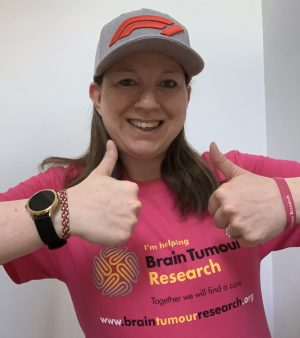
Her work colleagues joined her in Wear A Hat Day 2021, taking part in a virtual team event.
Later, she continued supporting fundraising activities, including a Walk of Hope event involving music and donations.
For Cat, sharing her story has helped bring attention to the need for better understanding, treatments and research funding for brain tumours.
Living With the Uncertainty of Glioblastoma
A glioblastoma diagnosis can bring considerable uncertainty.
Even when treatment goes well, regular MRI scans and follow-up appointments may become part of everyday life.
For Cat, there was also the experience of knowing people within her extended family who had died from brain tumours.
That personal history made her diagnosis particularly difficult to process.
Statistics about glioblastoma can be frightening, but they describe groups of people rather than predicting precisely what will happen to an individual.
The outlook depends on several factors, including the tumour’s biology, location, treatment options and a person’s general health.
Cat’s experience illustrates why living with glioblastoma is not only about medical treatment.
It is also about managing uncertainty, protecting emotional wellbeing and finding ways to continue participating in life.
What Cat’s Glioblastoma Story Can Teach Others
There are several important messages within Cat’s experience.
- Persistent or worsening symptoms deserve attention. Cat experienced headaches for months before her brain tumour was discovered. New or worsening neurological symptoms should be medically assessed.
- A diagnosis is not always immediate. Her headaches were initially attributed to other conditions, showing how brain tumour symptoms can overlap with more common health problems.
- Treatment can bring unexpected challenges. Cat’s chemotherapy was stopped because of changes to her blood counts.
- Small milestones can be meaningful. Returning to work and trampolining were important achievements in her recovery.
- Families and loved ones need support too. Cat’s husband helped her through hospital visits and treatment during the restrictions of the pandemic.
- Sharing experiences raises awareness. Through fundraising and telling her story, Cat has helped bring attention to brain tumour research.
Above all, Cat’s story is about a person whose life includes far more than her diagnosis.
She is a wife, a musician, a colleague, a trampoline coach and a brain tumour advocate.
These are important parts of who she is, regardless of the medical challenges she has faced.
Understanding Glioblastoma (GBM)
Glioblastoma is an aggressive, grade 4 malignant brain tumour.
Under the current World Health Organization classification, glioblastoma is classified as an IDH-wildtype diffuse glioma.
Older diagnoses, including those made before 2021, may use the term glioblastoma multiforme (GBM) without recording the molecular information required by today’s classification.
Glioblastoma can grow into surrounding brain tissue, making complete surgical removal difficult.
Although treatment can help control the tumour and manage symptoms, glioblastoma remains a serious, life-limiting condition.
What Are the Symptoms of Glioblastoma?
Symptoms vary depending on the tumour’s location and the areas of the brain affected.
They can include:
- Persistent or worsening headaches.
- Nausea and vomiting.
- Seizures.
- Weakness or changes in movement.
- Speech and language difficulties.
- Problems with memory or concentration.
- Changes in personality or behaviour.
- Vision or balance problems.
Not everyone experiences the same symptoms.
A headache does not automatically mean someone has a brain tumour. However, new, severe or worsening neurological symptoms should be assessed by a healthcare professional.
How Is Glioblastoma Treated?
Treatment depends on the individual diagnosis and the specialist team’s recommendations.
Options may include:
Surgery: Removing as much of the tumour as safely possible, or taking a biopsy when removal is not appropriate.
Radiotherapy: Using targeted radiation to treat tumour cells.
Chemotherapy: Temozolomide is commonly prescribed alongside radiotherapy and sometimes afterwards.
Symptom management: Medication may be used to manage seizures, swelling, pain and other difficulties.
Rehabilitation: Physiotherapy, occupational therapy, speech and language therapy and psychological support may help with the effects of the tumour and its treatment.
Supportive and palliative care: Helping people manage symptoms, maintain comfort and access emotional and practical support.
The treatment plan will depend on the tumour’s characteristics, the person’s general health and their individual circumstances.
Frequently Asked Questions About Glioblastoma
Can Glioblastoma Cause Headaches for Several Months?
Yes. Headaches can be a symptom of glioblastoma, and some people experience them for weeks or months before diagnosis.
However, headaches have many possible causes, and most are not caused by brain tumours.
Persistent, changing or worsening headaches, particularly when accompanied by neurological symptoms, should be assessed by a medical professional.
Can Glioblastoma Be Removed Completely Through Surgery?
Surgeons aim to remove as much of the tumour as safely possible.
However, glioblastoma cells can extend into surrounding brain tissue, meaning microscopic tumour cells may remain even after extensive surgery.
This is one reason radiotherapy and chemotherapy are often recommended after an operation.
Why Might Chemotherapy Be Stopped?
Chemotherapy may need to be delayed, reduced or stopped if side effects become too severe or blood tests show concerning changes.
For example, temozolomide can reduce platelet and white blood cell levels.
A specialist oncology team monitors these effects and decides whether treatment should continue.
Can Someone Return to Work After Glioblastoma Treatment?
Some people can return to work following treatment, either part-time or full-time.
Others may experience fatigue, neurological difficulties or other effects that make returning to work difficult or impossible.
A phased return, occupational health support and workplace adjustments may help where appropriate.
Can You Have a Good Quality of Life After a Glioblastoma Diagnosis?
Quality of life varies considerably between individuals and may change over time.
Some people are able to continue working, enjoying hobbies and spending time with family, while others need significant support with everyday activities.
Treatment, rehabilitation and supportive care can help people maintain the best possible quality of life for their circumstances.
Read More Glioblastoma Stories
Read more personal Glioblastoma stories on Aunty M Brain Tumours
If You Have Recently Been Diagnosed With Glioblastoma
If you have landed on this page after a glioblastoma diagnosis, whether it is your own or someone you love, please know you are not alone.
Every glioblastoma story is different.
Glioblastoma (GBM) is an aggressive, grade 4 brain tumour. Although it is a serious diagnosis, the way it affects each person, their treatment options and their experiences can be different.
Some people have surgery, radiotherapy and chemotherapy. Others may have fewer treatment options because of the tumour’s location, their general health or other medical factors.
Some people experience long-term effects from the tumour or its treatment, while others face challenges with mobility, speech, memory, fatigue or seizures. Families and carers may also face considerable emotional and practical difficulties.
Try not to compare your journey too closely with anyone else’s.
Reading other people’s experiences can offer comfort, understanding and a sense of connection. However, another person’s treatment experience or survival does not determine what will happen to you.
A glioblastoma diagnosis can bring difficult questions about treatment, the future and how life may change. It is understandable to feel frightened, overwhelmed or uncertain.
Take things at your own pace, ask questions and remember that you do not have to face this journey alone.
Where to Go After a Glioblastoma Diagnosis?
If you or someone you care about has been diagnosed with glioblastoma, there are organisations offering information, emotional support, practical advice and opportunities to connect with others.
The Brain Tumour Charity
A UK charity providing information about glioblastoma, possible treatments, symptoms and living with a brain tumour.
It also offers emotional support, support groups and resources for patients, families and carers.
Visit The Brain Tumour Charity
brainstrust – Glioblastoma Support
Offers practical and emotional support to people living with glioblastoma, including those facing a new diagnosis or tumour recurrence.
Its services include individual support, coaching, patient guides and opportunities to connect with others who understand life with a brain tumour.
Brain Tumour Support
A UK charity providing support for anyone affected by a brain tumour, including patients, families, carers and loved ones.
It offers individual and group support, opportunities to connect with others and specialist emotional support.
Macmillan Cancer Support
Provides information, emotional support and practical guidance for people affected by cancer, including glioblastoma.
Its services include help with understanding treatment, managing side effects, financial concerns, benefits and employment.
Visit Macmillan Cancer Support
Cancer Research UK
Provides reliable information about glioblastoma, including symptoms, diagnosis, treatment options and ongoing research.
Read its information about Glioblastoma
Brain Tumour Research
Funds research into brain tumours, including glioblastoma, and campaigns for greater awareness and investment in research.
Its work aims to improve understanding, develop better treatments and ultimately find cures for all types of brain tumours.
NHS Neuro-Oncology, Rehabilitation and Palliative Care Services
Your specialist medical team can help you understand your glioblastoma diagnosis, treatment options and ongoing care.
Depending on your needs, additional support may include physiotherapy, occupational therapy, speech and language therapy, psychological support or help managing seizures, headaches and fatigue.
Palliative care and hospice services can also provide valuable support for people living with glioblastoma and their families.
Palliative care is not only for end-of-life care. It can help manage symptoms, provide emotional support and improve quality of life at different stages of illness, including alongside active treatment.
Ask your GP, clinical nurse specialist or neuro-oncology team about appropriate referrals and local support services.
Would You Like to Share Your Glioblastoma Story?
At Aunty M Brain Tumours, we believe every person’s experience deserves to be heard.
Whether you have recently been diagnosed, are undergoing treatment, living with glioblastoma, supporting someone you love or remembering someone you have lost, your experience could help another person feel less alone.
Find out how to share your brain tumour story
Medical disclaimer: This article shares a personal experience alongside general educational information. It is not a substitute for professional medical advice, diagnosis or treatment. Brain tumour experiences and treatment options vary between individuals.
You can listen to his full story on The Aunty M Brain Tumours Talk Show podcast or watch the episode on YouTube.

Claire Bullimore is an influential figure in the brain tumour community. She embarked on her brain tumour journey and was diagnosed with an intraventricular meningioma. In response to her experiences, Claire founded ‘Aunty M Brain Tumours,’ a platform dedicated to sharing brain tumour stories. Based in London, England, Claire also identifies as a blogger and speaker for Aunty M Brain Tumours, shedding light on the challenges faced by those diagnosed and amplifying their voices for better awareness and support. Through her dedication and advocacy, Claire’s efforts have been recognized by Brain Tumour Research and other organizations, spotlighting her commitment to making a positive difference for individuals impacted by brain tumours.