Two Diagnoses, One Unexpected Friendship
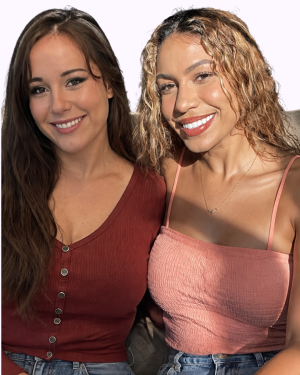
Diagnosed with rare optic nerve gliomas in their twenties, Michelle Culbert and Karina Mariie faced changes to their eyesight, difficult treatment decisions and uncertainty about their futures. After finding each other on TikTok, they created ONG Awareness to help others living with the same diagnosis.
When Changes in Eyesight Revealed Something More Serious
For Michelle Culbert and Karina Mariie, their brain tumour journeys began in remarkably similar ways.
Both were young women in their twenties.
Both began experiencing unexpected changes to their vision.
And both eventually discovered they had an optic nerve glioma, a rare tumour affecting the nerves responsible for carrying visual information from the eyes to the brain.
But although they shared the same diagnosis, their experiences were not identical.
Michelle was 26 when she received her diagnosis in April 2022. She had spent months experiencing blurred vision and changes to how she saw colours through her left eye.
Karina was diagnosed at 24 after initially believing her blurred vision might be caused by an eye infection.
Both women faced difficult medical decisions and sought additional opinions before choosing their treatment.
What neither expected was that their diagnoses would lead them to each other.
After connecting through TikTok, Michelle and Karina discovered how much they had in common.
Their friendship became an important source of support, eventually inspiring them to create an Instagram page called ONG Awareness.
When they joined me on the Aunty M Brain Tumours Talk Show in November 2023, they shared their experiences of diagnosis, treatment, vision loss and finding friendship through an illness neither had expected.
Their story is a reminder that, even when someone has a rare brain tumour, they do not have to navigate the experience alone.
Michelle’s Story: When Blurred Vision Wouldn’t Go Away
Michelle first began noticing problems with her eyesight in December 2021.
The vision in her left eye had become extremely blurry.
She was also experiencing changes to her colour vision.
Things no longer looked the way they should.
For someone in her twenties, these symptoms were worrying, but they did not immediately lead to an explanation.
Michelle sought medical advice, yet she felt her concerns were initially dismissed.
Her symptoms continued, leaving her frustrated and uncertain about what was happening.
She knew her eyesight had changed.
But she still did not know why.
Getting a Second Opinion
In April 2022, Michelle decided to seek another medical opinion.
This became an important turning point.
Further investigations revealed an optic nerve glioma.
She was just 26 years old.
The diagnosis finally explained the changes to her vision, but it also raised new questions.
What would happen to her eyesight?
Would the tumour grow?
Would she need surgery or another treatment?
And how would the diagnosis affect the life she had expected to lead?
For Michelle, the next stage involved understanding her options and finding a medical team she felt confident in.
Watch Naomi tell her story in full in the Aunty M Brain Tumours Talk Show interview below, or keep reading for the written version
Being Placed on Watch and Wait
After Michelle’s diagnosis, her doctors initially recommended monitoring the tumour.
This approach is sometimes called Watch and Wait, active monitoring or active surveillance.
Rather than beginning immediate treatment, the medical team follows the tumour through MRI scans and specialist examinations.
This may be considered when the benefits of immediate treatment do not clearly outweigh the risks.
However, knowing that a tumour is being monitored rather than treated can be emotionally difficult.
For Michelle, the period following diagnosis involved learning more about optic nerve gliomas and understanding what might happen next.
She also needed to consider the potential effects of treatment on her remaining vision.
The optic nerves are delicate structures, and treatment decisions can involve difficult balances between controlling a tumour and protecting neurological function.
Michelle sought multiple opinions as she worked towards deciding what was right for her.
Michelle’s Decision to Have Proton Beam Radiotherapy
After discussing her options, Michelle chose proton beam radiotherapy.
Proton beam therapy is a form of radiotherapy that uses proton particles to deliver carefully targeted radiation.
It may be considered in selected cases where specialists believe it offers an appropriate way of treating a tumour while limiting radiation exposure to some surrounding tissues.
For Michelle, choosing treatment was not a simple decision.
She had already experienced changes to her eyesight.
Now she had to consider the possible benefits and risks of radiotherapy, including how treatment might affect her vision and everyday life.
When she shared her story in 2023, Michelle spoke about the challenges and side effects she had experienced during her treatment journey.
Her experience highlighted how complicated treatment decisions can become when a tumour affects a structure as important as the optic nerve.
Karina’s Story: The Blurred Vision She Thought Was an Eye Infection
Karina’s journey began in October 2021.
She noticed that her vision had become blurry.
Initially, she thought she might have an eye infection.
It seemed like a reasonable explanation for what she was experiencing.
But when her symptoms did not improve as expected, she sought professional advice.
An optometrist examined her eyes and recommended that she see a neuro-optometrist for further assessment.
This raised concerns that the problem might involve more than the surface of the eye.
Karina was eventually directed to the emergency department for further investigation.
The Emergency Department Visit That Changed Everything
Karina remembered spending hours waiting in the emergency department.
It was an exhausting and uncertain experience.
Eventually, the investigations revealed that she had an optic nerve glioma.
She was 24 years old.
Like Michelle, Karina was suddenly trying to understand a diagnosis she had never expected.
Her blurred vision was no longer something that could be explained as an ordinary eye problem.
She had a tumour affecting her visual pathway.
There were questions about treatment, possible changes to her eyesight and how the diagnosis might affect her future.
Karina also needed to consider whether surgery, radiotherapy or another approach offered the most appropriate option for her circumstances.
The Biopsy That Made Karina’s Vision Worse
As part of her investigations, Karina underwent a biopsy.
A biopsy involves taking a sample of tissue to help doctors establish the tumour’s characteristics and guide treatment.
However, performing a biopsy near the optic nerve can carry significant risks because of the delicate structures involved.
For Karina, the procedure was followed by a further deterioration in her vision.
It was a difficult consequence of an investigation intended to help her medical team understand her tumour.
She was already adjusting to the shock of diagnosis.
Now she also had to cope with more noticeable sight loss.
Karina’s experience demonstrates why investigations involving the visual pathways require careful specialist consideration.
Not everyone with an optic nerve glioma needs a biopsy, and treatment decisions depend on individual medical findings.
Karina’s Decision to Have Targeted Treatment
After diagnosis and biopsy, Karina explored the different treatment options available to her.
These included discussions about surgery, radiotherapy and drug treatments.
She sought additional medical opinions before deciding how to proceed.
Karina described choosing a targeted treatment approach, which she referred to as immunotherapy during the interview.
Targeted treatments aim to act on particular characteristics or pathways involved in tumour growth, while immunotherapies work by modifying or activating the immune system.
These are different types of treatment, although terminology is sometimes used loosely in personal accounts.
Without Karina’s specific medication details, it would not be appropriate to identify the exact treatment.
What matters to her story is that she explored her options carefully and made a decision with her medical team.
Her treatment journey brought its own challenges and side effects.
Although Michelle and Karina shared a diagnosis, they were learning that their medical experiences could be very different.
Two Young Women Facing the Same Rare Diagnosis
One of the most interesting parts of Michelle and Karina’s interview was hearing them discuss the similarities and differences between their experiences.
Michelle was diagnosed at 26.
Karina was diagnosed at 24.
Both had experienced worrying changes to their eyesight.
Both needed specialist investigations.
And both faced difficult decisions about treatments that could affect their remaining vision.
But their individual circumstances led to different medical approaches.
Michelle underwent proton beam radiotherapy.
Karina chose a drug-based treatment.
This is an important reminder that two people with the same tumour name will not necessarily need the same treatment.
A tumour’s precise location, behaviour, pathology and the person’s visual function can all influence the medical plan.
Hearing from someone with a similar diagnosis can provide reassurance, but their treatment may not be appropriate for another person.
For Michelle and Karina, finding someone who understood the emotional experience of diagnosis was just as important as comparing the medical details.
Finding Each Other Through TikTok
Living with a rare brain tumour can feel incredibly isolating.
Friends and family may be supportive, but they cannot always understand what it feels like to be told that a tumour is affecting your eyesight.
Michelle and Karina wanted to find people who understood those experiences firsthand.
They eventually connected through TikTok.
After discovering that they both had optic nerve gliomas, they began sharing their experiences.
They could talk about medical appointments, changes to their vision and the uncertainty of treatment.
They also understood the strange situations that could arise when living with sight loss.
During our conversation, they shared humorous experiences connected to their visual difficulties.
Being able to laugh together was an important part of their friendship.
It did not remove the seriousness of their diagnoses.
But it provided moments when they could enjoy talking with someone who genuinely understood.
Their friendship gradually developed into something more.
They wanted to help other people find that same sense of connection.
Creating ONG Awareness
Michelle and Karina decided to establish an Instagram page called ONG Awareness.
ONG stands for Optic Nerve Glioma.
The page was created to raise awareness of the diagnosis and connect people affected by similar tumours.
For both women, finding each other had made a difference.
They wanted other people to have opportunities to share their stories, ask questions and find a community.
Their aim was not to provide medical treatment advice.
It was to create a place where people could talk openly about living with an optic nerve glioma and feel less isolated.
Why Sharing Rare Brain Tumour Stories Matters
When someone is diagnosed with a common medical condition, they may already know several people who have experienced it.
With a rare brain tumour, that is often not the case.
Someone might never have heard of an optic nerve glioma before their diagnosis.
They may struggle to find another adult with the same condition.
This can make medical decisions and changes to everyday life feel particularly lonely.
Michelle and Karina understood that feeling.
By sharing their experiences publicly, they hoped to help others recognise that there were people who understood what they were going through.
Their online friendship had shown them how valuable that connection could be.
Living With Changes to Your Vision
For both Michelle and Karina, sight loss was central to their experiences.
Vision affects so many everyday activities that people often take for granted.
Reading, recognising faces, moving around unfamiliar places and enjoying favourite activities can become more challenging when eyesight changes.
There is also the emotional difficulty of not knowing whether vision will remain stable or deteriorate further.
People may need time to adapt to changes in how they see the world.
Specialist support, visual assessments and practical adjustments can help some people maintain independence.
Michelle and Karina also discovered that humour could make difficult moments easier.
They spoke about situations where their vision caused unexpected or funny experiences.
Being able to share those moments with each other helped them feel understood.
Faith, Positivity and Finding Strength
Another important theme in Michelle and Karina’s conversation was the role of faith and maintaining a positive outlook.
Both women spoke about finding strength through believing in something greater than themselves.
Their beliefs helped them manage uncertainty and the emotional challenges of treatment.
They also recognised the importance of humour and laughter.
Some days were difficult.
Medical appointments, changes to vision and concerns about the future could all feel overwhelming.
But being able to talk to each other and find lighter moments helped them cope.
For Michelle and Karina, positivity was a personal approach to difficult circumstances.
It did not mean they could control their tumour or guarantee the outcome of treatment.
Instead, it helped them find ways to navigate experiences they had never expected.
Everyone copes differently, and there is no requirement to remain positive all the time.
What Michelle and Karina Want Others to Know
Throughout the interview, several important messages emerged from Michelle and Karina’s experiences.
Take Changes to Your Vision Seriously
Both women’s symptoms began with blurred vision.
Michelle also experienced changes to colour vision, while Karina initially thought she had an eye infection.
Their experiences highlight why persistent or unexplained visual changes should be assessed.
Sudden vision loss or rapidly worsening visual symptoms require urgent medical attention.
Ask Questions and Understand Your Treatment Options
Both women sought additional medical opinions.
Their different treatment decisions demonstrate why it is important to understand the benefits and risks of the options available.
Specialist advice should always guide treatment, particularly when a tumour affects the optic nerve.
Find People Who Understand
Michelle and Karina found each other through social media.
That connection helped them feel less alone and eventually led to ONG Awareness.
Support can come from many places, including family, friends, charities and others living with similar conditions.
Remember That Every Brain Tumour Story Is Different
Although Michelle and Karina shared a diagnosis, they underwent different treatments.
Someone else’s medical choices or treatment outcome should not determine your own.
Reading personal experiences can provide insight and reassurance, but individual advice should always come from an appropriate specialist team.
What Is an Optic Nerve Glioma?
An optic nerve glioma is a tumour affecting the optic nerve, which carries visual information from the eye towards the brain.
Optic nerve gliomas belong to a wider group called optic pathway gliomas.
These tumours can affect different parts of the visual pathway, including the optic nerve, optic chiasm and other nearby structures.
Many optic pathway gliomas are low-grade and slow-growing, particularly those diagnosed in children.
However, their behaviour varies, and tumours affecting the optic nerve can cause serious visual problems even when they grow slowly.
Optic pathway gliomas are more commonly diagnosed in children, although they can also occur in adults.
What Are the Symptoms of an Optic Nerve Glioma?
Symptoms vary depending on the tumour’s location and effect on surrounding structures.
Possible symptoms include:
- Blurred vision
- Reduced vision in one or both eyes
- Changes in colour vision
- Loss of part of the visual field
- Changes in eye alignment
- Bulging of an eye in some cases
- Other neurological or hormonal symptoms when nearby structures are affected
Michelle’s earliest symptoms included colour changes and extreme blurriness in her left eye.
Karina first noticed blurred vision that she initially believed might be an infection.
Visual symptoms are not always caused by a brain tumour, but persistent or unexplained changes should be assessed by an optometrist, ophthalmologist or other appropriate healthcare professional.
How Are Optic Nerve Gliomas Treated?
Treatment depends on the precise diagnosis, location, behaviour and effect on vision.
Possible approaches include:
- Active monitoring with MRI scans and specialist eye examinations
- Radiotherapy, including proton beam therapy in selected circumstances
- Drug treatments, including certain chemotherapy or molecularly targeted therapies
- Surgery in selected cases
- Biopsy when specialists consider it necessary and appropriate
Treatment can be complicated because the optic nerve is responsible for sight.
Some procedures carry a risk of further visual impairment.
This is why specialist assessment and individual treatment planning are particularly important.
Michelle’s initial treatment plan involved monitoring, followed by proton beam radiotherapy.
Karina underwent a biopsy and later chose drug treatment.
Their experiences demonstrate how different medical pathways can be even when two people share the same broad diagnosis.
What Is Proton Beam Therapy?
Proton beam therapy is a form of radiotherapy that uses proton particles rather than conventional X-rays.
It is designed to deliver radiation to a carefully defined treatment area.
In selected circumstances, it can reduce radiation exposure to some surrounding healthy tissues.
However, proton beam therapy can still cause side effects, including possible injury to nearby structures such as the optic nerve.
It is not suitable for every patient, and its use depends on specialist assessment.
Michelle’s experience illustrates one treatment approach that may be considered for selected optic nerve or optic pathway tumours.
Why Michelle and Karina’s Story Matters
Michelle Culbert and Karina Mariie were both in their twenties when they were diagnosed with optic nerve gliomas.
Their symptoms began with changes to their eyesight.
Michelle experienced severe blurriness and colour vision loss in her left eye.
Karina noticed blurred vision that she initially thought was caused by an eye infection.
Both eventually underwent specialist investigations and faced difficult treatment decisions.
But their stories became connected in a way neither had expected.
Through TikTok, they found someone who understood the uncertainty, frustration and challenges of living with a rare tumour affecting their vision.
Their friendship developed into the creation of ONG Awareness, a community intended to help others living with similar diagnoses.
One of the most valuable messages from their interview is that finding someone who understands your diagnosis can make a real difference, even when your treatment experiences are not the same.
Michelle and Karina did not have identical journeys.
But they shared the experience of being young adults facing an unfamiliar and frightening diagnosis.
By sharing their stories, they were helping others feel less alone.
And that is exactly why I believe personal brain tumour interviews are so important.
Thank you to Michelle and Karina for joining me on Aunty M Brain Tumours Talk Show and speaking openly about their diagnoses, treatment decisions and friendship.
Your experiences help raise awareness of optic nerve gliomas and remind others that support and understanding can be found in unexpected places.
This article reflects Michelle and Karina’s experiences as discussed in November 2023. It does not represent an update on their current health, treatment or circumstances.
Read More Optic Pathway Glioma Stories
Michelle and Karina’s experiences are part of a wider collection of personal glioma stories on Aunty M Brain Tumours.
You can also read about Lily’s Optic Pathway Glioma Story, as told by her grandmother Hayley Conroy, which explores a childhood diagnosis, diencephalic syndrome and several years of chemotherapy.
Read more personal Glioma Brain Tumour Stories.
If You Have Recently Been Diagnosed With an Optic Nerve Glioma
If you have landed on this page after being diagnosed with an optic nerve glioma, please know that you are not alone.
You may be worried about changes to your eyesight, uncertain about treatment or struggling to find someone else with the same diagnosis.
Every optic nerve glioma story is different.
Some people are monitored with regular MRI scans and eye examinations. Others need radiotherapy, drug treatment or surgery.
Some experience lasting changes to their vision, while others face different challenges.
Try not to compare your journey too closely with anyone else’s.
Another person’s treatment or outcome does not determine what will happen to you.
Ask questions, take things at your own pace and seek support from people who understand.
Where to Go After an Optic Nerve Glioma Diagnosis
If you or someone you love has been diagnosed with an optic nerve glioma, there are organisations providing information, emotional support and practical advice.
The Brain Tumour Charity
Visit The Brain Tumour Charity
Offers information about gliomas, treatment options, ongoing monitoring and support for patients and families.
Brainstrust
Provides personalised practical and emotional support for people affected by brain tumours.
Brain Tumour Support
Offers support for people living with brain tumours, including families and carers.
RNIB
Provides information and practical assistance for people affected by sight loss, including accessible technology, everyday living and independence.
Brain Tumour Research
Funds research into brain tumours and campaigns for greater awareness and investment.
NHS Ophthalmology and Neuro-Oncology Services
People diagnosed with optic nerve glioma may need ongoing care from neuro-oncologists, ophthalmologists and other specialist healthcare professionals.
Depending on individual needs, support may include specialist vision assessments, low-vision services, rehabilitation and psychological support.
Ask your GP or specialist team about appropriate referrals.
Would You Like to Share Your Optic Nerve Glioma Story?
At Aunty M Brain Tumours, I believe that every person’s experience deserves to be heard.
Whether you are newly diagnosed, undergoing treatment, living with sight loss or supporting someone you love, your experiences may help another person feel less alone.
Find out how to share your brain tumour story.
Medical disclaimer: This article shares Michelle and Karina’s personal experiences and provides general information for awareness and peer support. It does not replace advice, diagnosis or treatment from qualified healthcare professionals.
View this post on Instagram

Claire Bullimore is an influential figure in the brain tumour community. She embarked on her brain tumour journey and was diagnosed with an intraventricular meningioma. In response to her experiences, Claire founded ‘Aunty M Brain Tumours,’ a platform dedicated to sharing brain tumour stories. Based in London, England, Claire also identifies as a blogger and speaker for Aunty M Brain Tumours, shedding light on the challenges faced by those diagnosed and amplifying their voices for better awareness and support. Through her dedication and advocacy, Claire’s efforts have been recognized by Brain Tumour Research and other organizations, spotlighting her commitment to making a positive difference for individuals impacted by brain tumours.