Julia said at first, it was just headaches.
The kind you don’t think twice about as a parent.
But they didn’t go away.
They kept coming back.
And slowly, that quiet worry started to grow — something didn’t feel right.
Looking back now, those small signs were the beginning of something she never imagined hearing:
“Your child has a brain tumour.”
A Child’s Brain Tumour Story: Living with Craniopharyngioma at Age Five (Watch, Treatment & Recovery)
The First Signs Something Was Wrong
Scarlett had just turned five when things began to change.
It started with what seemed like a simple illness—headaches and vomiting.
The kind of thing you tell yourself will pass in a few days.
Over the following weeks:
- She was frequently sick, especially in the mornings
- Headaches became more intense
- She began waking during the night in pain — something she had never done before.
Like many parents, Julia tried to make sense of it:
- Maybe it was a food intolerance
- Maybe it was an infection
But deep down, something didn’t feel right.
When Symptoms Were Dismissed
Julia sought medical help multiple times.
Initial diagnoses included:
- Food intolerance
- Urinary infection
- Migraines
Despite antibiotics and tests, Scarlett’s condition worsened.
She became increasingly:
- Lethargic
- Withdrawn
- Unlike herself
Julia recalls the moment she realised something was seriously wrong:
“That’s not my daughter… she doesn’t play, she doesn’t do anything.”
Trusting a Parent’s Instinct
After multiple visits to A&E, Julia still felt unheard.
It wasn’t until a late-night call with a private doctor that everything changed. He recognised red flags and urged her to return to hospital immediately.
The next morning, Scarlett was taken back to A&E.
This time, Julia pushed harder.
A CT scan was finally ordered.
The Moment Everything Changed
The results came back in just 10 minutes.
Julia and her husband were taken into a separate room.
That’s when they were told:
Scarlett had a brain tumour.
In that moment, everything stopped.
Like many parents, Julia describes her mind going to the worst-case scenario—fear, confusion, and overwhelming shock.
Diagnosis and Understanding the Tumour
Scarlett was transferred to King’s College Hospital NHS Foundation Trust for further scans.
An MRI confirmed the diagnosis:
- A craniopharyngioma
- Located between the pituitary gland and optic nerves
Doctors explained:
- The tumour was benign
- But its location made it complex and “stubborn”
Surgery would be required.
Surgery and Hospital Experience
Scarlett underwent brain surgery the very next day.
Julia and her husband were able to stay with her until she fell asleep in theatre—a moment filled with both fear and love.
The operation aimed to:
- Remove as much of the tumour as possible
- Insert a reservoir for ongoing treatment
The surgery was successful, but some tumour remained.
Proton Beam Therapy Treatment
Following surgery, Scarlett was referred for specialised treatment, including care connected to UCLA Health.
She underwent:
- 6 weeks of proton beam therapy
- Daily treatment (Monday to Friday)
Proton beam therapy is a highly targeted form of radiotherapy designed to:
- Minimise damage to surrounding brain tissue
- Reduce long-term side effects
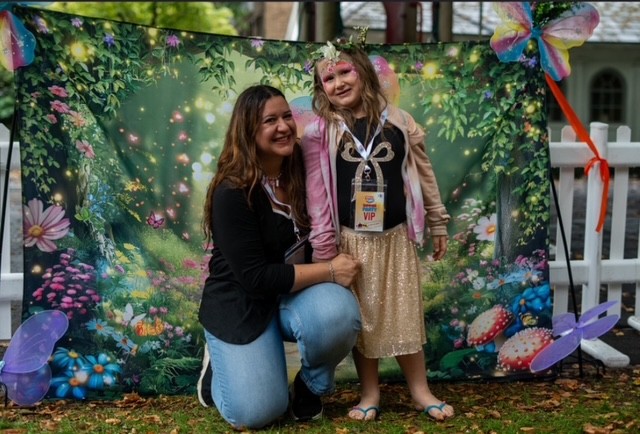
Life After Treatment
Although the tumour shrank significantly, Scarlett now lives with long-term effects.
She has developed:
- Hormone deficiencies
- Adrenal insufficiency
This means:
- She takes daily medication
- She requires emergency treatment during illness or injury
Despite this, Scarlett is doing well.
Her tumour is now stable, and scans have reduced from every 3 months to every 6 months.
The Emotional Impact on the Family
A childhood brain tumour affects the entire family.
Julia reflects on:
- The fear of diagnosis
- The emotional toll of uncertainty
- The strength her daughter showed
She describes Scarlett as:
“A resilient little girl who taught me so much.”
Finding Support Through Community
During treatment, the family received support from Spread a Smile.
This charity provides:
- Entertainment in hospitals
- Therapy visits (including dogs and performers)
- Gifts and support for children and siblings
These moments brought joy during incredibly difficult times.
Where They Are Now
Today:
- Scarlett’s tumour is stable
- She continues regular monitoring
- She lives life with strength and resilience
What Is a Craniopharyngioma?
A craniopharyngioma is a rare, typically benign brain tumour that develops near the pituitary gland—the part of the brain that controls hormones.
Although non-cancerous, these tumours can be serious due to their location, often affecting:
- Vision (optic nerves)
- Hormones (pituitary gland)
- Growth and development
Treatment often involves surgery followed by radiotherapy, such as proton beam therapy.
FAQs About Craniopharyngioma
What is a craniopharyngioma?
A rare, benign brain tumour that forms near the pituitary gland.
Is it cancer?
No, it is not cancerous, but it can still be serious due to its location.
What are the symptoms in children?
Common symptoms include headaches, vomiting, vision problems, and fatigue.
What is proton beam therapy?
A targeted form of radiotherapy that reduces damage to healthy tissue.
Can children recover from it?
Many children do well after treatment, but long-term monitoring is often needed.
View this post on Instagram