Looking for brain tumour blogs, podcasts or personal experiences from people who understand what life with a brain tumour can be like? Here are 13 voices from the brain tumour community worth discovering.
When you’re diagnosed with a brain tumour, it can feel as though your world has been turned upside down.
There are medical appointments, unfamiliar words, difficult decisions and questions you might not even know how to ask.
But sometimes, what you really want is to hear from someone who has been there.
Someone who understands the fear of waiting for scan results, the exhaustion that can follow treatment, or the frustration of trying to explain symptoms that other people cannot see.
That’s why I’ve always believed brain tumour blogs and podcasts are so valuable.
They give people a chance to share their experiences in their own words, whether those stories are hopeful, frightening, funny, frustrating or a mixture of everything.
And they remind us that there is no single way to experience a brain tumour diagnosis.
Why I Started Sharing Brain Tumour Stories
I started Aunty M Brain Tumours in 2011, following my own experience of being diagnosed with a large intraventricular meningioma.
Although I had been through brain surgery myself, I soon realised how different everyone’s experiences could be.
I wanted to understand more, not just about my own type of tumour, but about the many different diagnoses, treatments and challenges faced by others.
What began on Facebook and X (Twitter) eventually led me to Croydon Radio, where I presented Brain Tumour Thursday.
Over the years, I have had the opportunity to speak with people from across the world who have shared incredibly personal experiences.
Some have undergone surgery, radiotherapy or chemotherapy. Others are living with their tumours under regular monitoring. Some have faced recurrence, while others are learning to live with the long-term effects of treatment.
I’ve also spoken with parents, partners, carers and families whose lives have been changed by a loved one’s diagnosis.
Through Aunty M Brain Tumours, I’ve met many inspiring people who are also writing, recording and sharing their experiences.
This article originally began as a list of 13 brain tumour blogs and podcasts I wanted other people to discover.
I’ve kept those original voices here because their experiences and contributions remain important, even where some of the blogs are no longer regularly updated.
13 Brain Tumour Blogs and Podcasts to Explore
There are many ways people share their experiences. Some prefer writing, while others find it easier to speak openly through podcasts or videos.
These 13 resources offer different perspectives on brain tumours, cancer, recovery and life after diagnosis.
1. Wendy Shapiro Santana – 2ndChance2Live
Best for: Brain tumour survivorship, recovery and finding a new normal.
Wendy shares her experiences as a brain cancer survivor through her blog, 2ndChance2Live.
Her writing explores the emotional and practical challenges of recovery, alongside the process of adjusting to life after a serious diagnosis.
She also shares resources, reflections and stories from other people affected by brain tumours.
One of the valuable things about personal blogs like Wendy’s is that they explore what happens beyond medical treatment.
Recovery isn’t always about returning to the person you were before. Sometimes it’s about learning how to live with changes you never expected.
Visit: https://2ndchance2live.com/
2. Angela Conway – Brain Tumour Warrior
Best for: Brain surgery recovery, fatigue and the long-term effects of a brain tumour.
Angela’s Brain Tumour Warrior blog documents her experience of living with a low-grade brain tumour and undergoing a craniotomy.
Her posts cover subjects including fatigue, communication difficulties, rehabilitation and navigating life following surgery.
These are topics that can sometimes receive less attention than diagnosis and treatment, despite having a significant impact on everyday life.
For someone preparing for brain surgery, or trying to understand why recovery feels more complicated than expected, Angela’s experiences may offer a valuable personal perspective.
Visit: https://braintumourwarrior.wordpress.com/
3. Deborah Elizabeth – Debbie’s Cancer Blog
Best for: Exploring personal writing about life affected by cancer.
Debbie’s Cancer Blog was among the original resources I wanted to share with the brain tumour community.
Personal cancer blogs can provide a very different kind of support from medical information.
They often explore everyday life alongside illness, including relationships, emotions, uncertainty and the things people find difficult to put into words.
Although I haven’t been able to confirm whether this website is still accessible, I’ve retained it as part of my original collection.
Original website: https://debbiescancerblog.com/
4. Ruth Kavanagh – Brain Cancer Babe
Best for: Personal experiences and conversations about brain cancer.
Ruth Kavanagh’s Brain Cancer Babe was another of the original blogs that stood out to me.
One of the reasons I value personal stories is that they allow people to speak about much more than their diagnosis.
Brain tumours can affect confidence, independence, relationships, identity and plans for the future.
Hearing these experiences directly from the people living them can help others feel understood.
Ruth’s original website is included below, although its current availability needs confirming.
Original website: https://braincancerbabe.com/
5. Rudy Fischmann – Brain Cancer Diaries
Best for: Video storytelling and personal experiences of brain cancer.
Not everyone wants to read about brain tumours.
Sometimes watching someone speak about their experience can feel more personal and easier to follow, particularly if reading or concentrating has become difficult following treatment.
Rudy Fischmann’s Brain Cancer Diaries is a video-based resource that was included in my original recommendations.
Video diaries can be particularly powerful because you hear people’s voices and see the emotion behind their experiences.
Explore: Brain Cancer Diaries on YouTube
6. Matthew Newman – From the Desk of Matthew S. Newman
Best for: Life after brain cancer, motivation and personal reflections.
Matthew Newman has written and spoken about his experience of being diagnosed with a grade 3 astrocytoma.
His website includes blog posts, videos and reflections about how a cancer diagnosis changed his outlook on life.
His writing also explores family, gratitude, relationships and how people respond to life-changing events.
While every brain tumour experience is different, Matthew’s story shows how sharing personal reflections can connect with people facing their own challenges.
Visit: https://matthewsnewman.com/
7. Kirsty Plews – TuMerd
Best for: Finding personal perspectives within the brain tumour community.
Kirsty Plews created TuMerd, a Facebook-based resource included in my original collection.
Social media pages and online communities can be valuable because they allow people to connect in ways that traditional websites do not always offer.
They can also help people discover others who have faced similar diagnoses or experiences.
Kirsty’s TuMerd page is part of the original list, although its current activity has not been confirmed.
Explore: TuMerd on Facebook
8. Victoria Watson – BrainSet Podcast
Best for: Exploring brain-related conversations through audio.
Victoria Watson’s BrainSet was one of the podcasts included when I first created this list.
Podcasts offer a different way to learn about people’s experiences.
You can listen while resting, travelling or doing everyday activities, making them a useful alternative to reading long articles.
The original BrainSet podcast page is no longer displaying episodes normally, but I’ve kept the reference here as part of the article’s history.
Original podcast page: https://brainset.podbean.com/
9. Emma Mosley – Happy Family Hub
Best for: Family life, parenting and personal experiences of living with a brain tumour.
Emma Mosley’s Happy Family Hub brings together family life and her experiences as a brain tumour patient.
One of the things I find important about sharing these stories is remembering that people don’t stop being parents, partners or individuals when they’re diagnosed.
They still have families to care for, responsibilities to manage and everyday lives to navigate.
Personal blogs like Emma’s can help show the wider impact of a brain tumour diagnosis beyond hospitals and appointments.
Visit: https://www.happyfamilyhub.co.uk/
10. Alex Dawson – Timmy the Tumour
Best for: Personal storytelling and discovering different ways people talk about brain tumours.
Alex Dawson’s Timmy the Tumour was another of the original resources I wanted to highlight.
I’ve always been interested in the different ways people describe their experiences.
Some people write in great detail about their medical journeys. Others use humour, personal reflections or storytelling to explain what they are going through.
There is no right or wrong way to talk about having a brain tumour.
The original website could not be accessed during this update, so its current status remains unconfirmed.
Original website: https://timmytumour.com/
11. Emily Suess – Emily Suess
Best for: Cancer experiences, emotional wellbeing and creative approaches to recovery.
Emily Suess writes about experiences of cancer, anxiety, healing and creativity.
Her website brings together personal reflections and topics surrounding physical and emotional wellbeing.
A brain tumour diagnosis can affect far more than physical health, and it is important that we make room for conversations about how people feel during and after treatment.
Emily’s writing may appeal to readers interested in personal storytelling and the emotional side of living with illness.
Visit: https://emilysuess.com/
12. Arvin Kaushal – Brain Tumour Stories
Best for: Personal writing about brain tumours and life experiences.
Arvin Kaushal has a dedicated brain tumour section on his website.
Personal blogs provide the opportunity to tell a story over time, rather than trying to fit an entire experience into one conversation.
They can include the smaller moments that are easily forgotten when people talk only about diagnosis and treatment.
For someone trying to make sense of their own experience, these perspectives can be particularly meaningful.
Explore: https://arvinkaushal.com/category/brain-tumour
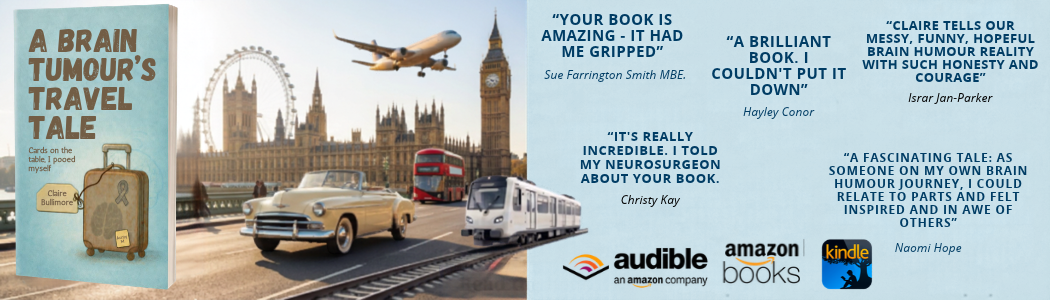
13. Claire Bullimore – Aunty M Brain Tumours
Best for: Real brain tumour stories, patient interviews, podcasts and experiences across different diagnoses.
And finally, there’s Aunty M Brain Tumours.
I created this platform because I wanted people affected by brain tumours to have somewhere to share their experiences openly.
Having had a brain tumour myself, I know how important it can be to hear from somebody who understands what you’re going through.
But I also know that my experience is only one story.
That’s why the Aunty M Brain Tumours Talk Show brings together people living with different types of brain tumours, survivors, family members, carers and experts.
My guests speak about their symptoms, diagnoses, treatments and recovery, but we also explore the things that don’t always make it into medical conversations.
The uncertainty. The long-term effects. The changing relationships. The difficult days. And sometimes the unexpected humour along the way.
There are no scripts and no expectation that every story must have a positive ending.
No scripts. Just voices being heard.
You can explore the interviews, listen to the podcast, watch conversations on YouTube or read individual patient stories.
Explore: https://auntymbraintumours.com/
Prefer Listening? Explore Brain Tumour Podcasts and Interviews
For some people, listening to another person’s experience can be easier than reading.
This may be especially helpful following brain surgery, when fatigue, concentration difficulties or changes in vision can make reading more challenging.
On the Aunty M Brain Tumours Talk Show, guests discuss their experiences in their own words.
You can hear conversations about:
- Receiving a brain tumour diagnosis.
- Preparing for brain surgery.
- Recovering after treatment.
- Living with a brain tumour under regular monitoring.
- Managing fatigue and other long-term effects.
- Family life, relationships and caring for someone.
- Finding support and adjusting to life after diagnosis.
Every experience is personal, and no interview should be taken as a prediction of what will happen to somebody else.
Listen, watch or explore more interviews: Aunty M Brain Tumours
Looking for Someone With the Same Brain Tumour Diagnosis?
One of the questions I hear is whether somebody else has experienced the same type of brain tumour.
I understand that feeling.
When I was diagnosed with an intraventricular meningioma, I wanted to know more about people who had been through something similar.
But brain tumours are not all the same.
They can develop in different parts of the brain, behave differently and require different treatments. Even people diagnosed with the same type may have very different experiences.
That’s why I’ve organised patient stories on Aunty M Brain Tumours by diagnosis.
You can explore personal experiences involving:
- Meningioma – including different locations, treatment experiences and recovery.
- Astrocytoma – stories involving different grades and treatment approaches.
- Glioblastoma – experiences shared by patients and their loved ones.
- Acoustic Neuroma (Vestibular Schwannoma) – stories involving hearing, balance, surgery and monitoring.
- Craniopharyngioma – personal experiences of diagnosis, treatment and ongoing effects.
- Central Neurocytoma – stories involving this rare brain tumour.
- Other Rare Brain Tumours – experiences that can sometimes be difficult to find elsewhere.
Browse Brain Tumour Stories by Diagnosis
You might not find someone whose experience is exactly the same as yours, but you may discover a story that helps you feel a little less alone.
Why Brain Tumour Stories Matter
Medical information is important. Understanding your diagnosis, treatment options and follow-up care can help you have informed conversations with your healthcare team.
But there are things that medical leaflets cannot always tell you.
What does it feel like to return home after surgery?
How do you explain fatigue to someone who thinks you look perfectly well?
What happens when you struggle with words or memory?
How do families cope with the uncertainty of regular scans?
These are the sorts of questions that often come up when people share their stories.
Reading a blog or listening to a podcast cannot replace medical advice. However, hearing somebody else’s experience may give you questions to ask, ideas for finding support or simply a sense of connection.
And sometimes, that’s exactly what somebody needs.
Frequently Asked Questions About Brain Tumour Blogs and Podcasts
Where can I find real brain tumour survivor stories?
You can find personal experiences on brain tumour blogs, podcasts, YouTube channels and patient support websites.
Aunty M Brain Tumours has a growing collection of interviews and written stories organised by diagnosis, helping readers explore experiences involving different types of brain tumours.
Are there podcasts about brain tumour recovery?
Yes. The Aunty M Brain Tumours Talk Show includes conversations about diagnosis, surgery, treatment, recovery and life after a brain tumour.
Guests share their personal experiences, including the emotional and practical challenges that can follow treatment.
Can brain tumour blogs help before surgery?
Reading or listening to personal experiences may help you understand some of the questions people have before brain surgery.
However, every operation and recovery is different. Your own surgical team is best placed to explain your individual procedure, possible risks and expected recovery.
What if I can’t find someone with my type of brain tumour?
Some brain tumours are rare, and finding others with the same diagnosis can be difficult.
Try searching by the exact tumour name, and where appropriate, its recognised alternative names. You can also explore diagnosis-specific patient stories and ask your healthcare team about relevant support organisations.
Can I share my own brain tumour story?
Absolutely.
Aunty M Brain Tumours is about giving people a voice and helping others understand what living with a brain tumour can mean.
Whether you’re a patient, survivor, parent, partner or carer, your experience may help someone else.
Do You Know a Brain Tumour Blog or Podcast That Deserves a Mention?
This article began back in 2021, and there are many more voices within the brain tumour community than I could ever include in one list.
Some people have been sharing their experiences for years. Others have only recently started writing, recording or speaking publicly about their diagnosis.
I’d love to discover more of them.
If you have a brain tumour blog, podcast or YouTube channel — or know somebody who does — please share it in the comments.
Tell me a little about their story and why you think other people might find it helpful.
The more voices we share, the more opportunities there are for somebody to find a story they connect with.
Originally published 24 September 2021. Updated October 2026. This article includes original recommendations, some of which may now be archived or inactive.
The experiences shared through personal blogs and podcasts are individual stories and should not replace advice from a qualified healthcare professional.
Do you know any Blogs or Podcasts that weren’t mentioned? Give them a shout out in the comments below!

Claire Bullimore is an influential figure in the brain tumour community. She embarked on her brain tumour journey and was diagnosed with an intraventricular meningioma. In response to her experiences, Claire founded ‘Aunty M Brain Tumours,’ a platform dedicated to sharing brain tumour stories. Based in London, England, Claire also identifies as a blogger and speaker for Aunty M Brain Tumours, shedding light on the challenges faced by those diagnosed and amplifying their voices for better awareness and support. Through her dedication and advocacy, Claire’s efforts have been recognized by Brain Tumour Research and other organizations, spotlighting her commitment to making a positive difference for individuals impacted by brain tumours.