How Can Your GP Help After A Brain Tumour Diagnosis?
When you are diagnosed with a brain tumour or recovering from emergency brain surgery, it can feel as though everyone expects you to know what happens next.
You may leave hospital with medication, follow-up appointments to wait for, and a head full of questions.
Who do you contact if you’re worried?
When should you call your GP?
Should you speak to your neurosurgeon, neurologist, epilepsy team, or someone else entirely?
These are questions many people affected by brain tumours ask.
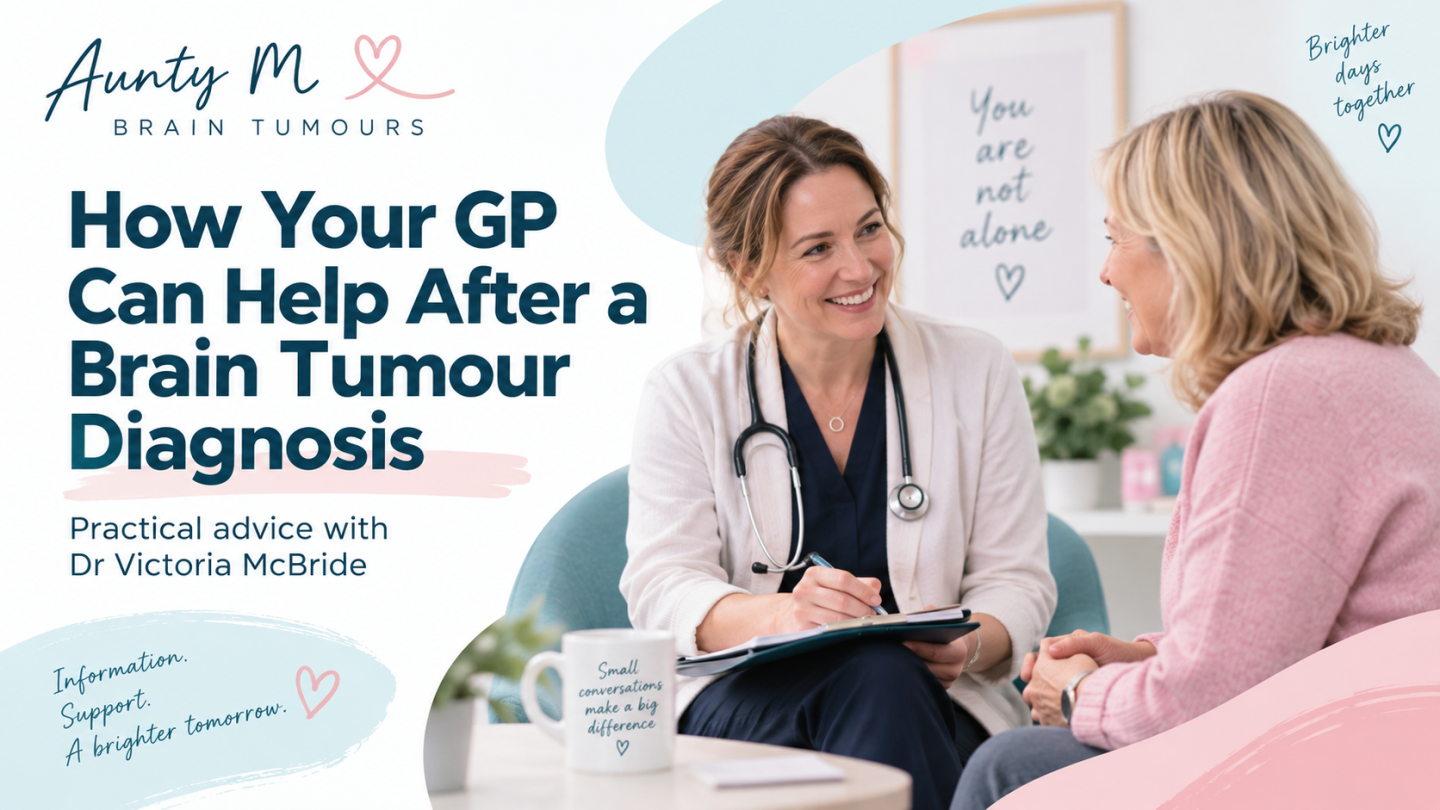
Watch Dr Victoria McBride and Claire Bullimore talk in full in the Aunty M Brain Tumours Talk Show interview below, or keep reading for the written version
Leaving Hospital Can Feel Overwhelming
One of the biggest challenges many brain tumour patients face is understanding who is responsible for different aspects of their care.
After surgery or treatment, you may be discharged with medication and instructions, but little understanding of what happens next.
Dr McBride explained that GPs are often in exactly the same position.
Sometimes patients arrive at their GP appointment before the hospital has even sent a discharge summary.
This means your GP may know very little about your hospital stay initially, but that does not mean they cannot help.
Instead, they can:
- Request discharge letters from the hospital
- Contact specialist teams for information
- Clarify medication plans
- Arrange monitoring and prescriptions
- Help coordinate future care
As Dr McBride explained, your GP often becomes your advocate when communication between services is delayed.
Who Should You Contact?
A common frustration for patients is knowing which professional to approach.
Different members of your healthcare team have different roles.
Neurosurgeon
Your neurosurgeon specialises in performing brain surgery and managing surgical recovery.
Oncologist
An oncologist oversees treatments such as chemotherapy and radiotherapy.
Neurologist
A neurologist manages neurological symptoms, including epilepsy, seizures and brain function.
Clinical Nurse Specialist (CNS)
Your Clinical Nurse Specialist often becomes your most valuable point of contact.
They can:
- Explain your diagnosis
- Help coordinate appointments
- Attend MDT meetings
- Chase scan results
- Liaise with specialists on your behalf
Dr McBride recommends asking about a Clinical Nurse Specialist if you have not already been assigned one.
Why Charities Matter
While medical teams focus on scans, medications and treatment plans, patients are often worried about very different questions:
- Can I drive?
- Can I return to work?
- What financial support is available?
- How do I cope emotionally?
- How can I speak to someone who understands?
This is where charities can make a huge difference.
Dr McBride highlighted organisations, including:
These organisations can provide practical advice, emotional support, counselling information, benefits guidance and peer support.
As many people in the brain tumour community know, Brainstrust is particularly helpful at acting as a central hub and helping people find local support services.
The Emotional Impact Doesn’t End After Treatment
Many people assume that once surgery or treatment is finished, life returns to normal.
In reality, recovery often continues for years.
Patients may experience:
- Anxiety
- Cognitive difficulties
- Fatigue
- Confidence issues
- Memory problems
- Changes in relationships
- Difficulties returning to work
Dr McBride emphasised that these concerns are completely valid and should not be ignored.
Your GP can help signpost counselling services and support organisations.
However, specialist brain tumour charities often provide more tailored emotional support than generic counselling services.
How To Get The Most Out Of A 10-Minute GP Appointment
One of the most useful parts of our discussion was Dr McBride’s practical advice.
1. Write Down Your Questions
Before your appointment, make a list.
Some examples might include:
- Can I drive?
- When can I return to work?
- Who do I contact about benefits?
- Can I go on holiday?
- Where can I find counselling?
- Why am I experiencing this symptom?
A written list helps ensure nothing important gets forgotten.
2. Ask For A Longer Appointment
Many people don’t realise they can request a longer appointment when discussing complex medical issues.
This can reduce pressure and give you more time to discuss your concerns properly.
3. Bring Someone With You
A family member, friend or carer can:
- Help remember information
- Take notes
- Ask questions you may forget
- Provide emotional support
Sometimes the person accompanying you notices difficulties that you may not have mentioned yourself.
4. Ask About Recording The Appointment
Some healthcare professionals are happy for patients to record consultations.
Always ask permission first.
For people experiencing memory, visual or cognitive difficulties, recordings can be invaluable when reviewing information later.
5. Keep Your Own Medical Notes
Maintaining a simple notebook of appointments, questions, symptoms and advice can help you feel more organised and in control.
Support For Parents And Carers
A brain tumour diagnosis affects entire families.
Parents caring for children with brain tumours, partners supporting loved ones, and family carers often need support themselves.
Dr McBride encourages carers to speak with their GP if they are struggling emotionally.
Support may be available through:
- Brainstrust
- Little Brainstrust
- The Brain Tumour Charity
- Macmillan Cancer Support
- Marie Curie
- Local support organisations
Looking after your own wellbeing is not selfish. It is essential.
Key Takeaway
Perhaps the most important message from this conversation is that your GP does not need to have every answer.
Instead, they can help guide you towards the right person, organisation or service.
Whether you need support with medication, work, counselling, benefits, transport, rehabilitation or practical adjustments, your GP can often help you find the next step.
You do not need to navigate life after a brain tumour alone.
If you have been affected by a brain tumour and would like to share your story, you can also explore the patient stories and podcast interviews available on Aunty M Brain Tumours.
Listen To The Full Interview
You can watch our full conversation with Dr Victoria McBride on The Aunty M Brain Tumours Talk Show below.

Claire Bullimore is an influential figure in the brain tumour community. She embarked on her brain tumour journey and was diagnosed with an intraventricular meningioma. In response to her experiences, Claire founded ‘Aunty M Brain Tumours,’ a platform dedicated to sharing brain tumour stories. Based in London, England, Claire also identifies as a blogger and speaker for Aunty M Brain Tumours, shedding light on the challenges faced by those diagnosed and amplifying their voices for better awareness and support. Through her dedication and advocacy, Claire’s efforts have been recognized by Brain Tumour Research and other organizations, spotlighting her commitment to making a positive difference for individuals impacted by brain tumours.